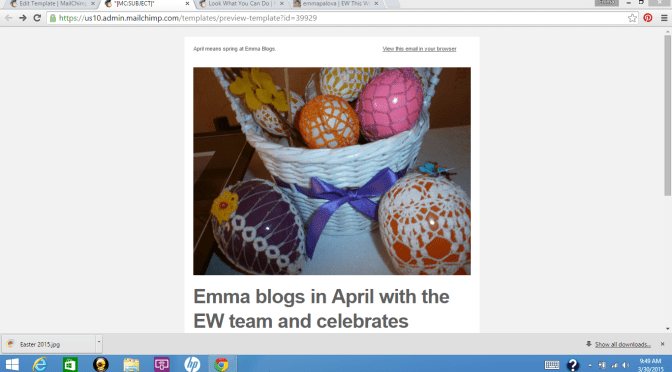
The April newsletter is here. It’s been on my radar screen since I’ve established Emma Blogs, LLC. Every month, the newsletter will feature news from the blogs portfolio, blogging tips and editorial/marketing calendar. Features will include en excerpt from the story of the month and a featured blogger. You can submit who do you think should be featured and why, as well as a story,a poem or a photo with links to your blogs. You can also submit a story about your niche business with a link.
Emma Blogs newsletter for April.
The deadline for submission for the May newsletter is April 20. Happy blogging.
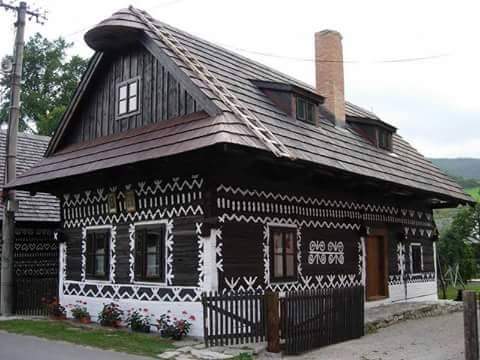
In my memoir “Greenwich Meridian,” I write about Czech and Slovak traditions that I have witnessed while living in Czechoslovakia with a touch of nostalgia. Some of them disappeared along with the old regimes, but most have survived mainly in villages and small towns preserved by enthusiastic small groups of people. Festive costumes for the holidays and special events reflect these traditions, as well as music, dance, food, and customs specific to each village and town.
We lived in Zlin, Moravia, which is the central part of former Czechoslovakia embedded in traditions. Both as a child and an adult, I lived and visited with my grandparents in Vizovice, a treasure trove of traditions.
Cousin Bronislav Pink ready for “schmigrust”
Easter celebrations in Czech and some other European countries are longer by one day, and that is Monday.
We have always indulged in lavish preparations for the long Easter weekend. That meant having enough meat, desserts, eggs, and beverages for three days. There were long lines just like before any major holiday. I spent a lot of time standing in lines and listening to what the old broads had to say.
“I am not going to tell him how much I spent,” a woman wearing a scarf and a fluffy skirt shook her head defiantly.
The other one with an apron over her dress smelled of burnt dough.
I thought, she must have burnt her kolache, a traditional festive pastry with plum butter.
The broad leaned closer to the first one and whispered something into her ear. Then they both laughed, until their bellies and chests were heaving up and down. I learned a lot standing in lines. The longer the line, the more I learned.
So, the culmination of it all is Easter Monday known for its “schmigrust,” an old whipping custom.
Traditional Czech festive costumes.
On that day, early in the morning ,large groups of boys and young men head out into the streets with their braided knot-grass whips or oversized wooden spoons decorated with ribbons. The day before, they spent many hours skillfully braiding their whips out of willow twigs or scouring the house for the biggest wooden spoon.
The boys go door to door, reciting traditional Easter carols like “Hody, hody doprovody,” asking the lady of the house for painted eggs. Then, they whip all the present women in exchange for decorated eggs and ribbons. Single women, and girls tied ribbons on top of the whip. I always wondered about the whipping custom, long before I ever set my foot out into the world. One day, grandma Anna finally explained it to me.
“It is supposed to resemble the whipping of Christ before he died,” she said.
“But, grandma that’s evil,” I cried.
Grandma just shrugged, and turned away. Later in life, I knew better than to question a tradition.
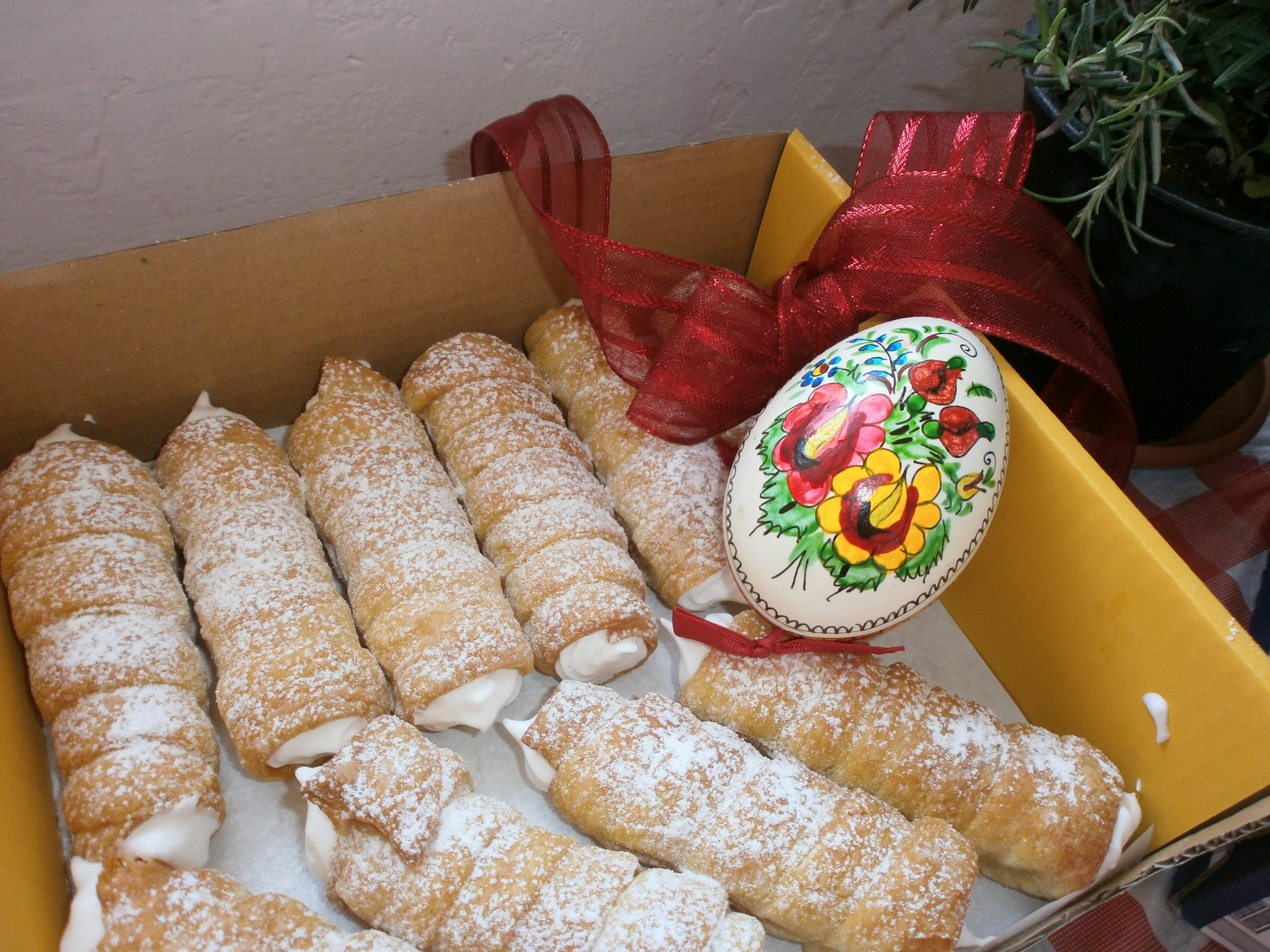
Easter desserts
Women of the house offered shots of plum brandy, usually home-made or acquired through bartering to the “schmigrust” groups. Even family members took part in this ritual. Uncles and cousins visited for coffee, festive desserts such as kolache, shots and meaningful conversation.
On a good year, and especially when I was a teenager, we got anywhere around 100 passionate revelers. Sometimes, I ran out of ribbons. The boys and young men, competing against each other, took pride in the number of ribbons they got. The craft stores had to stock up with meters and meters of ribbons, plain or embroidered. The hens, of course, felt obligated to produce more eggs.
I have created a monthly newsletter so all can stay in the loop. It highlights news from my Emma Blogs including the flagship EW Emma’s Writings site on http://emmapalova.com
I will always feature in it: the current editorial calendar and excerpts from the editor’s picks for each month. The editor’s pick for the month of April is the story “IW Hiker babe walks 4,600 miles in memory of daughter.” I will also include valuable blogging tips both in content and in design. Eventually I will add marketing tips as well.
You can find the story on the company blog/website Emma Blogs on http;//emmablogsllc.wordpress.com
Blogging is a constantly evolving story. You can send your story with a link to your blog. Why did you start blogging?
Happy Easter and blogging to all from
Emma and the EW team
Google trekker captures fascinating vistas of the Mighty Mac in Michigan
By Emma Palova
EW Emma’s Writings
I crossed the Mackinac Bridge many times over the last two decades. I never walked it during the annual Labor Day walk, and I haven’t been to the top of the masts or below the bridge. I am afraid of open heights, and I don’t know if the Mackinac Bridge Authority would let me climb up there.
But, other than the top or below the bridge, I’ve taken photos of it from just about any angle including from a ferry to Mackinac Island, from both shores of Upper and Lower peninsulas. The bridge is so magnificent that you get a clear view of it from the island.
And here is what Google did.
Google trekker provides fascinating vistas on the featured photo above from one of the Mackinac Bridge’s masts. Volunteers climbed through the trunk in the mast much like in a submarine to the top with the 40-pound Google trekker device. They walked around with the device on their backs, while 15 lenses in the globe of the device took fascinating shots of the Mackinac Bridge and the area, as presented in a video “Pure Michigan.”
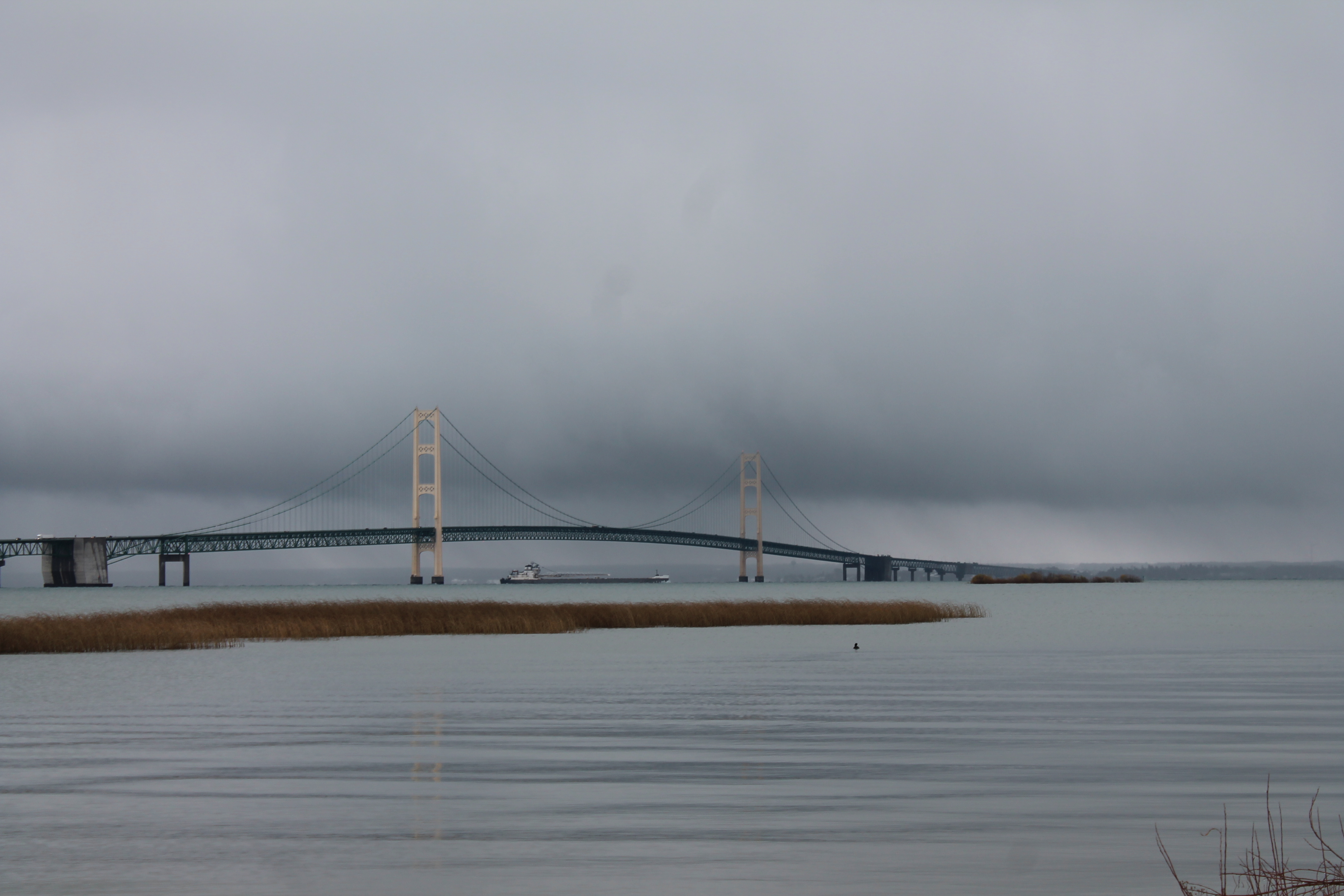
Below are traditional photos of the five-mile long Mackinaw Bridge in Michigan by Emma Palova.
Driving on the Mighty Mac in Michigan.Mackinaw Bridge from the Lower Peninsula view.
View of the Mackinaw Bridge from the Upper Peninsula.
The last time I crossed the bridge was in November of 2014 as the first snow fell on the bridge deck. The ride across the five-mile long bridge is creepy, and many drivers take the service offered by the bridge authority, even truck drivers. Bridge drivers will take you across.
If there are high winds, the bridge gets closed.
Here are some bridge facts from mackinac.com
Mackinac Bridge
The bridge was designed by the great engineer David B. Steinman and opened on November 1, 1957. The structure took 48 months to complete with over 3, 500 workers and $99,800,000 dollars. Also know as the “Big Mac” or the “Mighty Mac”, the bridge stretches 8,614 feet making it the fourth longest suspension bridge in the world. With a total span of about 5 miles, the Mackinac Bridge connects the Upper and Lower Peninsulas of Michigan uniting the communities of Mackinaw City and St. Ignace, Michigan. The main bridge cables are made from 42,000 miles of wire and the towers stand 554 feet above the water and 210 feet below to the bedrock. The engineering of the Mackinac Bridge was designed to accommodate the high winds, temperature changes and constant changes of weight. In severe conditions the deck at center span could move up to 35 feet. Under more subtle conditions, the deck could move slowly in one direction based on the force and direction of the winds.
Fun bridge construction facts
* 89,000 blueprints and structural drawings were made
* 71,300 tons of structural steel
* 931,000 tons of concrete
* 42,000 miles of cable wire
* 4,851,700 steel rivets
* 1,016,600 steel bolts
* 350 engineers
* 522 feet tall
* 1,024,500 tons in total weight
* 7,500 men and women that worked in quarries, shops, mills
* 1951 Chevrolet Styleine Deluxe owned by Albert Carter was the first car to cross the Mackinac Bridge
The annual Mackinac Bridge Walk is held every year on Labor Day. Two lanes of traffic are closed and 50-80,000 people, all led by the Governor of Michigan walk together over the bridge. Bicycles are prohibited on the Mackinac Bridge, however the Big Mac Shoreline tour is held in June and September, which takes its participants for a trip over the bridge. During the summer months, the Mackinac Bridge has become a major diverse tourist destination for bridge enthusiasts, bird-watchers and photographers.
Bridge fares begin at $2 per axle and increase from there. Fares are subject to change without notice.
The last event in March is the local Lowell Expo on March 28th at the Lowell High School from 9 a.m. to 3 p.m.
Lowell Community Expo
The calendar gives you a preview of stories and themes coming from the end of March through June. It is not set in stone, I always make it as flexible and versatile as possible.
It also gives an idea for marketing around the themes relevant to each month. It doesn’t exclude anything.
That’s the beauty of the Internet compared to print media; the speed and the versatility, as well as the turnover of stories. You can make it weekly, monthly, quarterly or annually depending on your blog and business.
I prefer quarterly because it gives enough leeway yet it helps stay on track and up with tasks. The calendar also depends on the frequency of your postings and the format of them.
Overall, it is worth spending time working on it rather than haphazardly writing about anything at hand. The calendar also organizes your overall strategy and thoughts into more manageable segments.
Check out the new editorial calendar for spring from the end of March through June on Emma Blogs, LLC. The calendar has listings of events and activities in the area from Expos to festivals, and customer appreciation days.
Lowell, MI- Watch for a story on spring sojourns in Venice, Florida on the Gulf Coast, locally in Michigan, and globally in Europe.
Today, March 20th, is the spring equinox. It is called equinox because the length of day and night are nearly equal.
Spring equinox signifies new life.
It is also the day of the total and partial solar eclipses depending on location, according to timeanddate.com
The first day of spring is traditionally associated with many customs like Easter and Passover. It is also a time for new beginnings and new life. Thus the symbol of the rabbit, a lamb and eggs.
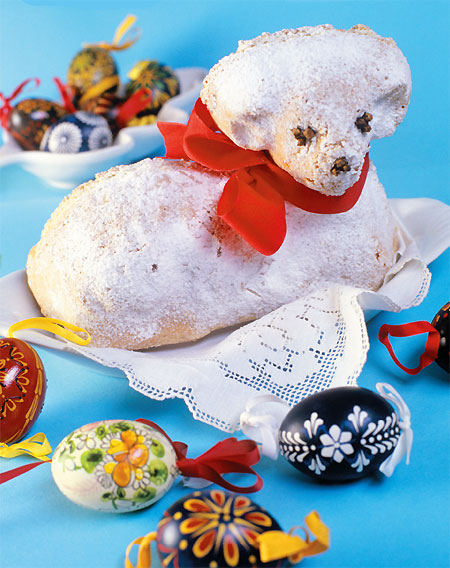
Czech Easter lamb baked like a pound cake with decorated eggs.
In many Christian cultures, Easter eggs are synonymous with Easter. Also known as Paschal eggs, these are usually decorated chicken eggs that symbolize fertility and rebirth. They can be quite exquisite, and in many cases are considered an art.
Many Easter related events feature the Easter egg as the central theme. Traditional games like egg hunts, where colorful Easter eggs are hidden for children to find, egg rolling, where eggs are rolled down a hill, and egg dancing, where eggs are laid on the floor and people dance while trying to not damage them are held all around the world.











 authoremmapalova
