All posts by emmapalova

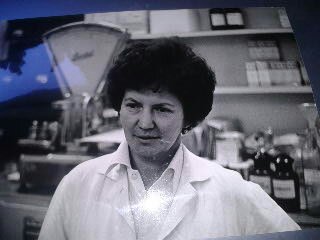
Emma Palova, born in Czech Republic, is an author, a writer, a screenwriter, a journalist, a photographer, a designer and the founder of Emma Blogs, LLC, based in Lowell, Michigan. Currently, she is working on her memoir "Greenwich Meridian" which she intends to turn into a screenplay. Palova started her blog EW Emma's Writings at http://emmaplova.com in support of the publication of her memoir in January, 2013. The blog has grown into a passion and a company that designs blogs for other people under the umbrella of Emma Blogs. Palova is a prolific online publisher open to new ideas and to new horizons. A natural innovator, Palova loves to create progressive brands into the future. Check out her inspirational post "Desert epiphany" and the authors page on About_me and on Facebook. I am looking forward to seeing you around the greater Grand Rapids area and on my blog. I am seeking an agent or a publisher for the memoir that I intend to publish for my mom Ella's 80 birthday on Aug. 23. I celebrated my fourth anniversary on the WordPress publishing platform on Jan. 15th, 2017 with more than 1,000 followers and 500 plus posts. Love always, Emma

PlumFest in Vizovice aka Trnkobrani

PlumFest in Vizovice, Czech Republic features contest in eating plum dumplings

Every year at the end of August, my mom’s native town of Vizovice in Czech Republic celebrates a big plum extravaganza that lasts three days. The annual PlumFest traditionally attracted thousands of people because of its free-spirited nature.

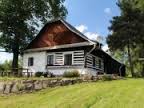
We stayed at my grandparents’ summer house at Krnovska 111. My grandpa Joseph called the old house a ranch, which was a stretch of imagination but it stuck.

Classic plum brandy known as slivovice.

I always invited a lot of friends for the festival from the secondary school in Zlin. So, the three days were a big party inside and outside all over the town. We picked up those who didn’t know where ranch was at the local train station.

Grandpa always looked forward to the PlumFest as much as we did, because he liked to party with us. I only remember him once really getting angry at us, and that was when someone on a Saturday night locked us up and threw the key to the ranch inside a rubber shoe. The next morning that person didn’t remember a thing, and just jumped out the window to catch the first bus.

The rest of us didn’t know where the key was, so we couldn’t let grandpa in. Grandpa thought we just didn’t want to let him inside his own home.

“Let me in you hooligans,” he pounded on the door.

Other than that incident, everything always went smooth. The program usually consisted of different bands including at the time famous band Olympic in the evening.

The town is also home to well-known comedian and mime Borek Polivka, and he quite often made a cameo appearance.

But, mainly Vizovice is known for the famous liquor company Jelinek that makes plum brandy. Plum brandy is exported around the world, and can be easily recognized by the plums on the vignette. Plum brandy also called slivovice was presented as a gift at the Heritage Mass at St. Cyril’s last week at the Czech Harvest Festival in Bannister, Michigan.

Contest in eating plum dumplings in Vizovice.

The major event on Sundays was the plum dumpling eating contest. Brave men sat at a long table on the stage. Assistants brought out plates with batches of 20 dumplings at a time. The rest of us cheered them and encouraged them to eat more.

One champion ate 60 plum dumplings, and then received a certificate and a paid  hot dog at the local establishment. I never found out if he ate the hot dog. He could hardly stand up from the table.

The tradition of the PlumFest continues to this day. It takes place at the Jelinek liquor company, and it has been shortened to two days. So, if you want to test your eating capabilities, the contest in plum dumpling eating is this year on Saturday, Aug. 24 at 1 p.m. on Starobrno Stage.

For more information on the  PlumFest go to: www.vizovicketrnkobrani.cz

Note: I published a recipe for cream cheese fruit dumplings on my facebook. I will also put it on my author’s page. Even though they’re sweet, they are not considered to be a dessert.


Copyright © story and photo by Emma Palova


← Back

Thank you for your response. ✨


Cucumber season

The story behind Czech pickles

My parents Ella & Vaclav Konecny have always had a cucumber patch here in Michigan. When they came to the United States four decades ago, they did not like American pickles because either they were too sour, too sweet or both.

Coming from the Moravian region in Czechoslovakia which produces one of the best canning goods around, they decided to take the matter into their own hands. They had a recipe from Czech Republic, so they put it to use.

Ella Konecny with flagship sweet and sour pickles.

The real big deal annually was the fact that during the ripening season of cucumbers, they would leave for vacation. It was either left up to us to pick the cucumbers, and leave them in the fridge to be canned. Later, they switched their vacationing habit to accommodate the almighty cucumber. At their peak, they made hundreds of jars of pickles that they usually gave away. Most recently, they took an entire box of pickles to Florida.

When my mom had a surgery with her back three years ago, the pickling task was up to us. I canned before but never quite as much. Living up to their expectations hasn’t always been easy, but this was a very definite challenge. Since then, my husband and I have developed a knack for canning to the point of loving it. Even though my back is killing me, and I probably should be writing another chapter in my memoir, I still like the down to earth business of canning. I have expanded from Czech pickles to gardinieras, marinaras and salsas. The biggest surprise is yet ahead.

I like the joy of making a true Czech American product in my own backyard.

Follow me on my blog, I will be broadcasting live this Sunday from Czech Harvest in Bannister.

Copyright © 2013 story and photos by Emma Palova

Pickling time I

image

Czech inspired sweet and sourpickles any way you like them. Now taking orders for Harvest 2013. Watch for the story behind these.

Preserving Czech traditions in United States

One of the best kept Czech secrets hides approximately 20 miles east of highway 127 amidst grain, corn fields and sugar beets in Central Michigan. Small farm houses sit on the flat farming land tucked away from the roads. The only noise is the wind whistling through the fields.

But, every year on the first Sunday of August, the small unincorporated village of Bannister, comes alive with polka music and traditional folk dances. The men and women put on traditional folk costumes and celebrate the Harvest Festival, in Czech known as Dozinky.

Most of the 100 people who live in Bannister are of Czech origin, and they have been looking forward to the celebration all year long.

Tom Bradley, dance troop leader, proudly polishes up his Russian dance shoes.

“A dancer is only good as his shoes,” he laughed.

Czech folk dances during the Harvest Festival in Bannister.

Tom Bradley and his wife Dianne are at the head of preserving the century-old tradition of celebrating the wheat harvest with Dozinky. Dianne leads the kids in dancing to the music of accordionist Linda Quarderer.

The day starts with a polka mass at St. Cyril’s Catholic Church. The musicians just like the dancers wear authentic custom made costumes rich with embroidered ribbons. The church is decorated with Czech dolls in folk costumes and with harvest wreaths.

The hymns are arranged to polka music. The first time I heard the Czech hymns here deep in the Midwest fields, I had tears in my eyes. I realized what this small group of people, who has been far away from home for more than a century, was doing.

Yes, they were preserving something that is dying out back in the old country. Similar harvest celebrations in Czech Republic can be found only in tiny villages on the border of Moravia and Slovakia.

The center of all happenings is the ZCBJ Lodge, home of the Western Bohemian Fraternity. It is also the only building on Main Street that stands out. It has united the Czech immigrants for more than 100 years.

Right after the mass, the traditional Czech dinner is served both inside and outside the hall from 11:30 a.m. to 2 p.m. The food consists of ham and chicken, dumplings, sauerkraut, mashed potatoes and gravy, and for dessert either kolache or poppy seed and apple turnovers.

Czech festive fair, pork roast, sauerkraut, dumplings & golden lager.
Czech festive fare, pork roast, sauerkraut, dumplings & golden lager.

I was amazed how authentically the ladies of the hall recreated a traditional Czech meal. Most of them have never set foot in the old country. But, the recipes have been handed down from generation to generation, much like the dance, and the music. The only thing that didn’t make it throughout the decades was the language.

The parade gathers in front of the ZCBJ hall, and it is led by both flag bearers and wreath bearers. The giant wreath has been made from wheat stalks and wild flowers. Other participants in the parade carry the ancient tools of wheat harvest, a scythe and a rake, adorned with ribbons.

The parade stops at the podium created from a decorated wagon with all three flags; Czech, USA and Slovak. Then the choir leader starts to sing the Czech & Slovak hymn;

“Kde domov muj, kde domov muj.

Voda huci po lucinach, bory sumi po skalinach………”

Translated it means:

“Where is my home, where is my home,

Water roars over the meadows, forests murmur over the rocks..”

Czech cookbook and Czech jewelry sold at the festival.

The dancers range from two years of age to more than 60. They perform traditional folk dances in couples or in a circle around the maypole. They could make any true Czech turn green with envy. Czech songs accompany the performance.

In the heat of more than 90 fahrenheit, the women sport black stockings, several support skirts under the main one, fluffy three-quarter length sleeves, lace caps, and men and boys wear black hats and vests over fluffy shirts and baggy pants.

After the official performance, a polka band plays for the public to dance inside the hall. The hall itself is decorated with paintings of old Czech leaders like Jan Zizka and others.

The event this year will be held on Aug.4. The cost for the dinner is $10. Come early, it sells out. For info about the ZCBJ Lodge activities go to http://zcbjbannister.org/events_calendar html

Follow the blog for a video from the festival.

Copyright © 2013 story and photos by Emma Palova
Czech classic pick

A Czech classic pick of berries

Czechs love to pick anything and on anyone. That’s what I like about the legacy of my predecessors.

I have fond memories of picking currant as a child along with my brother Vas in my uncles’ garden in the Moravian town of Vizovice. The summers were hot, and the small berries were ripe right around mid July. We spent all our summer breaks at grandma and grandpa’s house.

Red currant bush. The berries contain the most vitamin C.

“You have to go and pick currant for the pie,” said grandma Ann.

“But, we don’t want to,” we both whined. “It’s just too hot.”

There was no fooling about it. We had to go, if we wanted to eat. We crawled up the hill to uncles’ garden. The bushes were huge. We each had a pale, and whenever I wasn’t watching, Vas stole the small berries from my pale and put it in his. I slapped him on his hand. I was sweating like a pig.

“What are you doing, pick your own,” I was upset.

I wanted to go out on the street Krnovska and play with the rest of the gang. The tiny berries were getting on my nerves. They were sour, and they left red stains on my shirt.

To make things worse, my brother kicked my pale and the berries rolled into the grass.

“You fool,” I slapped him again.

We started fighting in the heat of the day. I could hear from the cellar just a few feet away, the berries in a barrel fermenting. Not only did the family bake and cook using currant, the uncles also made currant wine. When I got married a few years later, I was surprised that my mother-in-law Julie also made currant wine.

Bubble cake with red currant berries.

“You make that too?” I asked annoyed. “Who picks the currant?”

“You will,” she laughed. “Luda said you love to do that.”

We grew three types of currant, the most common red, black and white. We also had gooseberries; bizarre looking greenish white fuzzy berries that were used for making fruit cocktail along with apples.

There’s a saying that Czechs love to pick just about anything. I am beginning to believe that. Every year, my mom and dad go picking blueberries on the farms in West Michigan near Holland and Muskegon. As a child, mom too was forced to pick wild blueberries in the woods near Vizovice. Now, she loves to pick them, and makes tons of products from blueberries.

When I couldn’t find currant in the stores here in US, I planted a red currant bush of my own some six years ago. This year, I added a black currant bush. As I meticulously picked the red berries sweating in the July heat, I thought about my childhood.  I could even smell the old sweat of yesteryear along with the new one.  There’s always something that we like to bring back from the past; something that somehow keeps us connected.


Copyright © 2013 story and photos by Emma Palova

White’s Bridge: Gone but not forgotten

White’s Covered Bridge destroyed by fire

The remains of White's Covered Bridge after the July 7th fire.
The remains of White’s Covered Bridge after the July 7th fire.

Old timers along with younger people gathered by the White’s Covered Bridge near Smyrna last week to reflect on the bridge’s glory. It only took a few hours for the flames to consume the wooden structure and to collapse the charred deck into the Flat River.

“It’s a shame,” said one local gentleman.

Others talked about their good times by the bridge. For many it served as a picnic site, a kayak and canoe launch site or just plain time for a break from the hustle and bustle of everyday life.

Annually on July 4th, people gathered from far and near for tubing and kayaking.

White's Covered Bridge in its full glory this January.
White’s Covered Bridge in its full glory this January.

A local woman recalled a time when the bridge was lighted for the holidays and even had Santa Claus giving out presents. The bridge was also embedded in a legend that it was haunted. According to the accounts of some Kent County residents, when driving across the bridge at night, and stopping on it, ghosts would leave their hand prints on the window shield.

A flag nailed to the bridge’s guarding railing reads:

“We loved you so much and will miss your grace and beauty coming home.”

The Baylis Family

Following is the inscription on the Michigan historic site landmark:

Farewell to the White's Covered Bridge.
Farewell to the White’s Covered Bridge.

White’s Bridge

This picturesque covered bridge, one of the last of its kind in Michigan, was built-in 1867 by Jared N. Brazee and J.N. Walker, builders of several covered bridges in this area. The name of the bridge derives from the White family, a prominent pioneer family. The crossing of the Flat River here, was known as White’s Crossing before the first primitive bridge was built. In 1840, a bridge of log-corduroy construction was erected. It was replaced by this covered bridge, costing $1700. It is of the through-truss type with a gable roof. The hand-hewed trusses are sheeted over with rough pine boards. Wooden pegs and hand cut square iron nails are used to secure the various parts of the bridge. White’s Bridge has been in constant use since 1867 , proof that it was well made.

Copyright (c) story and photos by Emma Palova

I am also conducting a survey about the future destiny of the crossing at White’s Bridge road:

Should the White’s Covered Bridge be re-built?

If yes, with what kind of funds?

← Back

Thank you for your response. ✨

 White’s Covered Bridge destroyed by fire

A love to travel II: Secret rendezvous in Hungary

Family meets in Hungary

As I mentioned in part one of the travel stories, Czechs love to travel in the era after communism. So, do my parents who started the entire family immigration saga in 1968.

However, after my father Vaclav Konecny’s second escape from the communist homeland in 1976, I wasn’t allowed to travel to the countries in the West. Dad could not get visa to visit Czechoslovakia in spite of his very sick mother.

So, we set up a secret rendezvous in the border town of Gyor in Hungary not far from Slovakia exactly 10 years after he defected. Both dad and I could travel to other eastern countries, but the officials feared that he would spread dissident ideas and western propaganda inside his own country.

We headed out to Gyor across southern Moravia and Slovakia in the late fall of 1986. There were five of us travelling in a small Skoda car. I remember my late uncle Franta asking my grandma to buy him some hot Hungarian paprika, so it fires up his  brain power.

Gyor border town with Slovakia.

We packed some kolache for the road. Gyor was much like many medieval towns in Czechoslovakia. It had the same colorful facades and squares with statues of saints.

When I got out of the car, I was surprised how much dad had aged in those 10 years. He always had a receding hairline, a great smile and gentle grayish blue eyes, that looked sad this time.

Dad spent last few days with his mother in the hotel.

“This is the last time I see her,” he said.

We had farewell dinner at a restaurant with a band that played cszardas, a classical Hungarian spirited dance. We ordered goulash, a traditional Hungarian dish of stewed beef in lots of onion and paprika.

Going to the restroom was a definite challenge. I stood helplessly in front of two doors with two long words, no pictures. And nobody was coming out. I plunged ahead, only to find myself in men’s bathroom.

The language in Hungary, which has a lot in common with Finnish remains a mystery to me, even though I consider myself a good linguist. I remember writing a letter to my mother behind the hotel room desk. I was pregnant with our son Jake, and I could barely wait to be reunited with my parents in USA.

Dad said goodbye to the rest of the family and we boarded a train to Budapest, the capital of Hungary. I love Budapest. The architecture is very similar to Vienna and Prague, since all three capitals were part of the Austro-Hungarian empire until the end of World War I in 1918.

Budapest is the capital of Hungary.

In Budapest, we ate the awesome world-famous Hungarian salamis and czabajkas. We visited the posh shopping street where I bought a white leather suit. The suit later travelled with me to the USA.

We walked to the monument on Heroe’s Square in the November chill. We had a lot to talk about. In those 10 years that I haven’t seen my father, many relatives had died. My dad couldn’t come to my wedding, graduation or to the christening of my daughter. He was hard through and through.

“You know Emma, you have to follow your dreams and be prepared for them,” he said. “But there will be hard times no matter how prepared you are.”

The famous dish Hungarian goulash.

We continued our talk next day over a delicious Hungarian coffee and dessert at a restaurant pitched high atop the left bank overlooking the magnificent Danube River.

During the time dad was gone from home, his older brother Tony and his father had died. He could not come to any of the funerals. That’s the price of expatriation.

In a recent interview in Venice, Florida dad had no regrets over leaving his native land, but did admit to being sometimes homesick.

“All I have left now are memories,” he said.

Copyright (c) story by Emma Palova, photos Internet

Local authors

image.

This is my new cover photo for my author’s page on facebook. It was taken at one of my favorite hangouts Ella’s Coffee & Cuisine in downtown Lowell at 307 E. Main. As an author, I deeply believe in artistic synergy. The owners have been supporters of local artists and authors from the very beginning.

Ella’s to me is reminiscent of Paris hangouts of authors like Hemingway and his circles. I feed my artistic energy from other artists’ work as well.

I invite all to like my on my author’s page. It is here where I post snippets of my upcoming work and happenings.

Welcome to all.

Emma

Celebrate Independence on July 4th

Celebrate Independence on July 4th

America celebrates its biggest holiday, Independence Day on July 4th with fireworks, parades, concerts, grilling and chilling.

Pictured is the Lowell Showboat decked out in patriotic colors. The Showboat annually serves as a venue for the Sizzlin’ Summer Concert Series. I always run around with the camera, but I manage to enjoy the concerts from the deck of the boat. Summers in my hometown Lowell are busy with events ranging from Riverwalk Festival which runs this year from July 11 through July 13.

Lowell celebrates summer with the Sizzlin' concert series on the Riverwalk stage.
Lowell celebrates summer with the Sizzlin’ concert series on the Riverwalk stage.

A definite highlight of Lowell summers is relaxing music on the bank of the Flat River. Bring a chair or a  blanket.

The annual Sizzlin’ Summer concert series is held on the Riverwalk stage every Thursday from 7 p.m. to 9 p.m. This year it runs from June 13 to Aug. 22. You can celebrate July 4th with the 126 Army Band under the direction of  Chief Warrant Officer Jon Montgomery this Thursday.

During the Riverwalk, the Delilah DeWylde and the Lost Boys will be playing on the stage.

For full schedule of events go to Lowell Area Chamber of Commerce at http://www.discoverlowell.org

Copyright (c) story and photos by Emma Palova
Parish Festivals

Parish festivals bring families together

Much like in the USA, many festivals in Czech Republic are tied to churches and their patron saints. We’ve just experienced a great St. Patrick’s parish festival here in Parnell last weekend. For the first time we could all enjoy it together as a family. It was a family reunion at its best.

My daughter Emma Palova-Chavent arrived from France on Tuesday prior to the festival with her daughter Ella. And my parents Ella and Vaclav came from Big Rapids. To my big surprise even my brother Vas peddled on his bike 75 miles from Paris, Michigan to Lowell for the festival. My son Jake came for the chicken dinner from Kalamazoo.

Polka dance at St. Pat's Parish Festival last Sunday.
Polka dance at St. Pat’s Parish Festival last Sunday.

I was also mildly surprised by the $3 admission charge to play in the Las Vegas tent. My daughter and I always lose a lot more than just $3. We all went Sunday to the festival to enjoy the chicken dinner and mainly the polka music by the Diddle Styx Polka Band.

It felt almost like back home in Czech Republic during the Saint Mary’s Pilgrimage days in September that will now be held on the brand new Marian Square in front of the medieval church. Both Czechs and Germans love to listen, sing or whirl a polka.

We always came to visit with my in-laws for the Marian festival in Stipa, along with other family members.  I write about this in my memoir “Greenwich Meridian,” because the church has quite often inspired me for its opulent baroque interior with a beautiful organ. My uncle Tony used to play the organ. I was married in that church, and funeral masses for most family members were held there.

The Pala and Konecny families enjoy chicken dinner at the parish festival.

Most women in the village including my mother-in-law Julie baked and cooked up a storm for the Marian festival, as the families got together from far and near. We usually had schnitzels, which are breaded pork chops, and mashed potatoes with home canned compote. For dessert, we had the traditional “kolache” pastries filled with plum butter and cottage cheese.

There was a dance on the night before the festival Sunday, much like here in Parnell. I can think of only a minor difference between the two events. Carnival rides always accompanied the Marian feast, while classic car and antique car show embellish St. Pat’s festival. We didn’t have raffles or auctions, but we had colorful paper roses on wires from the carnival caravans as souvenirs from the Marian festival.

Saint Mary's church in Stipa, Czech Republic during Marian pilgrimage days.
Saint Mary’s church in Stipa, Czech Republic during Marian pilgrimage days.

The Marian event in Stipa is officially called a pilgrimage, because originally people made pilgrimages to a small chapel with one of the oldest statues of Virgin Mary in Moravia that stood in place of the church. We made a pilgrimage once from our Zlin apartment to the Marian church in 1978 when I was pregnant with my daughter. We walked approximately seven kilometers across the Southern Slopes and along the narrow roadway to Stipa.

Pilgrimages are still common in Europe to places like Fatima in Portugal and Lourdes in France, as well as Hostyn in Czech Republic.

Copyright @2013 story and photos by Emma Palova