I am back home in the USA from a writer’s retreat in France. Follow me on EW Emma’s Writings on http://emmapalova.com for stories from Provence, Burgundy and Paris. Pictured is Paris from a rooftop bar in the historic Le Marais quarter. To the right is the flashing Eiffel Tower. Every full hour the Eiffel sparkles in lights along with the blue beam that illuminates parts of Paris near the river Seine.
The fabulous panoramic “Les Nympheas” paintings inside the L’Orangerie Gallery were a gift from Claude Monet to the people of Paris.
Stay tuned for stories from Provence, Burgundy, Jura region and Paris on EW Emma’s Writings on http://emmapalova.com.
St
Villages of the Luberon Mountains Continued from Provence most beautiful villages at By Emma Palova EW Emma’s Writings Provence, FR- After a morning writing session on Sunday in the large Provença…
Continued from Provence most beautiful villages at https://emmapalova.com/2016/09/02/provence-most-beautiful-villages-2/
By Emma Palova
EW Emma’s Writings
Provence, FR- After a morning writing session on Sunday in the large Provençal social room with a view into the garden, we relaxed by the pool surrounded by the Aleppo pine forest with rosemary shrubs at the base.
The “girls” Emma & Selene had just completed a 10 kilometer hike to the Gorges de Regalon. The network of gorges and canyons plunges 30 meters deep and a magnificent forest of oaks, maples, Aleppo pines, cherry and fig trees shelters it.
“We met a guy who had flip-flops on and asked us how far of a walk it is,” laughed Emma. “Then he asked if his t-shirt was alright for the hike.”
Gorges Regales near Cheval-Blanc in Provence.
In the afternoon, we explored another village of the Luberon, the artsy Lourmarin with population of 1,300. Lourmarin lies in the triangle formed by Avignon, Marseille and Aix-en-Provence.
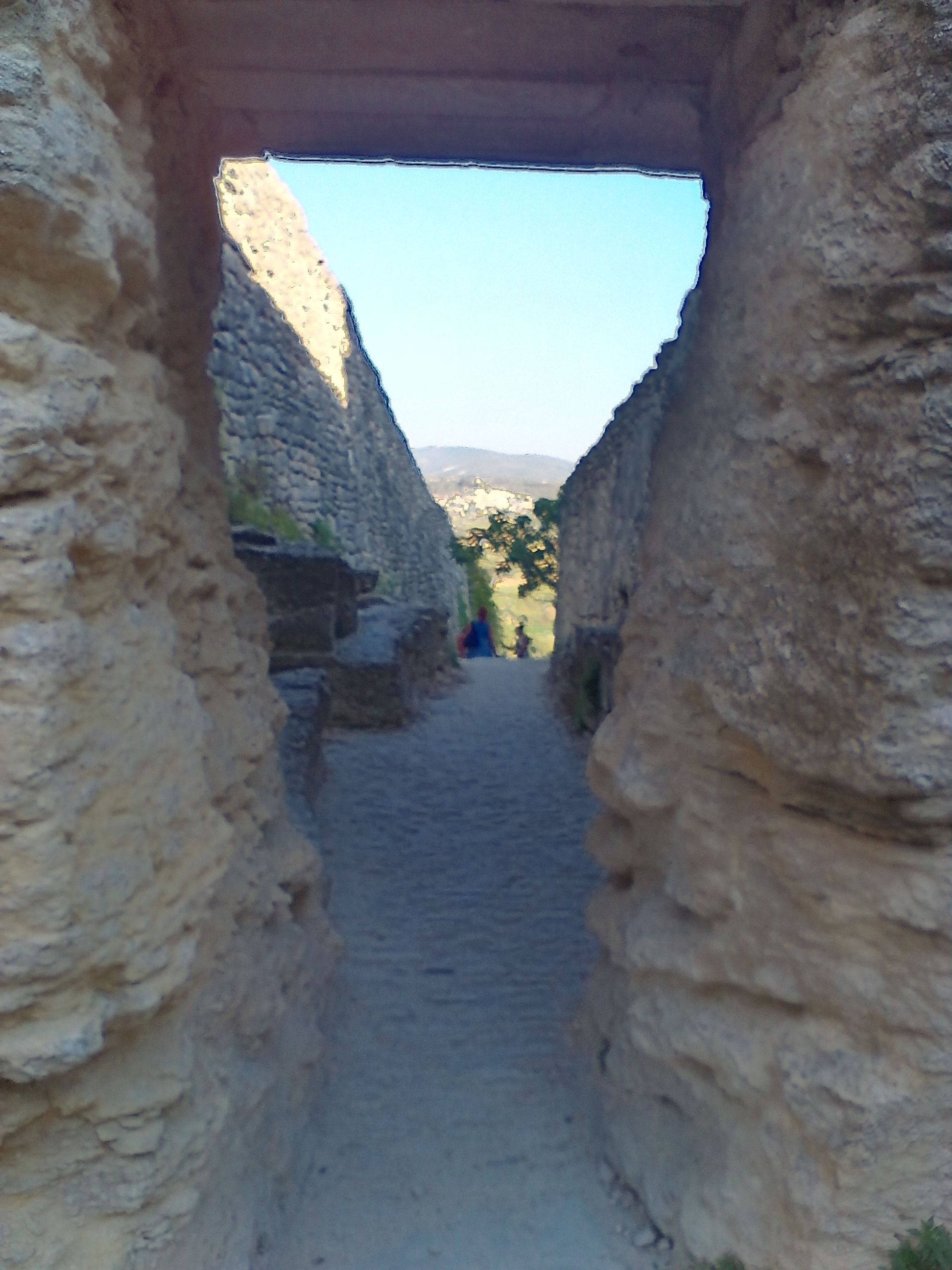
One of arched entries into the center of Lourmarin.
The new château in renaissance style was restored by industrialist & philanthropist Robert Laurent Vibert in 1920. He was killed in an accident in 1925 leaving behind a foundation for young artists. The château overlooks the delightful Lourmarin with three belfries reflecting on the diversity of religion.
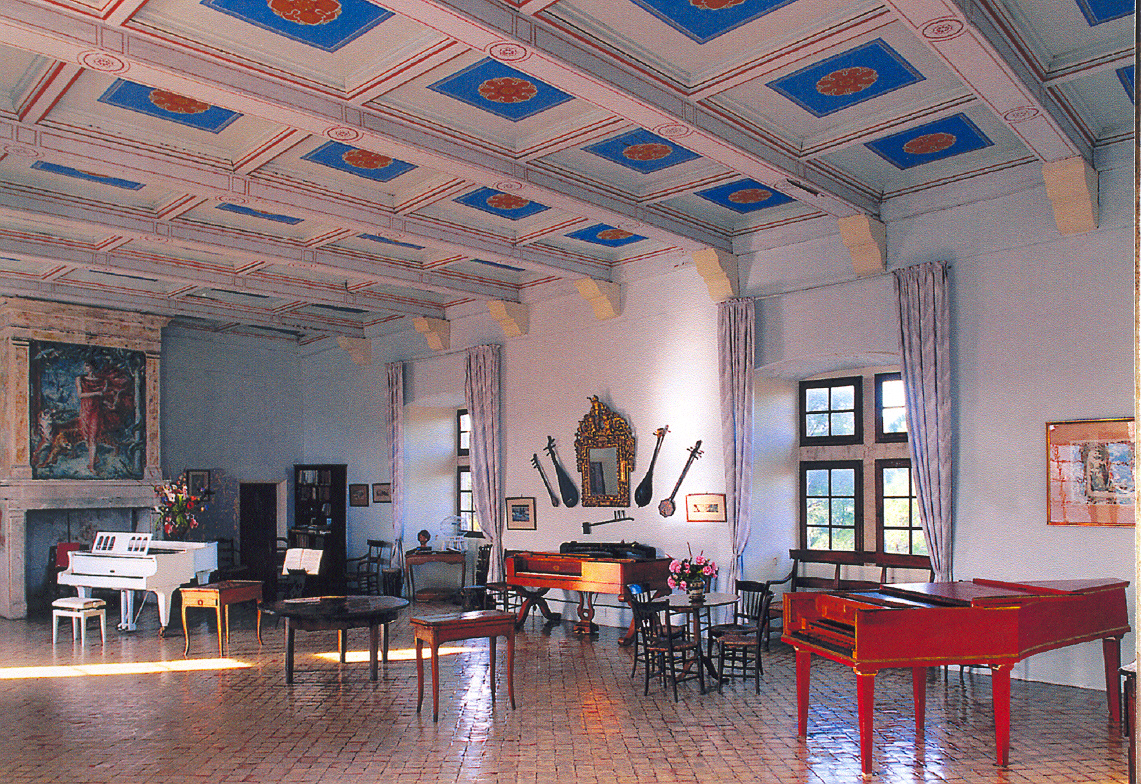
The right wing of the castle is fully furnished according to the renaissance period. We walked up the wide stone stairs leading into the main chambers of the castle. I especially loved the music room with music instruments from four continents, the library and the ladies room.
The castle serves as a major venue for the annual summer music festival from July 11 through Oct. 8th.
The kids delighted in the castle garden with sculptures and a pond with koi fish. A short walk down the hill led us into the bustling village with tourists, a festival and a market.
A Lourmarin water fountain.
Fashionable shops and galleries lined the streets in the center of Lourmarin along with wine caves, endless restaurants and cafes.
Sitting at a sidewalk café on Place de l’Ormeau, I did as the Lourmarions do every day; I watched the pedestrians and an occasional car navigate the cobblestone narrow streets Mediterranean style.
A chic proprietor of a bed& breakfast sporting high heels was awaiting her guests at the cobblestone l’Oarmeau square adorned by sculptures with a water fountain. The water fountain with fish kept our youngest team member Sam, 2, calm. Ivy completely overgrows many of the bastides at the Place de l’Ormeau.
In one of the galleries, I found an amazing 3-D bluish yellow collage picture of the Last Supper. Emma loved the slick modern lamps, as well as the retro art in a gallery across the street. I didn’t want to leave Lourmarin.
The music room inside the Lourmarin castle.
But, we had one more village on our schedule: beautiful Ansouis, pop. 1,057, with French terrace gardens and the dominating castle at the top.
A jazz band used an opening in the castle walls as a stage with the setting sun behind for their light effects. Behind the spectator crowd, a couple danced Charleston on a sloping street.
French terrace gardens in Ansouis.
And there was a syrup stand; not a wine stand but a booth selling the old elixir, which Emma and I know so well from the Czech Republic. Long before coke, sprite and other pop arrived massively in Eastern Europe, there was an equivalent: the good old home-made syrup from local fruits.
“Syrup is big now in France,” Emma said.
No, kidding. I encountered the syrup-diluted-in-water concoction at our other tour locations such as St. Remi-de-Provence and Poligny in the Jura region of France.
A square in St. Remy-de-Provence. Vincent Van Gogh made St. Remy his home for one year. He created his greatest works here.
To be continued. Stay tuned for more stories from Provence in “Farewell to Provence” and from the Jura region, home to yellow wine, Comte cheese and Louis Pasteur.
My summer writer’s retreat in France takes me from Burgundy 450 kilometers south into the heart of Provence. Continued from “In Provence” https://emmapalova.com/2016/08/31/in-provence-aug-26-aug-29-2/
By Emma Palova
Provence, FR- Our trip to Provence took us 450 kilometers south of the home base in the wine village of Fixin in Burgundy. After lodging at the Provençal bastide no. 23 on Chemin de la Font du Pin located between Cheval-Blanc and Merindol, we were ready to explore the most beautiful villages of France.
They are: Ansouis, Gordes, Lourmarin, Menerbes, Roussillon, Seguret and Venesque.
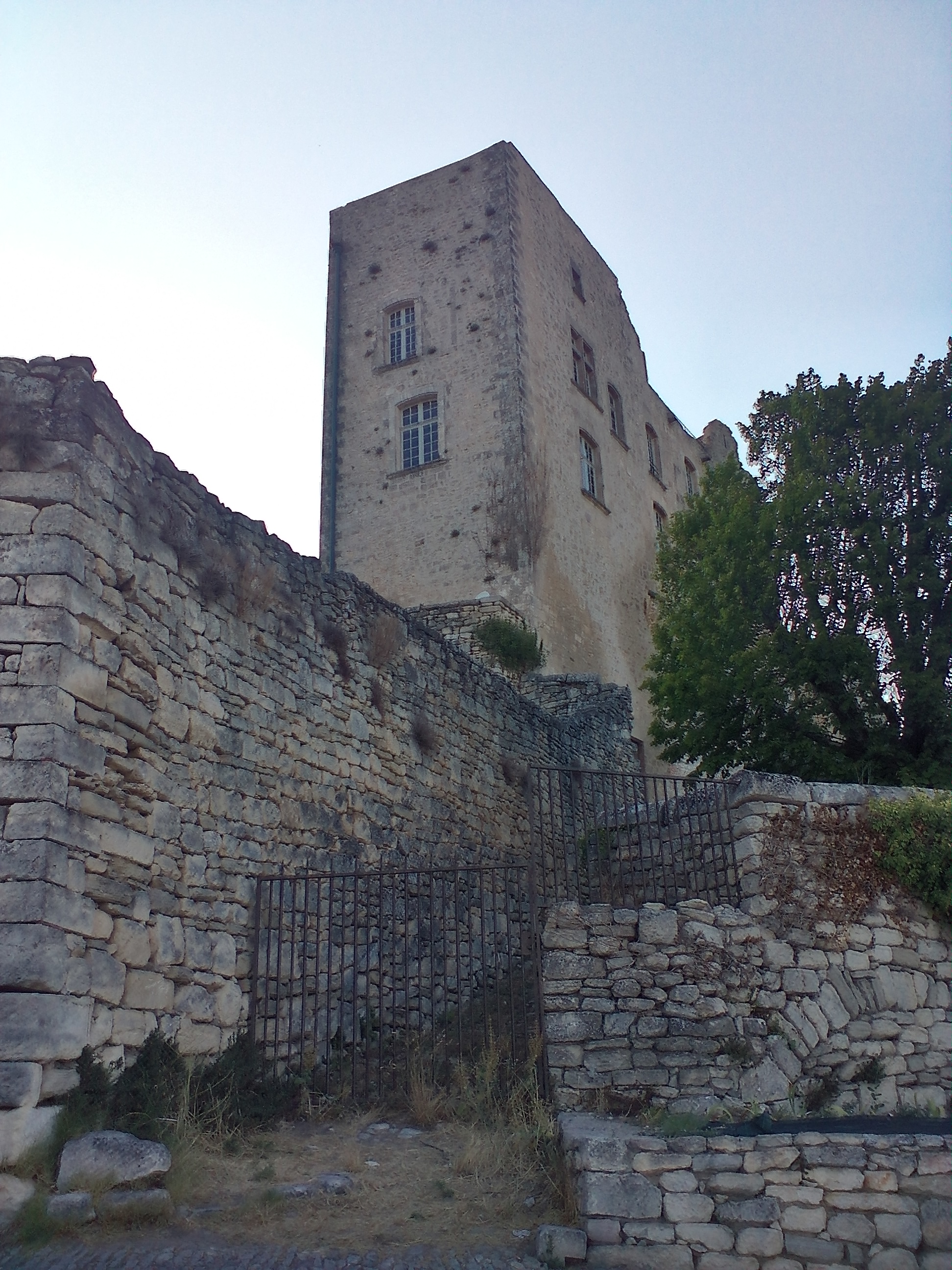
Chateau de Marquis de Sade in Lacoste, Provence.
Hugging the slopes of the Luberon mountain range or its foothills, these charmers share common elements of more than a century of history & arts, cafes, connecting trails, fortifications and majestic châteaux.
At the bastide, our international “ladies squad” loaded up into one car to make the trip up treacherous narrow roads framed by the Luberon easier.
“I hear that you need a Mexican to drive you,” joked versatile Selene who changed her hat from a chef to a skilled driver.
Driving on the narrow roads through the villages of the Luberon is a true art that I have never mastered.
“Do you know who Marques de Sade was?” Emma asked me.
“They didn’t teach us that in Czech,” I laughed.
“The word sadism is derived from his name,” Emma said. “You haven’t seen the Federico Fellini movie “120 Years of Sodomy?”
Now, that grabbed my attention. I love Federico Fellini and until now, I only knew about sadistic dentists and their scary assistants in not so sterile, white offices.
The view from château in Lacoste.
Well, I was just about to find out the story of this exiled aristocrat from Paris.
“An exile in Provence, must be nice,” I thought.
“Yes, he had all these servants and poets on the chateau with him, what an exile,” said sarcastically Claude.
“He spent 30 years being locked up,” Emma said.
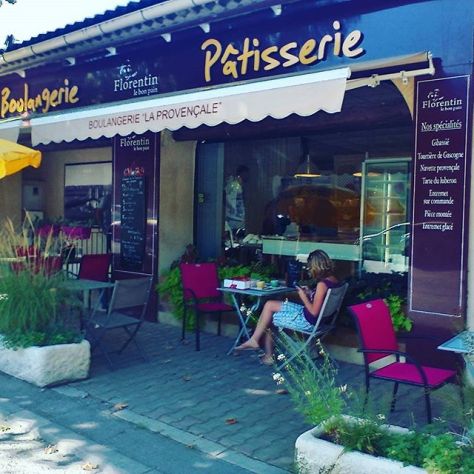
Our roadside attractions were olive groves, vineyards, old farm and wine growers homesteads and vegetable plots. Further on in the villages of Les Beaumettes, Goult, Bonnieux, I admired the boulangeries, patisseries and endless restaurants such as the Fuming Cow Café.
The medieval village of Lacoste, pop 450, was built into a steep hill in several levels, a typical fortified structure from the 11th century.
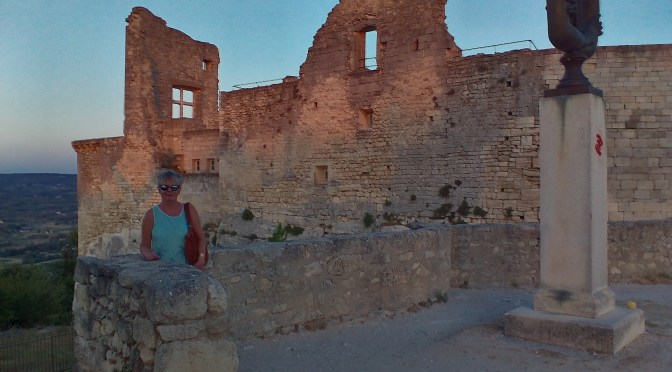
At the peak sits the ruin of the castle of the notorious Marquis de Sade. I took in the surreal view breathlessly.
The beauty of Provence with its fields and “Climats” or vineyards, broken by an occasional road or a village, laid at our feet. The 11th century castle is now home to stylist designer M. Pierre Cardin.
It is not unusual in France, that the castles are privately owned.
From the top we headed through the ruins down the “calade” cobblestone path to the base of the village. The path was busy with tourists. We passed abandoned boulangeries, open terraces with belfries, and old stone houses, some of which are being restored.
The walk through the chateau ruins in Lacoste.
You closed your eyes and you could imagine the life in this village in the time of Marquis de Sade, live with horses, coaches and escorts that he abused.
The sunset cast soft light on the ruins and sculptures by Greco and other artists. The amazing black“Arms” sculpture embraced the visitors on foot, bikes or on horseback from all over the world.
The café de Sade offered colorful smoothies, regional wines and Provençal cuisine.
Among the activities held in most of these Provençal villages are markets, concerts and festivals.
We prepared our own Provençal dinner at the bastide that featured apero from the olive vendor in Merindol with cheese and olivenade, olives, local bread, beef and turkey brochettes and wine rose from a cave in St. Tropez.
Belfry at chateau de Marquis de Sade in Lacoste.
The dry heat persisted into the evening lit by colorful lanterns and other “lumiere” creations. The conversation carried both in French and English languages. The topic: the beauty of Provence still waiting to be explored tomorrow.
For more information on villages of the Luberon go to: www.provenceweb.fr
To be continued…………… Lourmarin, Ansouis and St. Remy-de-Provence
International “ladies squad” explores L’art de Vivre in Provence
Note: My summer writer’s retreat 2016 in France takes me from Burgundy south to the heart of Provence for magical four days. Our international “ladies squad” explored three of the seven most beautiful villages in France: Lacoste, Lourmarin, Ansouis and the town of St.Remy-de-Provence. For one year, Van Gogh made his home in St. Remy inspired by the Alpilles.
By Emma Palova
EW Emma’s Writings
Provence, FR- Provençal bastide no.23 sits on Chemin de la Font du Pin between the villages of Cheval-Blanc and Merindol. The mansion with seven bedrooms nestles at the foot of a beach pine forest.
Provencal bastide near Cheval-Blanc.
Typical architecture for this southernmost region of France embraces traditional elements of stone washed walls with tall French doors, large gathering places on the main level and sleeping quarters on the second level. Arches instead of doors open the space between different rooms.
The yard with the garden caters to relaxation and function with a cafe-style gazebo lit by sun energy lamps, a large dining table and an iron wrought bed. White Mandeville plants and Hydrangea decorated the gazebo.
The large pool with a colorful cabin is near the house on a cleared terrain in the white pine beach forest with rosemary shrubs.
Our international “ladies squad” found their bedrooms each equipped with a bathroom and a view into the morning sun bathed beach forest. Tiles are a must in the hot dry climate of Provence.
I shared room no.7 dipped in hues of purple and decorated with butterflies with granddaughter Ella. After a recent conflict, I find solace in the peaceful Provençal atmosphere of farm markets, wine caves, cafes, cobblestone streets, olive groves and deserted châteaux lit by magnificent sunsets.
Inside the bastid. A large living and dining room with French doors into the garden.
The first night we picked ripe grapes in the front yard. Vendange or wine harvest has already started in this part of France. There was also a lime tree and plentiful rosemary shrubs that grew both at the base of the beach forest and in it. To my surprise, on my “balades” through the forest, I also found shrubs of holly.
One morning In the middle of my walk, I stopped dead when I heard a rattling sound.
“A rattlesnake,” I thought and hurried back to the bastide.
Two days later by the pool, Claude pointed out the rattling sound.
“C’est une tone de Cigale de olive,” she said. “That’s the sound of the cigales.”
I laughed at my paranoia originating in my early childhood years while living in Texas.
Mornings, before the heat of the day breaks, are fresh. You wake up to the roosters’ crowing and to the sound of the Cigale in the olive groves and in the rosemary bushes.
Beach white pines near the Provençal bastide.
Instead of a Provençal breakfast of hard-boiled eggs with figs, we ate Lyon festive brioche with pralines, compliments of Mrs. Claude Chavent, Emma’s mother-in-law.
Each lady from the squad contributed her own tastes and flavors to the full gourmet experience. The traveling squad consisted of Captain Dr. Emma Palova of Fixin, Chef Selene Alvarez of Veracruz, Mexico, former anesthesiologist Mrs. Claude Chavent of Lyon, FR and journalist, writer Emma Palova of USA. Both Emmas were born in former Czechoslovakia.
On a late Saturday morning, daughter Emma and I headed out to the Merindol market.
Instead of a marche extravaganza, we only found an olive and cheese merchant along with a straw hat and a bag vendor.
“It’s the summer break,” said the olive vendor.
Olive merchant in Merindol, Provence.
“It’s all about the love for life here in France, not about money,” Emma educated me. “It’s called l’art de vivre.”
For our apero that night, Emma bought an olive spread “olivenade”, a dried tomato spread, cheese, spicy olives with pimento and olives in brine with Provençal herbs at the market in Merindol.
Wine tasting stands at the markets in Provence.
Walking a narrow street up the hill, we stopped at a local hangout spot for coffee and tea on the sidewalk. I love watching people in these quaint villages not occupied by tourists. The locals were already drinking wine and beer.
A woman wearing an apron dress with a large grocery bag hurried past the abandoned tobacco shop. A chic woman overdressed in a black T-shirt with long sleeves pedaled uphill, while a youngster on a bike with fresh bread in his backpack closely followed her.
I wasn’t alone watching the action. A Provençal old-time villager was sitting in his chair right in front of his house on the street. Of course the woman haltered her hurry to exchange gossip with the old-timer. There’s always time for gossip in these villages.
Cafe in Merindol, Provence.
We also came across a reformed church, an anomaly in the mainly catholic France.
We stopped at a farm market on our way back to the bastide to get fresh strawberries and mangoes for the planned Daiquiri drinks by the pool.
We tasted wine from a local wine caterer stationed right by the market stand.
Even though pink wine known as rose is the wine of choice in the Provence region, I bought a bottle of white wine for the apero. Nothing like Burgundy whites, but it tasted better than the rose.
To be continued…………………The most beautiful villages of France
“Climats” in Burgundy present a cultural landscape, a 2015 UNESCO world heritage site
Note: After my third visit to the wine region of Burgundy in France, I consider it to be my annual summer writer’s retreat amidst vineyards, exceptional gastronomy and the “Climats.”
By Emma Palova
Fixin, FR- On an early Sunday morning, I woke up to the ringing of the church bells and a local gentleman shouting at his dog, a lot louder than the dog’s barking.
From my studio, I heard the cars rolling down the narrow Rue Magnien that leads into the tiny wine village of Fixin. The walls around the estates magnify the sounds and funnel them into endless echoes.
Major street through Fixin
But, just before the light broke, I could hear the chirping of the birds in the mulberry tree. The mulberry tree is the only tree that grows between the bricks in the small courtyard in front of the house.
The stone house rises three stories with “lucarnes” or windows in the roof. Sources tell me that the house was a brasserie, before getting divided. After the division, the house lost the right wing, but none of its Burgundian charm or massiveness.
Surprisingly, the house does not have an adjacent vineyard behind it. New or old vineyards in Burgundy are hard to come by, according to my daughter Dr. Emma Palova-Chavent. However, a dream to get a vineyard sometime in the future may become a reality, knowing my daughter.
The journey from the corn and soy bean fields of Michigan, USA to the vineyards of Burgundy is about 4,000 miles long across the Atlantic Ocean. After an endless flight to Paris, we took a reasonable Uber ride for 45 euros to the Gare Percy train station near the famous Lyon Station, one of seven train stations in Paris.
I have a great affinity to train travel that originates in my homeland in Czech Republic.
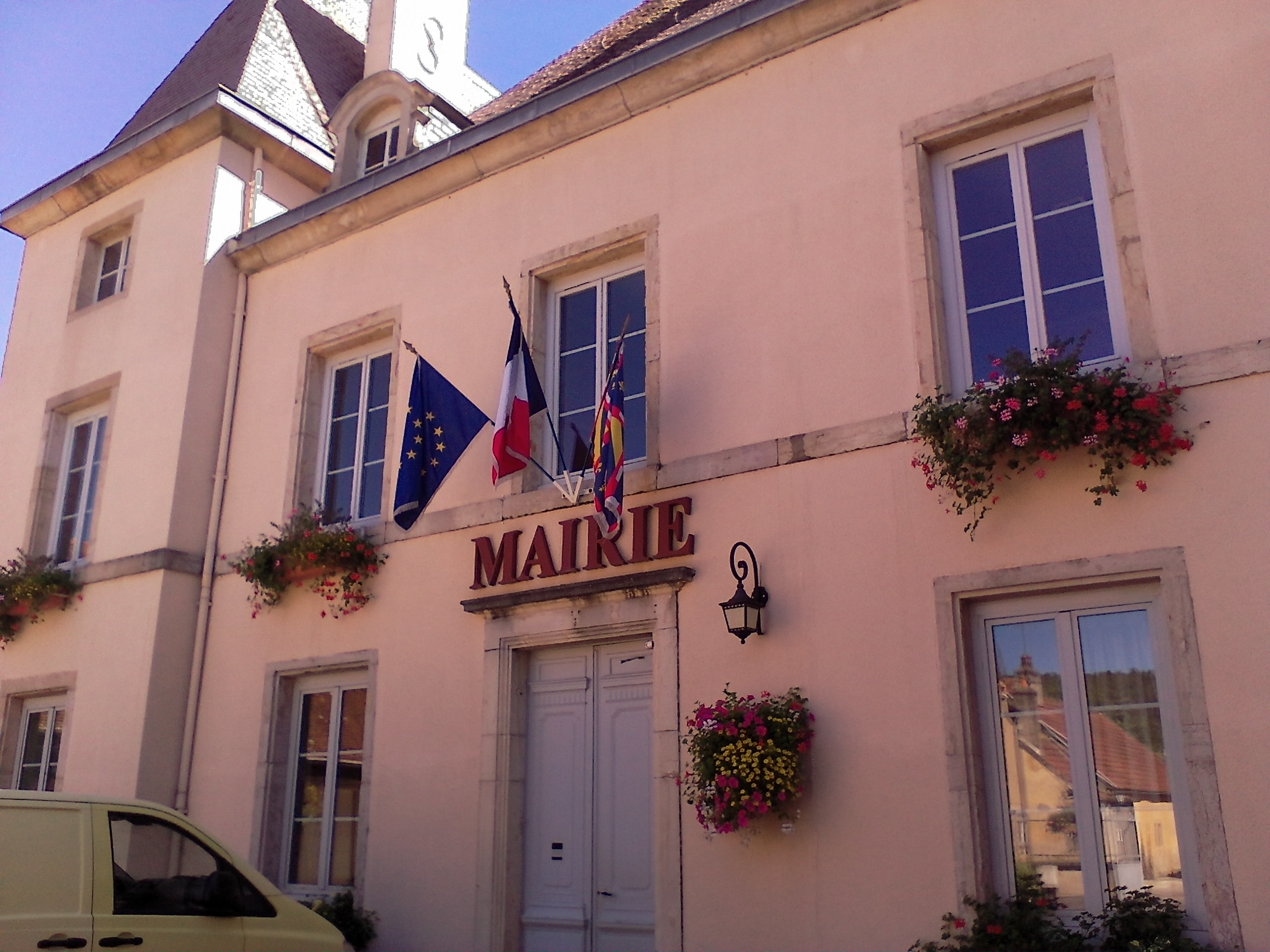
Township hall “Marie” in Fixin with school.
The local train took us swiftly into Dijon, the capital city of Burgundy, a principal wine-producing area. Travelling by train in France is a great alternative to the automobile due to the efficiency of the entire transit network.
Fixin sits on the Grands Crus Route which winds from the northernmost Chenove to Remigny in the south for a total of 57.8 kilometers.
You can ride it, bike it or walk it for a unique experience of a lifetime. Whichever you choose to do, there are accommodating facilities along the way like Hotel les Grands Crus in Gevrey-Chambertin sitting directly on the wine trail.
The “Balades en Bourgogne” app offers e-guided tours highlighting off the trail locations with châteaux, churches and wineries.
I’ve experienced the magic of this wine route during my three distinct visits to Burgundy. In 2009 with a base in Nuits-Saint-Georges, then in 2013 in Dijon and now I stay in Fixin in the north part of the Grands Crus Route.
La Perriere mansion of the Dukes of Burgundy in Fixin.
The vineyards in the heat of the day are just as peaceful as they were a century ago when the monks established them. Perfect rows of wines in small plots that hug the slopes, are sometimes divided by stone walls, stone arches or by stone shelters known as “cabottes.” An occasional walnut tree oasis with a bench serves as an observation platform.
The UNESCO has recognized this complex magic in designating the vineyards of Burgundy as the “Climats,” a world heritage site in 2015 to be preserved for all mankind.
This small plot viticulture of vineyards that are terrain based create an impressive mosaic of more than 1,000 Climats lined up from Dijon to the Maranges.
Hiking between the wine villages of Fixin and Couchey.
“In Burgundy, when we speak about a Climat, we don’t look to the sky, we keep our eyes to the ground,” said Bernard Pivot, writer and president of the support committee for the Climats.
As I walk the winding path through the Climats, in the distance a church steeple in Couchey shimmers with yellow and blue tiles. Only the bell tolls the time. The time has stopped here in the vineyards and the watch seems unnecessary.
I bend down to pick a bluish purple small grape, the Pinot noir grape variety of the region of Burgundy deeply embedded in the red soil. As the sweet juices touch the palate, I realize that thousands of years of hard work have gone into this one grape to bring it to perfection.
And that this second is the same as it was one thousand years ago when the monks established the vineyards.
Church of St. Martin, 1172 in Fixin .
The monks, the Valois Dukes of Burgundy, the wine merchants and wine growers, have all carried the wine tradition over the centuries.
On the horizon to the left, I see the magnificent seat of Dijon nestling in a valley with all its museums, archaeological abbey, the Palace of the Dukes of Burgundy and the gourmet restaurants.
Walking from one wine village to the next, is like being born again with a new view on the world.
During my different stays in Burgundy, I noticed that some little things have changed, while the most remain the same. It’s that same stability that we constantly seek around us, no matter where we are.
Burgundy wine caves
Among the changes are: more bilingual tourist stations and chambers in the villages, greater use of the wine trails via bike tours, walking and hiking.
However, the steady constant vibrates in the romantic wine villages with stone architecture, in the gastronomy and in the exceptional Crus wines.
The Climats have given us the high quality wines sought after around the world. These include: Montrachet, Romanee-Conti, Clos de Vougeout, Corton, Musigny, Chevalier-Montrachet, Chambertin and more.
Unique and fragile, the Climats, vineyards of Burgundy, are our heritage, one that must be protected and passed on. Their inscription on the UNESCO World Heritage List as a “cultural landscape” is part of this objective. This is a commitment that has been undertaken, and witnessed by the community of nations, to respect and to preserve the “Outstanding Universal Value” of the Climats, as “combined works of nature and man.”
[Article 1, paragraph 3 of the Convention of World Heritage]
St. Petersburg, FL- I’ve made many new discoveries this year during my annual writer’s break on the Gulf Coast. I spend some time in St. Pete’s with the family in a big blue house close to the beach on Tierra Verde.
The 5,600 square feet house had no furniture except for an old couch. The five bedrooms did have beds, most of them were queen or king size. And there were smart TVs. Big smart TVs. You sat on the floor to watch the TV.
The house had two flights of stairs, one of them was spiral, probably inspired by Salvador Dali. Sitting on the couch, you could watch from the top all those who were coming up a long bridge-like walkway. It took people forever to come to the only sitting area in the entire house.
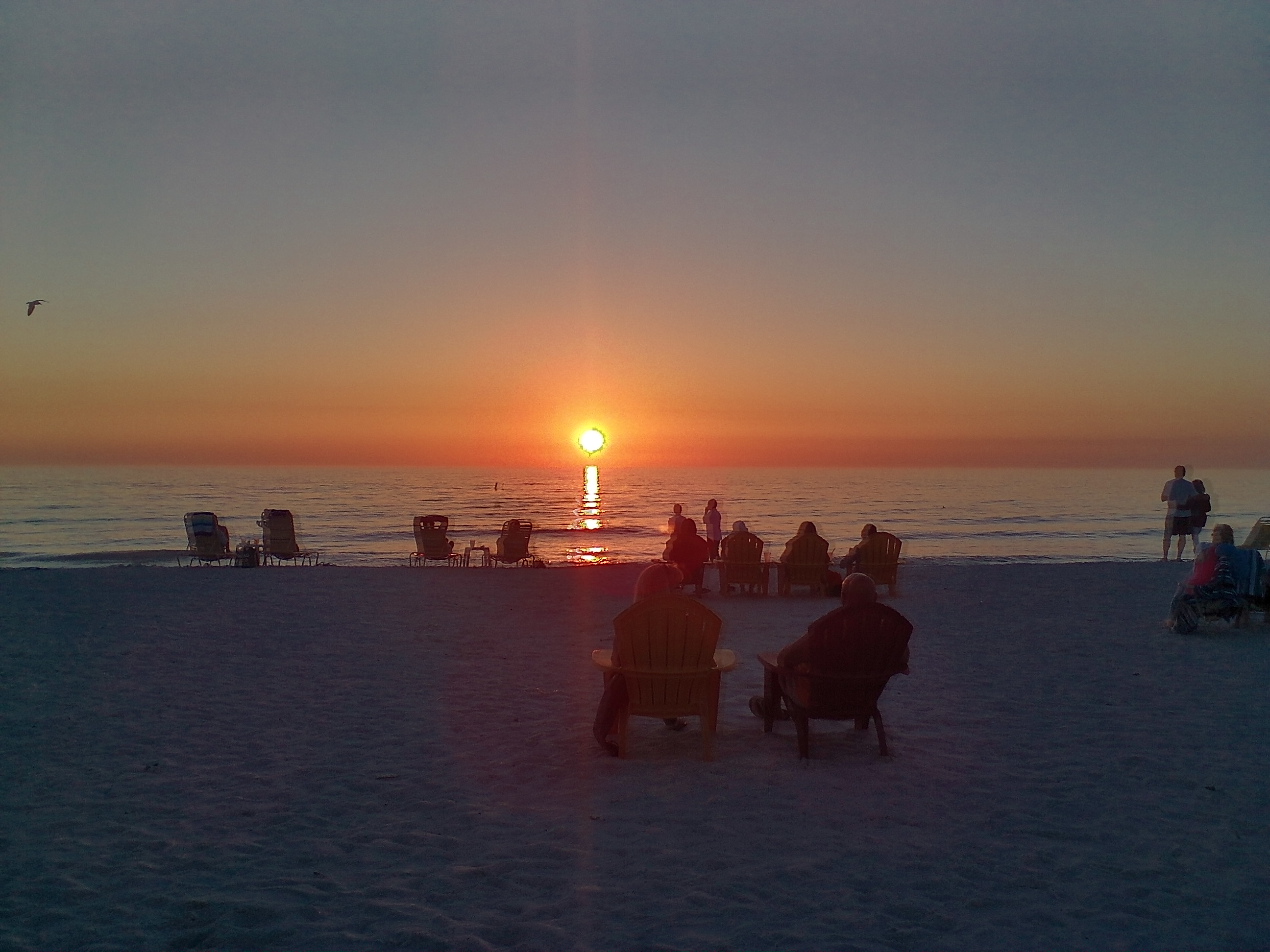
St. Pete’s beach
I was especially fond of the huge empty living room downstairs. It was more like a ballroom. I could easily imagine couples dancing down there deep below much like in the Disneyland haunted house. The professional wrestler Undertaker lived in the house at one time. So, goes the legend.
The reason we ended up in that upscale quarter without street lights instead of Daytona Beach were last-minute arrangements. The big houses that didn’t fill with reservations were cheaper and went fast like hot potatoes.
The renter hunk Rob didn’t realize that he advertised the wrong house.
“It’s not ready,” he said. “We’re fixing it up.”
Croissant & Co. in Venice
“Don’t beat yourself up for that,” my daughter Emma said.
“The question is how much furniture will there be in the house,” Rob stated honestly.
Obviously, my daughter was looking for an adventure in St. Pete.
We had a backup plan if Rob didn’t come up with any furniture. We would split up our party and do necessary tasks. Emma and I planned to hit the local Goodwill to buy some beds. The other half would go and buy groceries.
We flew into Orlando already an hour late. On board the plane we demanded a free beer to make up for the lost hour. It was dark in an unknown city with yet a rental car to pick up.
Somehow, we made it St. Pete and knocked on Rob’s door around 11 p.m. But, first a couple of dogs came charging at us.
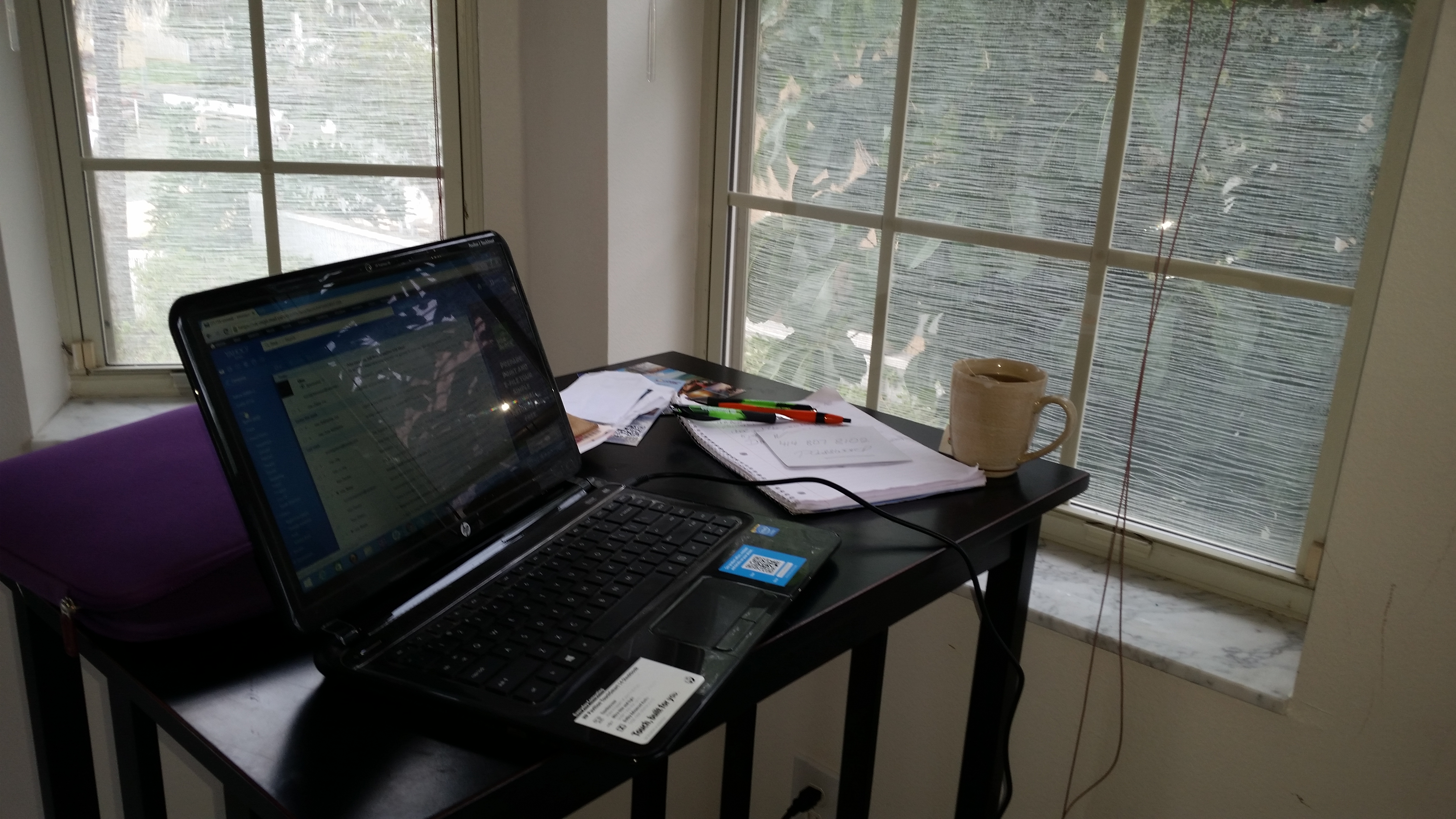
My writing station in St. Petersburg.
Rob was a fun character who made money on supplements before big box stores took over. Some really funky supplements remained in the kitchen cabinets. They looked very home-made with scribbling on them.
The kitchen even had plenty of utensils, and again it was very big more like a cafeteria. All seven of us could dance in there if we wanted to.
I like big things but everything in that blue house was enormous, even the Tupperware containers.
I don’t know if Rob was feeling guilty for our lodging or if he was just a nice guy.
Shooting pool outside.
“Hey, you can spend tomorrow at my other house,” he said. “It’s closer to the beach and the guests are not coming until later in the week.”
So, the search for the other house ensued after a breakfast standing up. The last time I ate my food standing up was as a student at cheap buffets in Brno, Czech Republic.
St. Pete, a city full of surprises, has a Gulf Blvd. and a W. Gulf Blvd.
Finally, we found it. It was much smaller, but it did have furniture. Moreover, it had a leftover box of low carb Ultra Michelob with only 95 calories per bottle.
“We earned it, we deserve it,” were shouts of joy.
We devoured the beer shooting pool outside. Then we grilled Johnsonville brats in the outdoors kitchen.
“You call that beer?” Rob laughed when we apologized. “I am from Wisconsin, that’s water.”
Venice, FL- During my annual writer’s retreats in Florida, I always come across a gem; it may be an artist, a breeze, scuba divers or sand castle builders, students of architecture on their spring break. This is my seventh year on the Gulf Coast exploring treasures washed on sea, and not just seashells.
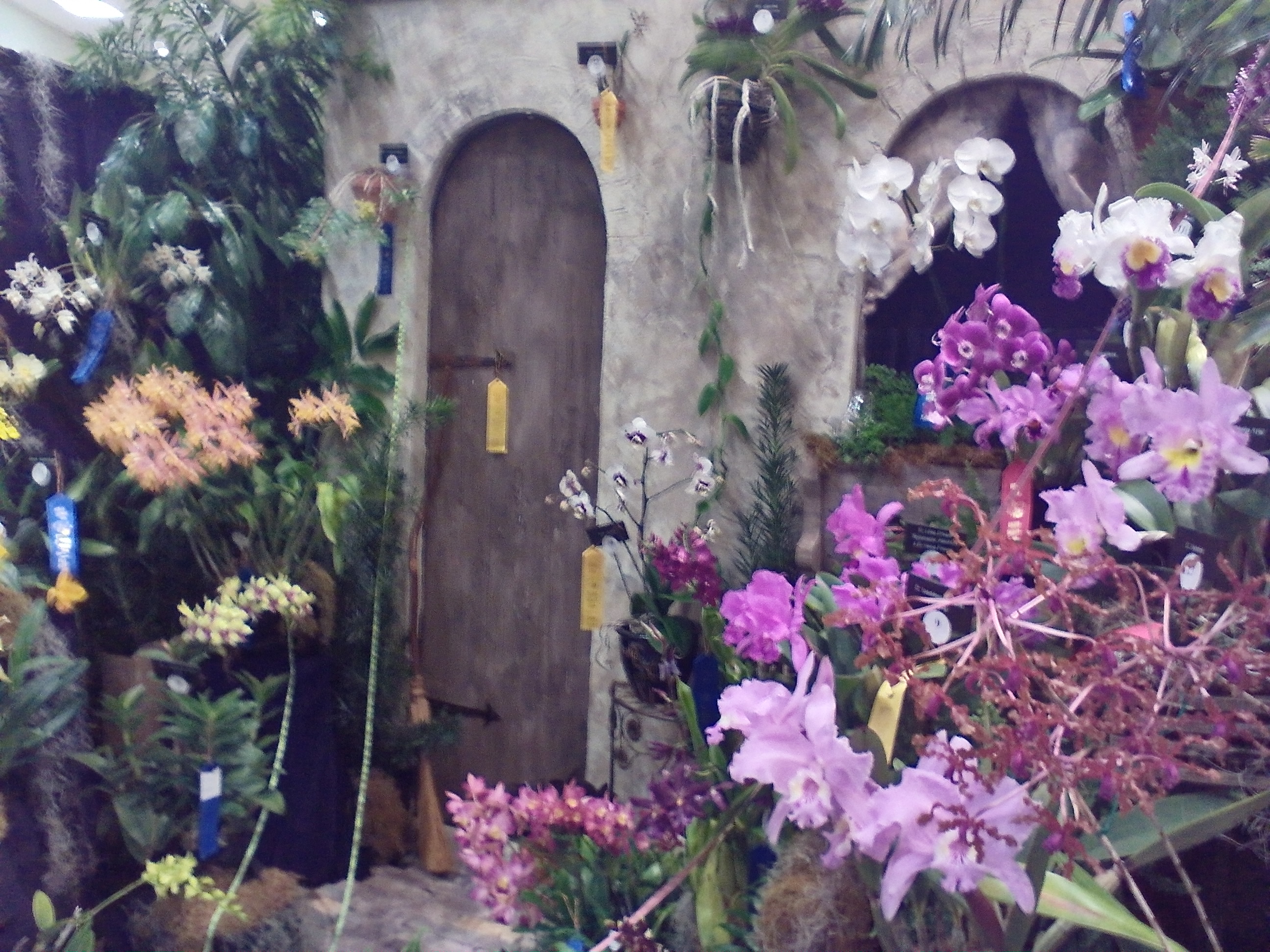
This year, it was the “50 Shades of Orchids” show organized by the Venice Area Orchid Society, (VAOS) an affiliate of the American Orchid Society.
50 Shades of Orchids in Venice
The VAOS is celebrating 50 years of existence. The show is put on at the height of the tourist season and it attracts 3,500 visitors annually and premier growers.
Perhaps, the most striking upon entering the exhibit hall at the Venice Community Center was the unexpected fragrance filtering in from all corners. I am a lifelong lover and collector of these enigmatic flowers. To see the orchids displayed in all colors, shades, hybrids and varieties was stunning.
The orchid stems and spikes were bending under the weight of the magnificent blooms.
Some of the blooms looked more like the faces of animals, birds or butterflies. Others resembled spiders. The large tricolor blooms resembled the Iris or more common flowers home to northern climate zones.
Each display consisted of 50 different orchids, hybrids and species wrapped in palm greens.
VAOS exhibit at the show.
The participating growers offered most orchids for sale including the ones adaptable to various climates like the cattleya, Phalaenopsis, oncidium and vanda hybrids.
My favorite is the ornate Phal that comes in many different shades. I have a nice collection of these that has grown over the years on my windowsills facing the soft northern light.
Years of experimenting have rendered valuable experience. Unlike popular belief the flower doesn’t like a lot of water, only two ounces per week, less in winter. The orchid does not like to have her feet wet. The pots with orchids should be emptied.
Catleya orchid.
There are more than 25,000 orchid species in existence. However, many are being destroyed by poaching and deforestation.
The orchid society promotes conservation and educational projects. It has grown into one of the largest and most active orchid societies in Florida.
The magical orchid can also be found at the Marie Selby gardens in Sarasota, Fl.
















 authoremmapalova