Fallasburg, MI- I love everything about the Fallasburg Park and the village: the Covered Bridge, the Flat River, the house museums. It truly takes you back in time, away from the fear of technology, from the fear of the unknown and much more.
I live approximately three miles away from the park and I do social media marketing for the Fallasburg Historical Society. The park and the village serve as a major venue for many regional events such as the Fallasburg Festival for the Arts in the fall, the Fallasburg Bazaar and the upcoming Christmas in Fallasburg traditional party on Dec. 12 at 6 p.m. Please join us to celebrate the season.
This is my latest status update. I am working with clients on social media marketing for the Fallasburg Historical Society (FHS), CJ Aunt Jarmilka’s Desserts and potential clients the Lowell Women’s Club and Americas Voices.
My first order of business was to set up a blog for them on the WordPress platform using different themes.
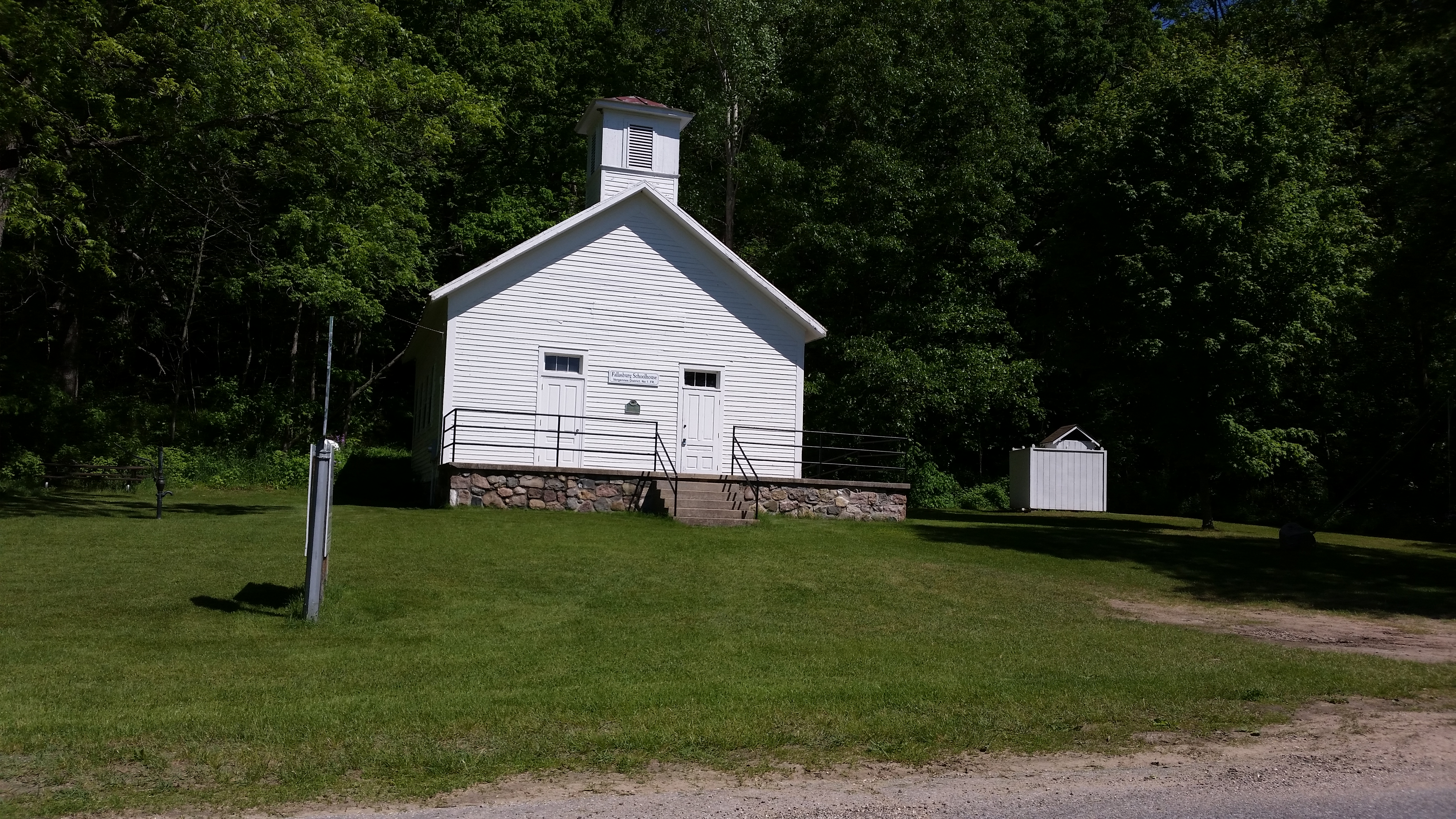
One room school house, a museum for the Fallasburg Historical Society
For FHS I designed “Fallasburg Today.” Then came social media, that is establishing accounts on Facebook and twitter. And posting on regular basis.
I think the posting on regular basis is the biggest challenge, but also the key to success.
I do have to say that the folks at FHS embraced the social media project 100 percent. They gave me materials, photos and maps.
Map of Fallasburg bazaar vendors.
I don’t think one can do it alone with the quantity of data. I appreciate all their help and their efforts to raise awareness of the 1830s Fallasburg village with modern means.
The village will hold its first annual bazaar on Sept. 19 & 20 from 10 a.m. to 5 p.m. Come and explore. A big deal for the village is the annual Christmas party. Stay tuned for details.
I am looking forward to creating the October newsletters and bringing on board the Lowell Women’s Club and Americas Voices.
Lowell, MI- The “Fallasburg Today” blog with the Lovecraft theme by Andre Nores is up and running with three initial posts, a Facebook page plug-in and a twitter page @fallasburg.
The Fallasburg Historical Society (FHS) is celebrating 50 years of historic preservation of the 1830s village founded by John Fallass.
I consider it a sign of times that the quaint pioneer village nestled in the northeast corner of Kent County is now marketed on WordPress and on social media.
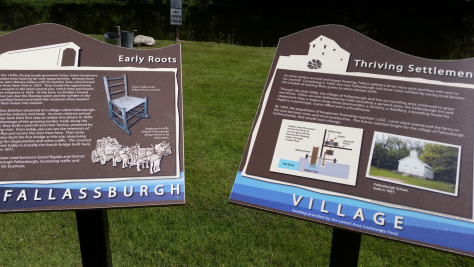
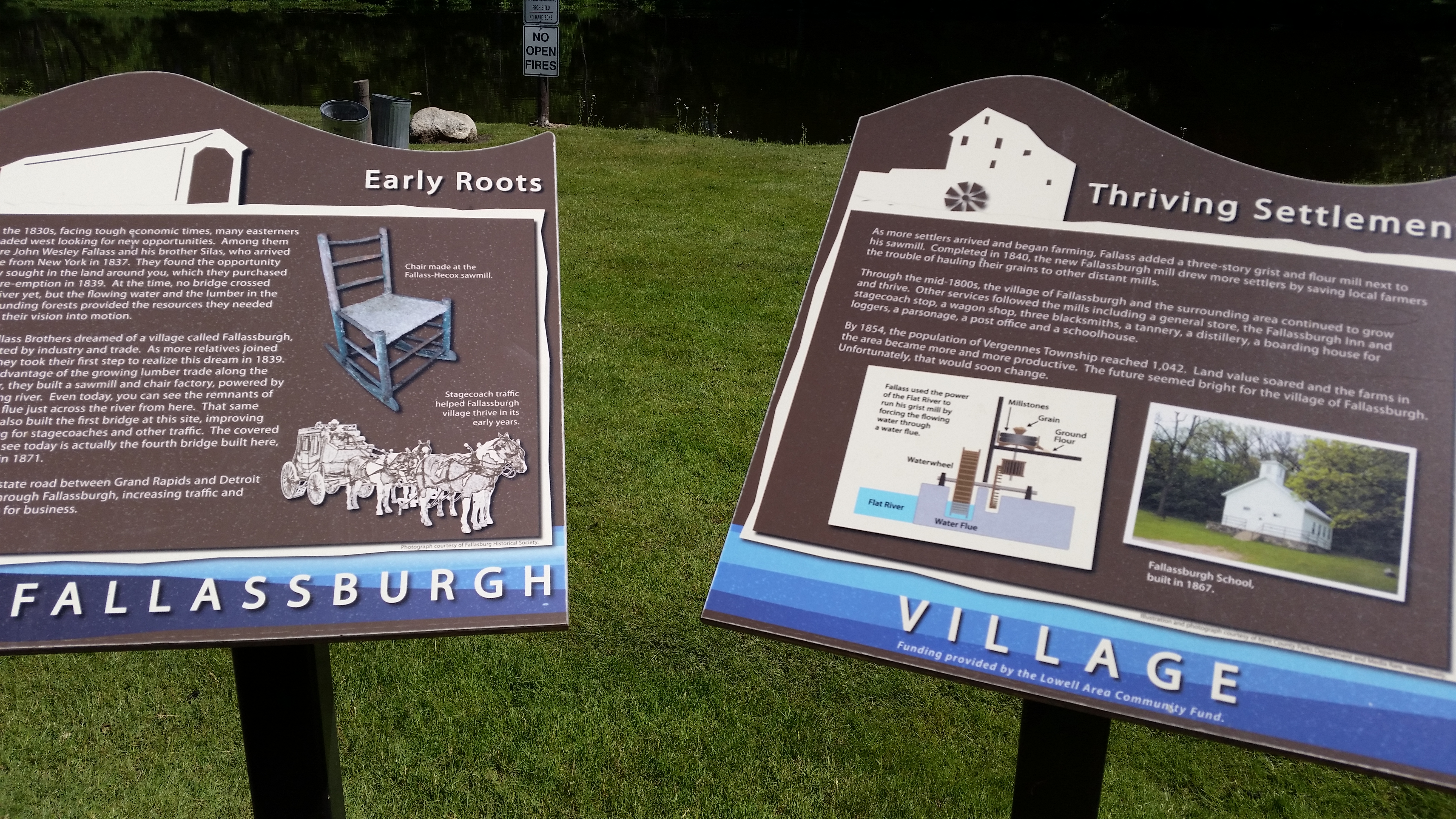
New interpretive markers at the Fallasburg village.
In an effort to bring awareness to the village, the FHS president Ken Tamke and the board asked me for some technology help last week.
I share their passion and love for history and I live three miles away from the Fallasburg Park. And I love nature at its best.
I embraced the project with fervor because of the dates of the upcoming First Annual Village Bazaar set for Sept. 19 and Sept. 20.
We had a good start: a Facebook page with 245 likes, a website www.fallasburg.org and the excitement of all.
I did the twitter first and then the blog and connected all that. My unifying theme has been “bringing the village alive” so the name “Fallasburg Today.”
Today, there is a live discussion on Facebook and twitter is starting up. People and other organizations like Whites Bridge Historical Society are interested in what is happening at the Fallasburg village.
They are sharing the posts on Facebook and tweeting.
I am a deep believer in progress otherwise we would still be walking and living in caves.
Fallasburg Historical Society celebrates 50th anniversary
By Emma Palova
EW Emma’s Writings
Fallsburg, MI- It was Leonora Tower of the Vergennes Cooperative Club who started the West Central Michigan Society in 1965 with Norton Avery. The goal was historical preservation of the Fallasburg village once a thriving village six miles north of Lowell.
In 1990, the society changed its name to Fallasburg Historical Society, but the same people remained involved. However, the society became bankrupt in 2006.
That’s when the current president Ken Tamke got involved.
One room school house, a museum for the Fallasburg Historical Society
“I grew up around there, visited my grandparents all the time,” Tamke said.
His grandparents, the Bradshaws owned the farm on Fallasburg Point, which is now a fancy development.
His passion for historical preservation runs in the family. His dad was involved in history preservation in Berkeley.
“I am a big fan of history,” he said. “Historic preservation is in my blood.”
So, basically, according to Tamke, the modern society grew out of a group of women from the Vergennes Cooperative Club. Also involved was Marcia Wilcox, former Vergennes Township supervisor.
Fallass House 1842
I love the place,” Tamke said. “It’s a little hamlet that became forgotten.”
Truly, time has stopped here. The village sleeps its dream from the thriving 1800s.
Founded in the 1830’s by John Wesley Fallass. The village of Fallasburg includes 42 acres along the banks of the Flat River, the covered bridge, a schoolhouse, village cemetery, the Fallasburg Historical Museum and the Misner House Museum, the Tower House and a barn.
The Fallasburg Historical Society exists for preservation, restoration, and maintenance of the Fallasburg Village, as well as encouraging public support through education, sharing information, and hosting many events.
Misner House 1850
The one room schoolhouse is actually the museum where artifacts are stored. It is open during summer time on Sundays from 2 p.m. to 4 p.m.
The Fallasburg village was listed as the Fallasburg Historical District in the National Register of Historic Place on March 31, 1999.
“There were initial problems with that, but it did go through and doesn’t give restrictions,” said Tamke. “We’re very proud of this. It’s an honorary designation.”
Now, the biggest project ahead of the society is fixing up the Tower House to give it a new purpose since it sits close to the North Country Trail.
The society received a grant from the Lowell Community Fund and Lowell Cable Fund. The roof got fixed. But, the kitchen, the bathroom and other interior spaces need to be restored. The financial estimate from 1999 to fix the Tower House was $100,000.
Charming annual Christmas party in the Fallasburg village
“We want to repurpose the building as a meeting place for the historical society, the Lowell Area Historical Museum and other community groups,” he said. “We hosted weddings at the school.”
The quaint village attracts couples to tie the knot, and hundreds of photographers. The restored barn was the Barn of the Year 2014. Also new markers have been placed by the covered bridge. It is the goal to have unified markers by each building.
Fallasburg events include the first and brand new village bazaar will be held during the Fallasburg Fall Festival in September, along with the vintage baseball tournament with the Flats team in the field.
Tents with crafts, food and arts will be set up by the Misner and Tower houses. All buildings will be open for self-guided tours without any admission.
“We’re not affiliated with the arts council, it will be a concurrent event, ” Tamke said.
Barn of the year 2014
The biggest event is the Covered Bridge Bike Tour coming on July 12. However, the most charming event is the annual Christmas party at the school.
Ladies from the society bring delicious dishes to pass, there is music and Tamke serves up wine and grog .
There are 120 members in the historical society and most actively participate in various events.
Kids from the area schools take field trips to the village. Addie Abel and Mike Organek actually went to the school give tours.
Interpretative markers in the Fallas village
“Parents come with them and gain appreciation for the village,” said Tamke. “It hasn’t been touched by the pass of progress.”
Lowell Area Historical Museum director Lisa Plank will help with mentoring of an intern to help scan and catalogue documents and artifacts.
“We want to raise public awareness because you can forget that it’s out there,” Tamke said. “It’s a hidden gem.”
It’s also a great place to visit for Father’s Day and get some unforgettable photos and to escape from technology.
Lowell, MI – Under the gloomy skies Monday, the people of Lowell honored the 629 veterans who found their final resting place at the Oakwood Cemetery.
Groomed to the nines by Don DeYong and the crew, the lovely cemetery whispered its own stories of 151 Civil War veterans. The Boy Scouts marked each veteran’s grave with a star and a flag.
Emotional Dave Thompson was the featured speaker for the ceremony located by a monument to the unknown soldier.
Memorial Day 2015
“I like to think the rain are tears,” he said. “This is the first time in many years it is like this.”
Oakwood Cemetery
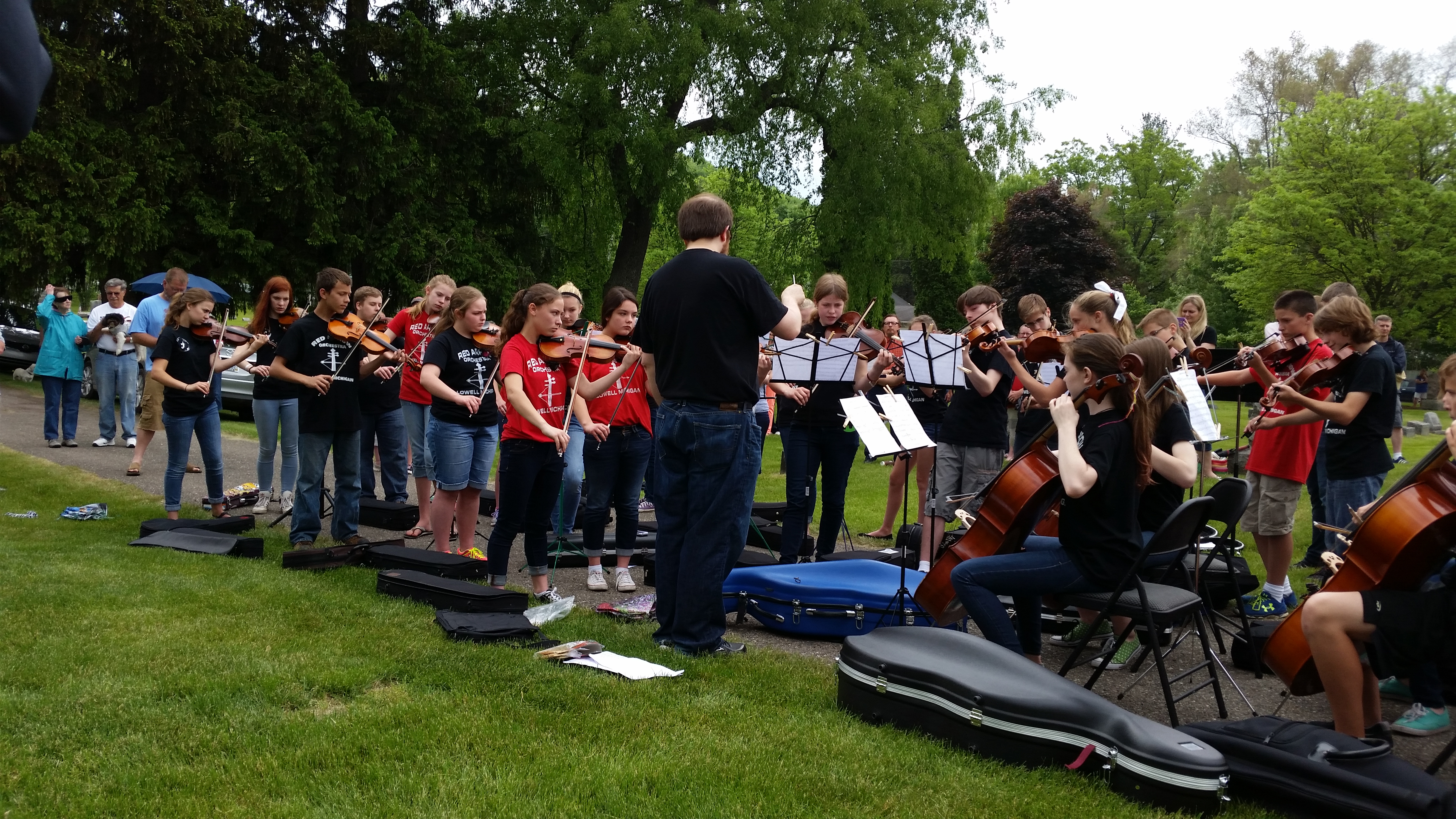
Thompson introduced the beautiful strings band of Wendy Tinney. As the violins played their sad tunes and rain sprinkled, many people were wiping off tears from their faces.
The strings band.
The only two remaining veterans from WW II laid flowers to the monument, much like representatives from the local organizations.
The flags were flying half staff in the wind that was blowing from the south.
“We have 29 new veterans here at the cemetery,” said tearful Thompson.
Mayor Jim Hodges also laid flowers to the monument.
Memorial Day 2015
Even though it started to rain heavily, people stood there in the rain under the umbrellas listening to Thompson hauntingly name the deceased veterans followed by a bell ring for each.
We thank you all veterans for our freedoms and your sacrifices.
Writer Sarah Harmon participates in the Lincoln Tribute
Note: The article is Sarah Harmon’s account of the two-day Lincoln Tribute held in Washington D.C. at the Ford’s Theatre this week.
“The Lincoln Tribute was definitely unforgettable and I am so glad I was able to experience it,” Harmon said.
EW writer Sarah Harmon in Paris
Lincoln Tribute, 150 anniversary
By Sarah Harmon
EW Emma’s Writings
“Lincoln shot! Condition considered hopeless!” Those were the headlines around America this very week 150 years ago. The night of April 14, 1865 changed the history of the United States forever when actor and Confederate sympathizer John Wilkes Booth jumped down onto the stage of Ford’s Theatre screaming “Sic semper tyrannus!” (Thus always to tyrants) and ran out the back of the theater after shooting President Abraham Lincoln. What should have been a time of celebration that after four long years, the Civil War was finally over immediately became a nation in mourning for one of its greatest leaders.
The box with the flag on the upper right of the theater picture is where Lincoln was sitting when he was shot.
The National Parks Service, Ford’s Theatre, and Civil War buffs everywhere have eagerly anticipated the commemoration of such an important turning point in American history. Museums throughout the D.C. held special exhibits in honor of the 150th anniversary of the Civil War and Lincoln assassination, and Ford’s Theatre in particular opened a special exhibit featuring artifacts that had not been all brought together under that roof since April 1865. Notable elements include the Derringer pistol Booth used as well as the bullet itself. They also show the objects that were in Lincoln’s pockets that fateful night. Perhaps most interesting of those was a Confederate five dollar bill.
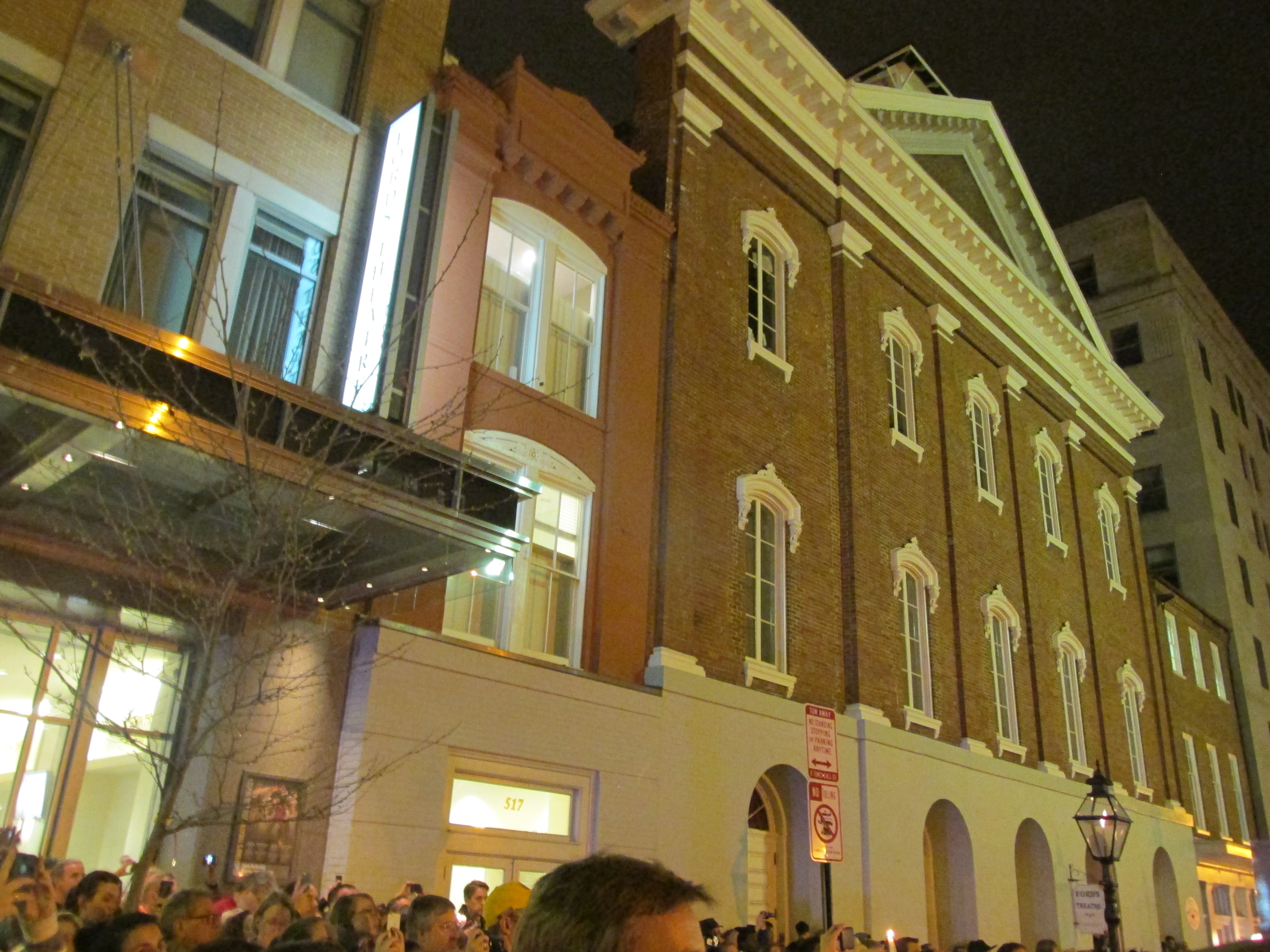
The brick and white building is Ford’s Theatre during the vigil.
The two-day Lincoln Tribute at Ford’s Theatre began at 8 am on the fourteenth with a behind the scenes tour of the theater and concluded with the 7:30 pm performance of the play “Freedom’s Song: Abraham Lincoln and the Civil War” on the fifteenth. In addition to the usual spring performances of the one-act play “One Destiny” and the Detective McDevitt walking tour, several dozen living historians were on the sidewalks of Ford’s and across the street at the Petersen House, where Lincoln died. Both days included a panel discussion of the parallels between Lincoln and his legacy in America and the life and legacy of South African president Nelson Mandela. From 9pm to 10:15, the moment Booth fired the gun, a special performance, “Now He Belongs to the Ages,” took place on the stage at Ford’s. It was streamed live online and at the National Portrait Gallery for those unable to get tickets inside the theater.
The show began with music and an introduction by Colin Powell. Actors and historians shared words spoken by and about Lincoln including some criticism from his peers to remind us that the sixteenth president was not just the perfect marble version in the Lincoln Memorial, but was a man with faults who loved to laugh, tell stories, and be a loving father to his sons as well as his nation.
Crowds during the candlelight vigil on Tenth Street with Petersen House on the left and Ford’s Theatre on the right at 11:30 p.m.
The sound and emotion of 150 years of history reverberated through the theater and Portrait Gallery courtyard as the audience joined in singing “Amazing Grace,” a song Abraham knew and loved. Following the presentation, most participated in a candlelight vigil in honor of the president’s last hours, which he spent laying diagonally on a too small bed in Petersen House.
Actors in the crowds would suddenly burst into a monologue, telling of how she saw Booth just that afternoon or how he held Lincoln’s head while the doctor examined him. It truly felt almost as if the entire block traveled back in time a century and a half. The vigil and tours of the theater continued throughout the night and culminated in a ceremonial wreath laying outside Petersen House at 7:22 am, the moment Lincoln passed from life into history.
Artifacts at the Ford’s Theatre on display.
John Wilkes Booth wanted to be a hero for the Confederate cause by murdering the American President. He hoped that it would help to erase the name of the Great Emancipator from time, but in fact, his actions did more than any other single episode to make sure that the name of Abraham Lincoln would echo forever throughout the ages.
Editor’s note: This is the third and last part of the 25th anniversary mini-series “25 Years in the USA.” I published the first part on Dec. 22 on the exact date of the anniversary of our arrival to the country. I published the third part on Jan. 9th.
By Emma Palova
EW Emma’s Writings
Lowell, MI- While working the second shift at Meijer, I wrote the most short stories in the morning. People working at the store inspired me.
My husband Ludek and I started looking for land to build a house in 1994. We found Lowell, a small town in West Michigan. And as we drove past the old Parnell store in the middle of nowhere, I knew I was going to like it here.
25th anniversary of arrival to the USA
“This is it,” Ludek said as he showed me the land. He built the house himself with a few contractors.
Hometown Lowell before the annual Riverwalk Festival.
Once we had the house, I started feeling more at home. I got us two dogs. On top of the job at the store, I started selling real estate for Westdale. That was a unique experience where I met my business guru late Larry Combs.
“How many sales phone calls did you make today?” he asked.
I lied when I said 50. I actually made more like seven or 10.
“Call whenever you can even if you’re waiting for food in a restaurant,” he advised. “I want to write a book “My friend Emma.”
I wrote for American Lists, a Czech newspaper based in NYC.
Larry never wrote the book. He got Parkinson’s disease and shot himself.
I was homesick and every Christmas drove to the Gerald Ford International Airport in Grand Rapids to watch the planes take off.
I was still writing for American Lists, former Czechoslovak Newsweek based in New York City out of nostalgia. I was writing in Czech. The paper does not exist anymore.
The first time I went back to Czech Republic was in 2000, and that was a mistake. It brought back memories and old friends even though it was a different country than the one I had left.
I vowed never to go back again.
“Never say never,” told me the store manager.
During my five-year long stint with the Ionia Sentinel-Standard, I finished my first book “Fire on Water” about the communist experience in 2001. Because as they say, “There are three big experiences in this world: communist, capitalist and catholic. I lived them all.
I dropped the store and real estate and commuted daily 80 miles one way to Plainwell to first paid journalism job for Kaechele Publications. It was a one man office with zero training. But, the editor was an avid photographer and taught me how to shoot.
“Don’t go into a shoot with a mindset,” he said. “Keep your options open.”
Since, 2000 I went back home three times.
“Why do you still call it home?” asked my daughter Emma. “You have lived longer in the USA than in Czech.”
Yes, I will always call it home. That’s where I was born, got married, graduated from Technical University of Brno and had our two children.
And that’s just the tip of an iceberg. I am now penning our family immigration story in “Greenwich Meridian where East meets west.”
It’s like reliving all those years since 1968 when the former Soviet Army occupied Czechoslovakia. Sometimes I struggle with it, sometimes I cry, and sometimes I laugh. Just like in life.
About the featured photo: Ice sculptures in hometown Lowell, Michigan 2014












 authoremmapalova