Category Archives: Uncategorized
Reviews from Americans of Czech origins
Bannister, MI – The following are reviews of the “Greenwich Meridian Memoir” by Thomas and Diane Bradley of Bannister, MI. Both are Michigan State Polka Music Hall of Fame 2012 inductees. They are one of the founders of the Czechoslovak Harvest Festival known as “Dozinky” held annually in Bannister on the first Sunday in August. The Bradleys are members of the Western Fraternal Life Association, Lodge Michigan #225.

Czech folk dances during the Harvest Festival in Bannister.
Thomas Bradley
The “Greenwich Meridian Memoir” truly brought back memories of my trip with my grandmother to Czechoslovakia in 1960 when I was 17. We stayed with friends in one of those grey apartment buildings. The deal was you couldn’t talk to people without them looking around to make sure no one was listening. I knew part of what was going on but this book really provided insight as to what was truly taking place.
Also, I knew about the Charter 77 movement and this memoir helped to provide a bigger picture as to what was taking place. This book provided a great amount of insight into how the citizens of Czechoslovakia actually lived and their struggles during that period of communism. It was truly very informative.
Diane Bradley
I’ve heard many stories from my grandparents and elders in the family who immigrated to the United States from Czechoslovakia. Arriving between 1900 and 1910; they were from a different time and socioeconomic background.
I so enjoyed reading Emma’s family’s journey to a new and safer life. Their memories were of a new era and different circumstances. “Greenwich Meridian Memoir” truly broadened my perspective of immigrants’ lives and challenges.
About the feature photo: This is the cover of the “Greenwich Meridian Memoir” designed by graphic artist Jeanne Boss of Rockford.

Autumn Virtual Book Festival
Follow author readings and interviews during the month of October.
The festival features a variety of authors with diverse genres.
https://www.facebook.com/events/2364082633894256
Copyright (c)2020. Emma Blogs, LLC. All rights reserved.
Blue Moon October
A spooky Blue Moon month, a spooky year
By Emma Palova
Lowell, MI – Welcome “Blue Moon” October with your two full moons, pumpkins, candy, spooky characters, books, Girls Nites Out in ugly sweaters and paranormal investigations in the Fallasburg historic village.

The month started off strong with a full moon, a storm in the morning and a brainstorming session in the afternoon with Anthony Mora Communications for the PR of my upcoming book “Greenwich Meridian Memoir” about our family immigration saga from former Czechoslovakia to the USA. As part of the project, they will also be marketing my book no. 2 that never fully reached the market because of covid-19. Thank you Anthony and Lindsey for your work on this project.
While most of the events have been cancelled, the nature hasn’t canceled her show in hues of oranges, browns and yellows. Moreover, today was the Feast of the Guardian Angels. We each have a guardian angel, and this year we need more than one. As I drove to the Vergennes Township hall to pick up my absentee ballot, I noticed a sign on Bailey: “Jesus 2020.”


Shifting Sands: Secrets is book no.2 in the Shifting Sands short stories series.
Just 10 minutes before the brainstorming session, I found out from my Romanian poet/publisher friend Valeriu Dg Barbu, that my book has already been translated into Italian. Thank you Valeriu. Valeriu owns a small publishing house Editura Minela at:

Autumn Virtual Book Festival

The Autumn Virtual Book Festival organized by Pages Promotions LLC, with authors and books extraordinaire started yesterday.
Follow us all month long on
Plus my husband and I celebrate our wedding anniversary on Oct. 7. Happy anniversary Ludek.

The socially distant Lowell Harvest Celebration will take place on Main Street on Oct. 10. This year, the Lowell Area Chamber of Commerce is taking over the Larkin’s Chili Cook-Off. The chamber will be selling $5 wristbands for chili tastings at different venues.
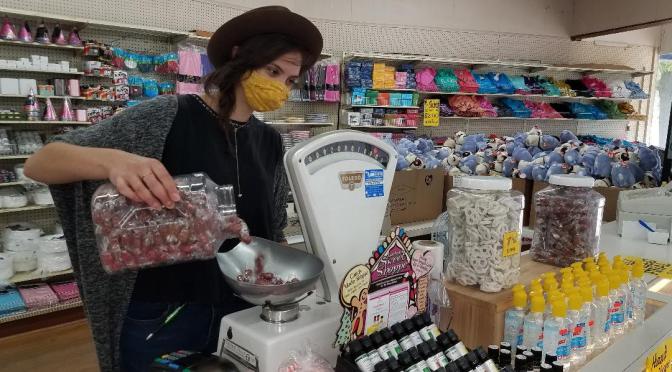
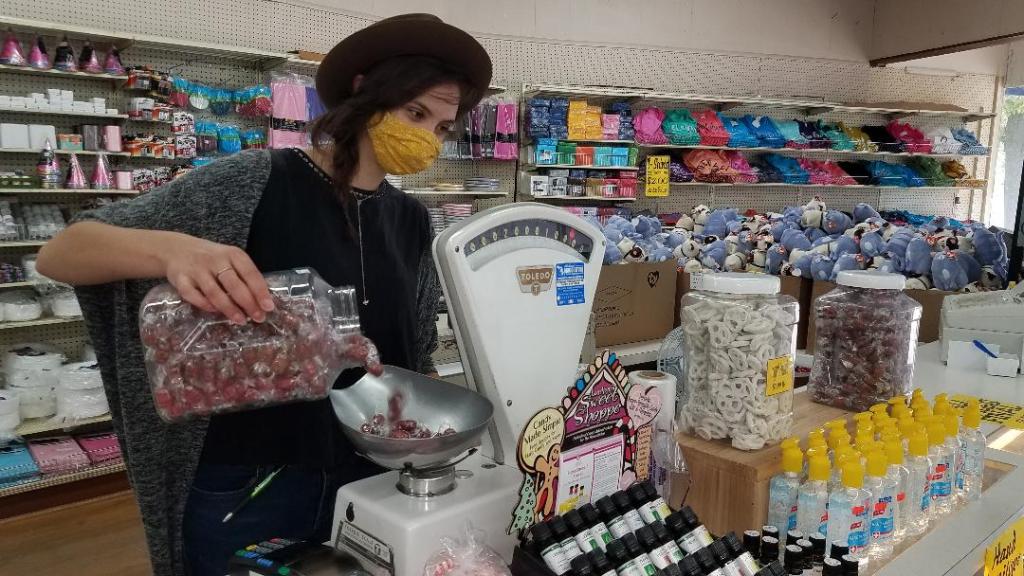
Featured photo: Hannah Rietzema at the Springrove Variety, that is now closed.
Copyright (c)2020. Emma Blogs, LLC. All rights reserved.
Reviews from Goodreads
October Virtual Book Festival
Happy Labor Day weekend

A nice morning view from my studio window.
I decided to organize myself on this lovely Sunday.
We spent a great day on the beach yesterday in Pentwater. I was delighted to see a gentleman reading on his Kindle just eight feet away from us, while I was making notes in my $1 notepad from the Dollar store.
Pointing at my blue hardcover notebook and in the gentleman’s direction, I said to my husband: “It’s a long road from the writing in this notebook to that kindle on the beach, but it can be done.”
Check your inboxes for my brand new author’s enewsletter hot off the presses with a sample chapter from the upcoming “Greenwich Meridian Memoir. “
The link to 2020 Book launch campaign is:
https://mailchi.mp/fbc779395f9f/memoir-ready-to-launch-in-october
Copyright (c) 2020. Emma Blogs, LLC. All rights reserved.
A piece of Americana fades away
Springrove Variety in Lowell closes down
By Emma Palova
Lowell, MI- He calls himself the shopkeeper standing behind the candy counter with an old-fashioned scale on original maple wood floors. Mike Sprenger, owner of Springrove Variety at the corner of Main Street and Riverside, is more than a business owner. He was like a sentinel on the Flat River keeping watch over the old times amidst the hustle and bustle of the growing town. Moreover, he created a family atmosphere inside the store modeled after his former employer, D&C. The store will close by the end of September, as Sprenger retires.
With one of a few nickel & dime stores remaining in Michigan, and mushrooming box stores, the competition was relentless. But so was the community support over the years.
“We’ve outlived our niche gradually over the 15 years,” he said. “The community support kept it going, that’s what makes it hard to close it.”

Sprenger opened Springrove Variety in its current location in January of 1995 after working for D&C stores. He started as a stock boy sweeping and washing floors. He worked himself up to district manager overseeing nine stores. When D&C closed in 1993, he started looking for a job. At first, he wanted to work for a wholesaler, but on second thought, he’d rather buy goods from one.
Based on a tip from a wholesaler, Sprenger found out about the store in Lowell. He moved from Walled Lake on the east side of the state to the Lowell area.
“I loved it,” he said.
Sprenger combined part of his last name and his partner’s Bob Grove to create the name, Springrove. Grove never entered the partnership.
He admits that the first years were challenging in finding connections with the wholesalers, building up the stock and finding out what the town wants. His consistent answer to customer requests was:
“I will get it,” he always said.
Then came the box stores and departments like clothes and shoes at Springrove Variety had to go. Instead the focus was on crafts and toys.
“We had to readjust our niche,” he said. “We could react faster than big stores to fad items like Beanie Babies, spinners and Cabbage Patch.”
To buy items at a competitive price from the wholesalers, Sprenger had to buy direct.
“It’s very hard to do,” he said. “What saved us, we had six stores, we brought in the goods and split it up.”
He grew the number of stores to six experiencing the highest peak in sales and employees in 2005 with 60 employees. He would split the inventory between the six stores located in Greenville, Trenton, Allegan, Wyoming, Marysville and Owosso.
As the wholesalers started going away, so did the dime stores. There used to be a dime store in every small town. Out of the seven wholesalers in the USA, there remains one variety distributor.
And then came COVID-19 in March of 2020 and everything deemed not necessary was shut down. It was precisely the crafts, the yarns and the puzzles that saved the store from going prematurely out.
“We were deemed essential,” Sprenger said. “People went nuts locked in their homes. We were here to supply the needs for COVID. It was a blessing for them and for us. We had wanted they wanted.”
However, Sprenger made the decision to retire long before COVID-19.
Like many dime store owners, Sprenger, 67, started feeling the age. He was working six days a week, 12 hours a day.
“It was time for me to slow down,” he said. “We did what we had to do.”
The loyal customers will miss the store as much as they will miss the shopkeeper. Most of them used to come into the store as kids and buy candy.
Sprenger could tell many stories from the store, but he related a heart-warming one. Back in his office, he pulled out of a box, a framed one- dollar bill with a yellow sticky note dated 2010 that said:
“I have lived in Lowell for 70 years. When I was 7 or 8, I took 1 or 2 penny balloons. It keeps bothering me. Please accept payment. Thank you.”
Call it a testimony or a souvenir to his five decades long career in the variety business. Also, his employees loved to work there; from the longest employee Linda Hamp to Hannah Ritsema.
“In a small town, Linda would know their names,” he said. “Everybody knew everybody.”
Jean Jeltema of Lowell recalls going to the store to buy fried peanuts and “Evening in Paris” perfume.
“They had stuff in flask squares and wooden floors,” she said. “Mike would always make an effort to get it for you.”
Dawn Ruegsegger of Saranac bought all her yarns at Springrove for kids and grandkids’ blankets.
“When my kids were young, I did cross-stitch blankets and got string and squares from there and did pillow cases,” she said. “So sorry it will be gone.”
But for most customers, the missing part will be the shopkeeper himself.
“I will miss talking to Mike and his family the most,” Ruegsegger said.
Three weeks ago, Jeltema bought elastic at the store for a mask at 20 percent off.
“I will miss him,” she said. “He was always right there, ready to help you. Mike knew his customers.”
Sprenger will serve on the Lowell Area Chamber of Commerce Board and work for 20 hours overseeing the remaining stores in Marysville and Owosso for three more years.
He regrets that the grandchildren won’t know the atmosphere of the dime stores.
“That’s what we’re losing when the barber shops, the soda fountains and the dime stores go out,” he said.
Copyright (c) 2020. Emma Blogs, LLC. All rights reserved.

Excerpt: Living in socialism
Note: Following is an excerpt from the chapter: “Living in socialism” from my upcoming book- the “Greenwich Meridian Memoir” set for Oct. 16 release on Amazon.
The book is available for preorder in Kindle format at:
Continued: Living in socialism
Workplace ethic
Among interesting events at workplaces were birthday celebrations. Ludek described a typical birthday celebration at the ZPS factory as follows; the celebrant typically brought in a bottle of plum brandy and poured everyone from each department a shot. After work, the celebration continued at the local pubs. There was a lot of birthday celebrations throughout the years. Milestone celebrations like turning 50, meant you got a fancy watch from the company and a huge party at a local pub.
During national holidays, the workers would steal anything and take it through the gates without being checked because there were so many of them leaving at once for the parades. So, the parades were known as the “March of Thieves.” The parades actually started inside the factory. On the matter of overtime, one individual was selected to punch for all those, who waited somewhere outside the factory behind the gates.
The major employers in Zlin were Svit and ZPS; their huge factory complex spanned several blocks in town. The shoe factory Svit was built during the Thomas Bata era in the 1920s. It employed 10,000 workers. ZPS was the mechanical engineering factory, employing also 10,000. Women worked mainly in Svit, while men worked in ZPS.
Our hometown Zlin grew thanks to the T & A Bata firm, when Tomas Bata was known as the “king of shoes” (aka the creator) of the global shoe emporium with export of shoes to the U.S. as well. The growth and success of the Bata firm were attributed to a large army contract with the Austro-Hungarian Empire to make shoes for 5,200 soldiers.
The core of city Zlin boasts the fine architecture of functionalism; the former Bata headquarters building “Twenty-one”, a high-rise reaching 254 feet and the 11- story Hotel Moscow. During socialism, the shoe empire became the factory Svit, where people worked for generations. In socialism, the economy was planned accordingly into one-year plans, five-year plans and ten-year plans. All the companies had to strive to fulfill the plans to the highest percentage for bonuses at the end of the year. The bulletin boards at the different workplaces boasted the percentages of fulfilled plans.
The average salary for women working in the Svit factory was 1,200 crowns; for men working in ZPS it was 2,500 to 3,000. Since, the work or the economy didn’t fluctuate, most jobs were for the entire lifetime until retirement.
“You couldn’t quit,” said Ludek.
According to Ludek, even if you wanted to quit, you couldn’t because you had to give a six-months’ notice, and the other employer wouldn’t wait for you that long. On top of that you had to sign a work contract.
Of course, there was no such thing as calling in sick; you had to have a doctor’s script that you are sick. Not showing up for work was called American time off or “A.” If you did it for three days in a row, the police would come looking for you.
If you were sick and stayed at home, you had to be in bed, because regular controls at home were conducted if you’re not cheating.
“They even touched the bed and the sheets if they were still warm,” Ludek said.
You got paid when you were sick, and the health care was free for all. There was a universal one crown fee per prescription of any drug. People often ask, if there was a shortage of drugs and doctors.
Of course, there was a shortage of everything due to the planned economy. You got used to most of the shortages, but some were just plain embarrassing like not enough toilet paper, hygiene products or laundry detergent.
On the other hand, there were fashionable dresses in nice boutiques, pretty shoes and fancy parties with crystal glasses and porcelain plates. The paradox of not having basic needs fulfilled sharply contrasted with the opulence of the fashion, including home fashions inside homes and apartments. People took good care of their homes and took pride in their furniture. Women spent days polishing the furniture, and usually you couldn’t touch anything when visiting a friend. You were designated a safe spot to sit, where you didn’t jeopardize the cleanliness and the order of things.
Most products were made in Czechoslovakia or they were imported from the countries of the RVHP–the association of mutual economic assistance such as Poland, Hungary, Bulgaria, East Germany, Romania and U.S.S.R.
You spent a lot of time waiting around for anything and everything, quite often it was in lines for desirable items like bananas or meat.
The grocery stores were small with only a limited amount of shopping baskets, so you waited for the shopping basket, then you waited inside the store at the dairy counter for cheese, and at the meat counter for meat, you waited in a line for the cash register and you waited for the bus to get home with your groceries. There you waited for the elevator to get to your apartment.
The waiting game was due to everything being small and crowded. Overall, the country is small with only 15.6 million population and territory of 127,875 square feet kilometers in the heart of Europe. So, it has traditionally been the target of other countries in their quest for more land.
At the time, there were only savings banks in the country except for the Commerce Bank in Prague that handled international currency. People got paid money not checks. Most of them kept the money at home and spent it for basic needs.
Nothing was really cheap; you pretty much spent your entire paycheck on life’s necessities. And that definitely discounted gas and telephone bills, because only a few people had cars or telephones. However, most people were not in debt, and mortgages didn’t exist. Something as bizarre as a non-returnable loan for newlyweds existed.
It wasn’t uncommon for several generations to live in one house. But the main housing was in apartments, that were affordable, but you had to wait for them for years. There were cheaper state-owned apartments and apartments owned by the cooperatives. Condos did not exist. This set-up was due to the socialist ownership of everything from apartments to land, factories and businesses that happened through the major nationalizations in 1945 and 1948. Houses were individually owned and usually built by owners. Most houses were in villages, and these included very old buildings like my Grandfather Joseph’s beloved “Ranch” at 111 Krnovska in Vizovice. The old buildings known as “chalupas” required extensive repair challenged by the shortage of contractors and materials.
However, the main source of the communist pride were the apartment mega complexes such as the “Southern Slopes” housing 20,000 people, which was one- fourth of the population of Zlin. These were dubbed as the “building successes of socialism.” The country is sprinkled with these and their inhabitants are happy to live in them. Most of them have been turned into condos.
Atheism vs Religion
A friend asked me to write about religion in socialist Czechoslovakia. Under the Marxism Leninism philosophy, the official religion was atheism–not believing in God or any deity. The church properties were confiscated along with everything else and belonged to the state as of 1945. But people went to churches, some secretly, others openly.
There were only two denominations that my husband Ludek and I could recall: Catholic and Evangelic. Each town had one church only, and the Catholic church usually prevailed depending on the region. The churches were old dating back to feudalism and the reigning aristocracy. It took 150 years to build the new Saint Mary’s Church in Stipa due to a pause in construction because of the 1620 war. The construction started under Albrecht of Valdstejn in 1615 and ended in 1765 thanks to the money from the Rottal countess.
The clear and present danger of going to church mainly impacted teachers and career-oriented people who were trying to get ahead of the game. It impacted both my father and my aunt.
Although we come from a large Catholic family, Aunt Martha, who was a teacher in Stipa, could not go to church. Many years later, I found out that she was a member of the Old Catholic Church, a chapter located inside a chapel at the cemetery across the street from the Konecny house and that she had sponsored a priest in his education. The chapel is also a tomb of the count Seilern family, a major influence in the Stipa region with the Chateau Lesna.
One of the major wars, the Thirty Years’ War, in Czech history was over religion. What I consider the sad part of modern history is that after the downfall of socialism in Czechoslovakia, the majority of people never returned back to the church.
However, a big tradition centered around the parishes stayed intact–that is the feast of the saints. In our case, it was the Feast of Saint Mary in Stipa on September 8 th. These feasts or pilgrimages were much like homecomings or festivals in the U.S. The entire families gathered for the feasts for an opulent celebration of the saints. In many cases, animals were butchered and ladies baked the famous pastry-kolache or strudels. A dance took place at the local hall on the night before the feast. This often turned into a brawl, as people got drunk on plum brandy. Carnival rides always came into town with booths and paper roses. I loved these paper colorful crepe roses on wires; I wish I had kept at least one. Other booths sold gingerbread hearts of all sizes and for all hearts.
In traditional pilgrimage places like Hostyn, the booths were set up all the time and opened for the season with hundreds of religious and non-religious items: rosaries, prayer books, medallions and miniature statues. Pilgrims streamed to Hostyn, both on foot and on buses.
That brings me to celebrations of holidays in general. In villages like Stipa, many people raised animals for meat: rabbits, pigs, geese, turkeys, chickens and ducks. That was the primary source of meat for the holidays. Most meat was roasted, served with creamy sauces or sauerkraut and dumplings. Pork and chicken were often fried into wiener schnitzel. Salads or vegetables were not as common as in the U.S. due to their year-round shortage. Soups were always a part of a holiday meal, mostly beef or chicken. In some households, people made their own noodles.
As a rule, women baked for the weekends all sorts of pastries, some for breakfast. But there was also an abundance of pastries on the market; at the bakeries, coffee shops, patisseries and in grocery stores. The patisseries served as cafes with people hanging around in them sipping coffee or wine, while enjoying a “rakvicka.” This dessert has always fascinated me; the pastry is in the form of a small coffin filled with delicious cream and ornately decorated on the top with whirls and swirls of more cream.
Among the most famous baked goods, were “rohliky” or bread rolls in the shape of a crescent, some even came with poppy seeds. And bread was always good, whether baked round with hard crust or in loaves in small or large bakeries.
Other homemade products included sausages and smoked meat. The butchering of the family pig usually took place in winter and before the holidays, so there was plenty of meat on the table. Socialism with its chronic lack of basic goods, drove the need for self-sufficiency specifically in the villages and craftsmanship as well. People were forced to be more creative in many different ways.
Many households in villages and towns were self-sufficient with everything homemade or home grown. National artist Joseph Lada illustrated the traditional festivities: The Feast of St. Nicholas on Dec. 6, the butchering of the family pig in the yard with onlookers, Christmas by the tall tiled stoves, autumn campfires with fire-roasted potatoes and summer fun by the ponds with the willows.
The Czech Republic enjoys four distinct seasons: mild winters, early springs, hot summers and moderate autumns. The seasons are conducive to year-round vacationing and recreation. In the socialist era, people traveled freely between the two parts of the country, Czech and Slovak republics. Slovakia is the home to the Tatra Mountains. Travel to other socialist countries was also accommodated.
Recreation was encouraged and subsidized through the membership in the Revolutionary Union Movement (ROH) at the workplaces. Some companies had their own recreation centers in the mountains like Jelenovska. We visited this center in the mid-1980s. Much fancier centers belonged to the leaders of the Communist Party.
The ultimate goal of socialism aimed at the health and well-being of the population and the country. However, that was contradicted by the inability to act freely in many aspects such as travel to the Western countries and overall limitations of freedom of speech and press.
The press of the socialist era represented the opinions and views of tolerated organizations. The number one daily newspaper was “The Red Truth,” the official paper of the Communist Party gloated with the party philosophy and the party news. Then, there was a version for the younger generation called, “The Young Front,” which was a little bit less biased. After that, came “The People News” and “The Agricultural News.” All of them were heavily censored for content and inuendo. Journalists had to go to political schools, which were hard to get into.
The older generation like my grandpa read “The People News” only on Sunday afternoons. At the Gymnasium Zlin, we had to recite the news in the “Citizens’ Education” class. The news was usually about the president sending a congratulatory letter to another leader of a socialist country or about the regular Communist Party conventions.
The TV wasn’t much better, if not worse. There was one TV station–The Czechoslovak TV run by the government. The books and magazines were less censored. I sent a lot of novels to mom Ella.
EVENTS
I will be participating in October Virtual Book Fest with a reading on Oct. 5 and an interview on Oct. 23.
Zoom Reading:October 5, 2020 @ 7pm – 7:30pm
Zoom Interview:October 23, 2020 @ 7pm – 8pm
Copyright (c) 2020. Emma Blogs, LLC. All rights reserved.
The Fishmonger
In search of inspiration: The Fishmonger

Hooked on wild caught fish from the Straits of Mackinac at the local farmer’s markets
By Emma Palova
Ada, MI- It all started with a conversation, a few coolers and a canopy. And a brand-new enterprise was born 10 years ago.
But it took six generations of commercial fishermen, a passion for the great outdoors “Grizzly Adams” style and healthy eating to make the old trade work in new times.
Dan Sodini of DMS is the fishmonger, while his brother-in-law Jamie Massey is the fisherman of the Great Lakes based in St. Ignace.
“An opportunity to begin a small family business of taking wild caught fish from the U.P. to Farmer’s Markets around the state of Michigan came 10 years ago,” said Sodini. “We are celebrating our 10th year anniversary.”
The first market was in Midland, home to the DMS fish crew.

“We could drive to the U.P., stay with the family and get up and go to the market on Saturday morning,” Sodini said.
Rarely, do you see fish peddled at the local Farmer’s Markets. It’s mostly local home-grown produce spruced up sometimes with cheeses, breads and preserves.
“Some people were delighted and bought fish,” said Sodini. “Others took a little time.”
But after Sodini explained where, when and how the fish was caught, it all became easier.
“Once people tried it, they became customers and they’re still buying fish today,” he said.
Speaking about being hooked on genuine wild-caught fish taste.

I discovered the U.P. fish booth three years ago based on a word-of-mouth tip from a friend who lives in Ada.
“You know, there’s this fishmonger at the Ada Market and the fish is excellent,” she said. “Try it.”
Being a fish lover ever since I can remember buying trout at the “Rybena” deli in former Czechoslovakia, I didn’t need to be persuaded.
What first struck me unlike buying fresh fish at the stores, was that there was no fish smell around the booth. Everything was immaculately clean, and then Dan’s impeccable knowledge about the fish, surpassed the fish markets of Marseille.
The first time I bought all three “catch of the day”- fresh walleye, whitefish and trout, smoked whitefish and whitefish dip. It was an unsurpassed feast.
This is my favorite recipe: whitefish or trout baked with pesto and lemon. Bake for 20 minute at 350 F or on the grill.
In the beginning, DMS offered only fresh fillets which included: whitefish, walleye, lake trout, king salmon, yellow perch and smelt.
Over the 10 years, DMS has expanded both the fish selection and the farmer’s market locations.
“Once we realized that we could make a go of it, we expanded into other markets,” Sodini said.
DMS added smoked whitefish, lake trout, salmon and Laker bites, which are skinless, boneless bite size pieces of small lake trout.
“We have added our very popular smoked fish pate made with the fisherman’s recipe,” he said.
The pates include: smoked whitefish, salmon and lake trout. Brand new this year are the Laker patties, a fish burger or fish cake made with fresh lake trout, that can be grilled or sautéed in a skillet.
From August through mid- October, DMS has annual wild king salmon sales of the whole fish which averages 10 to 12 pounds. This yields approximately half to ¾ of the fish.
“With COVID we have experienced both a decrease and an increase in sales,” said Sodini.
The decrease mainly because of people not wanting to come out and take safety precautions while the increase is in direct access to wild caught fish vs. the limited high-priced beef and other meat products.
“From the beginning people chose fish for high quality protein,” Sodini said.
Backed by 150 years of Massey commercial fishing on the Great Lakes, Sodini, a former treatment specialist, found himself in the fish business. During his unemployment, the family had this important conversation about starting a fish distribution business.
“We are honored and proud to be a part of the family legacy,” he said. “We appreciate and are thankful for all of our customers from all over the state of Michigan, who are our friends and have supported us for 10 years.”
“I love what I do! Having the opportunity to offer wild caught fresh and smoked Great Lakes fish at local Farmers Markets is a privilege and a lot of work,” Mega said. But what I enjoy most is meeting each new customer and the friends that we have made over the 10 years we have been going to markets.”
On a Saturday market, DMS sells an average of 150 to 200 pounds of fish.
“The kids grew up on farmer’s markets,” he said. “They get paid and they love it.”
Today, the DMS crew does 12 markets a week:
Ada market on Tuesdays
Brighton on Saturday
East Lansing on Sunday
Flint on Saturdays
Frankenmuth on Wednesday
Holland on Wed.& Sat.
Meridian on Saturdays
Midland on Wed. & Sat.
Mt. Clemens on Sat.
Mt. Pleasant on Thursday
Northville on Thursday
The selling season is from May to October. From November through April, DMS does winter fish drops at the farmer’s markets locations.
“People can order frozen fish products biweekly or monthly,” Sodini said. “We deliver to each of the farmer’s markets location. The fisherman vacuum packs, blast freezes all of our fish fillets.”
You can find individual farmer’s locations at the DMS Facebook page at:
https://www.facebook.com/dmsfishsupply
Next in the series “In search of Inspiration”- Springrove Variety, a piece of Americana gone from the US landscape
Copyright (c) 2020. Emma Blogs, LLC. All rights reserved.
Happy Birthday mom
Mom Ella turns 83 today
By Emma Palova
Big Rapids, MI – My mother, Ella Konecny, turns 83 on this beautiful summer day. We celebrated her birthday yesterday in Big Rapids with a cookout on the deck. Mom always puts on a feast: juicy ribs, coleslaw, mashed potatoes and her famous nutty cake roll, all preceded by a traditional Czech platter of cheese, salami and home-made pickles Znojmo style.

Together with my father Vaclav, they’ve been living in this small university town, home to Ferris State University, for more than four decades.
Mom was born Drabkova in former communist Czechoslovakia on Aug. 23, 1937 in Zlin to a working class family. My grandparents Anna and Joseph Drabek worked hard to get mom into the university so she could become the future pharmacist.
My mother has inspired the memoir Greenwich Meridian, where East meets west about the family immigration saga. She didn’t want to leave the communist country after the Soviet invasion on the night of August 20-21 in 1968.
The memoir, slated for Oct. 16, 2020 publication is dedicated to both of my parents because they have always inspired me both in hard and good times with their dedication and perseverance. It is available now on preorder on Amazon at:
Their journey from the Moravian hilly villages of Vizovice and Stipa to Big Rapids in Michigan was tumultuous with many twists and turns.
Some of the milestones included the 1973 return to hardline Czechoslovakia from Texas, and then the escape back into the New World for my dad in 1976. Mom joined him in 1980.
Dad landed the math professor job at the Ferris State University, and that finally anchored them permanently in their new home.
To this day, mom says she loved her bio lab technician job also at the university.
Their true story has also inspired my fiction in my first Shifting Sands Short Stories book. “The Temptation of Martin Duggan” contains some bits and pieces from the early years of immigration.
I wrote that story shortly after my immigration to the USA in 1989. When I compare some of the elements of the short story to the memoir, I consider them Visceral in character, coming from a gut feeling.
The main character in the story is professor Martin Duggan obsessed with his own quest for perfection.
May you both enjoy many more years of love, good health and optimism. Thank you for all your love and support.
For chapters “Prague Spring, Part I” & “Prague Spring, Part II from the memoir click on the following links:
Prague Spring, 1968 Part I
Prague Spring, 1968 Part II
Copyright (c) 2020. Emma Blogs, LLC. All rights reserved.