I am looking forward to 2014 in spite of its rocky & freezing start. My goals include exponential growth of followers of my online journal. I plan on diversifying the content with other writers’ and bloggers’ work.
So far, it has been a one –woman show as far as articles, photography and design.
I am using this opportunity to invite other writers and artists to display their work in my journal. I would like to add fiction and poetry. I am a firm believer in creative partnerships.I want to add more advertising, both local and national, as well as a store page in an effort to monetize the site. And tie everything close with social media.
I am also happy about completing career profiles on Google+ and Elance in search of freelance work.
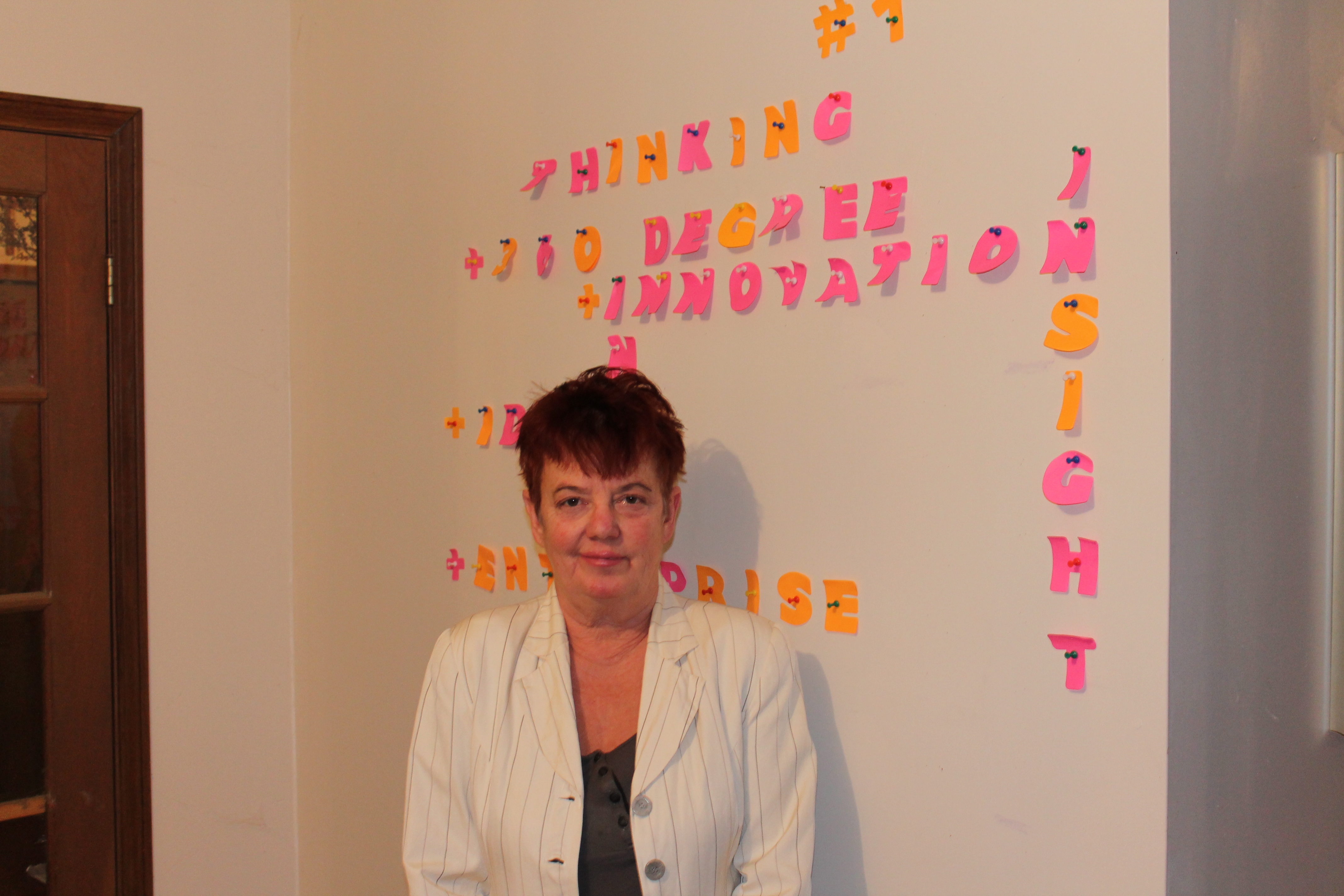
Emma Palova
I will continue writing the memoir “Greenwich Meridian” which is the principal reason behind the journal. The family immigration saga is evolving as we speak and taking its own course.
My parents Ella&Vaclav Konecny, who started the saga in mid 60s are spending the winters in Venice,Fl. Dad will be celebrating his 80th birthday this July. My daughter Emma appears to be staying in France for a while. My brother Vas lives in Paris, Michigan and my son Jake lives in Kalamazoo.
I am targeting the book for next year’s publication before Mother’s Day since it is dedicated to mom. I am aiming for traditional publication as of right now.
I also have plenty of short stories awaiting publication collected in “Glass Flowers” anthology. I wrote most of these when I was working at the Meijer store in the nineties in Grand Rapids.
So, it will be a busy new year. I celebrated my one-year anniversary with WordPress on Jan.15. Looking forward to another one.
Gold Sunday is the first or last Sunday before Christmas which this year falls on Dec. 22nd. By then all good housewives have their baking & cleaning done according to Czech traditions. Before I started writing and blogging, I could make up to 10 different Christmas desserts including vanilla crescents, “nutty baskets” and chocolate “rohlicky.”
As a student at the prep school Gymnasium Zlin, we would even get time off for baking.
“As long as you’re keeping the tradition going,” Russian professor Chudarkova used to say.
That reminds me of the opening day of the hunting season here in Michigan where some schools get the day off. I always baked long into the night, and I filled the pastries on Christmas Eve. Back in the old Czechoslovakia I had no helpers. Many years later in the USA my son Jake assisted me by rolling out the dough from a stool.
Silver Sunday is time to get your Christmas fish for the big evening feast known as “Bountiful Eve.” The town squares in Czech Republic are home to merchants with live carp. For years during Christmases of the past I went shopping for the best carp ever sporting a net bag, so the carp can breathe.
The Christmas fish in Czech Republic is carp
Large wooden vats carried carp from ponds in Southern Bohemia. The carp trade dates back to feudalism and to the royals who granted the rights to do this. I regret that I’ve never seen the carp ponds in Bohemia.
The live carp and then the butchering of it on the morning of Dec. 24 have been the subject of stories, legends, photographs and calendars much like the day and the evening itself.
Christmas magic in Steamboat junction combines sound, light and motion
I will remember one carp story forever. One family got so attached to their live carp, they could not bring themselves to butcher it. They took the live carp to a nearby brook and released it into the shallow water. The carp probably didn’t make it, but they felt better and from then on they purchased fish filets from a well-know store in hometown Zlin and that was Rybena.
I think my uncle John butchered ours. The family usually placed the carp in a tub. One year I put the tub outside on the apartment balcony. When I went to check on the fish next day, it almost froze. I had to smash the ice and resuscitate the fish.
So, the Christmas Eve menu in Czech Republic consists of breaded fried filet of carp, potato salad, mushroom or fish soup and the great cookies.
In later years, non-carp lovers substituted the carp for salmon filets. We stick to the tradition and I buy either cod or other white meat fish. I make tons of potato salad with our own pickles.
One entire chapter in my memoir “Greenwich Meridian” is dedicated to me living and working in Lowell. It is called Emma Palova, the journalist, because my daughter is also Emma Palova.
My husband Ludek Pala and I moved to Lowell in August 1995 after living in Kentwood suburb for two years. Today many people still ask me, “How did you end up in Lowell?”
“It’s a long story,” I answer as we sit down and talk.
That afternoon, long time ago, we drove down Main Street. I immediately fell in love with the charming town. There was no Riverwalk yet, and the Lowell chamber office was located in the tiny white building on the east end of town. I remember talking to director Liz about basic information on the town.
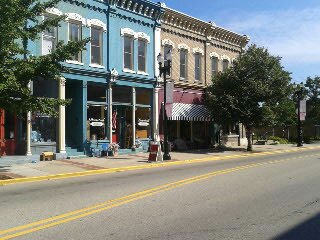
A colorful block on Main Street Lowell.
We walked into Reedy Realty looking for land or a house. The Flat River Antique Mall still existed with its soda fountain, and instead of Flat River Grill there was the Swan Café. I think Flat River Cottage was located inside what is today Main Street Inn.
I liked everything about the town including Springrove Variety and Larkin’s had their saloon door, way before the modern street façade. There was a Spartan grocery store Family Fare just big enough not to get lost in it.
We found land in Vergennes Township and built a house not far from the Franciscan Sisters. I think at the time the railroad track was to a certain point functional.
My son Jakub Pala went through the Lowell Area Schools system from Cherry Creek Elementary third grade to Lowell High School. He played soccer under coach Pala.
Lowell is home to a strong arts organization Lowell Arts! Artsy knits wrap around trees.
When my mother Ella first visited with us, she said Lowell looked like a “cowboy village” recalling her first years in the country in Hawkins, Texas in the seventies.
“This looks like Hawkins,” she said.
I liked the quaint atmosphere of the Lowell area mainly the Fallasburg Park with the Covered Bridge and the historic pioneer village. I visited the one-room school-house many times, most recently right before my trip to Europe.
My love for history led me to explore many area historical sites and museums. Compared to Europe, the museums and history here in North America are young. One of the oldest bridges in Prague made of stone, the Judita bridge, dates back to the sixth century.
I’ve seen and written about all the special exhibits at the Lowell Area Historical Museum including the most recent and my favorite one, “Real to Reel.” The town has a strong Lowell Arts! Organization that puts on many exhibits, concerts, and theatre plays by Thebes Players.
Riverwalk with Showboat with pedestrian area on the banks of the Flat River. Summer concerts are held here.
The Englehardt Library was constructed with monies from the Englehardt Foundation. Overall Lowell has been fortunate to have many philanthropists and community foundations that enable community projects such as farmland preservation.
I love the architecture of Main Street, its buildings with front and back door entrances. That differs a lot from European towns and villages. Most European towns and cities have squares with fountains or monuments in the middle. The buildings usually have one front entrance only.
However, there are some similarities such as many towns and cities in Czech Republic also sit on the banks of rivers. They do have promenades like Lowell has the Riverwalk. Prague even has several botels on the Moldau River, which are floating hotels on boats, but they don’t have a Showboat.
Old Lowell Area Chamber of Commerce office on the east end of town.
Today, as I took photos for my EW Emma’s Writings online journal blog to show my friends in Czech Republic how we live, I realized how fortunate we are.
From the artsy knit work on the trees in downtown to the Pink Arrow Pride t-shirts, the town has a lot to offer. We patronize all the businesses in Lowell. My future daughter-in-law Maranda will have a baby shower at the beautifully renovated Main Street Inn.
I love the Summer Sizzlin’ concerts, just as much as I love the Fallasburg Fall Festival, (FFF) for the Arts, FallFest Bluegrass, Harvest Celebration along with the chili cook-off. The annual chili-cook off held in mid October is sponsored by Larkin’s Pub, and it is held on Broadway Street in downtown Lowell. Larkin’s Other Place serves as a venue for plays by Thebes Players complete with a dinner theatre. For this year’s repertoire and schedule for FFF check out the Lowell Arts! website at http://www.lowellartsmi.org
Larkin’s pub on Main Street in Lowell.
Each year in September, the town decks its lampposts with posters and pink shirts commemorating cancer victims. The Pink Arrow Pride project in its sixth year raises money and forces against cancer. For the annual football game that takes place at the Red Arrow Stadium both the players and spectators dress in pink. This year the game will be held on Sept. 6.
It is the hottest game of the season.
Lowell is surrounded by two townships, Lowell Township and Vergennes Township. The high school along with the stadium is located in Vergennes Township.
Other area attractions include a charming bed & breakfast Witt’s Inn in Vergennes Township completely remodeled with a wedding barn. It is nestled among apple orchards.
Red Arrow Stadium at the Lowell High School annually hosts the Pink Arrow Pride.
Among the many interesting churches in the area is the Vergennes United Methodist Church constructed in 1864. It is a simple clapboard structure reminiscent of buildings on the East Coast.
The Franciscan Life Process Center holds their annual Harpfest in mid August. The center has many arts and music programs.
And then of course, there are the trail systems and Lowell is at their crossroads. I can’t wait to hit the Frederick Meijer Flat River Trail from our place to town or to Belding.
The trails have been in the making for the last six to 10 years due to hard work of many involved volunteers.
So, as the years roll by, I learn to appreciate more and more the rural area we live in with all that it has to offer.
American Midwest has its own magic with the changing seasons, and the changing colors. When I first found out that people do color tours here, I could not believe it. Now, I understand the beauty of the American fall.
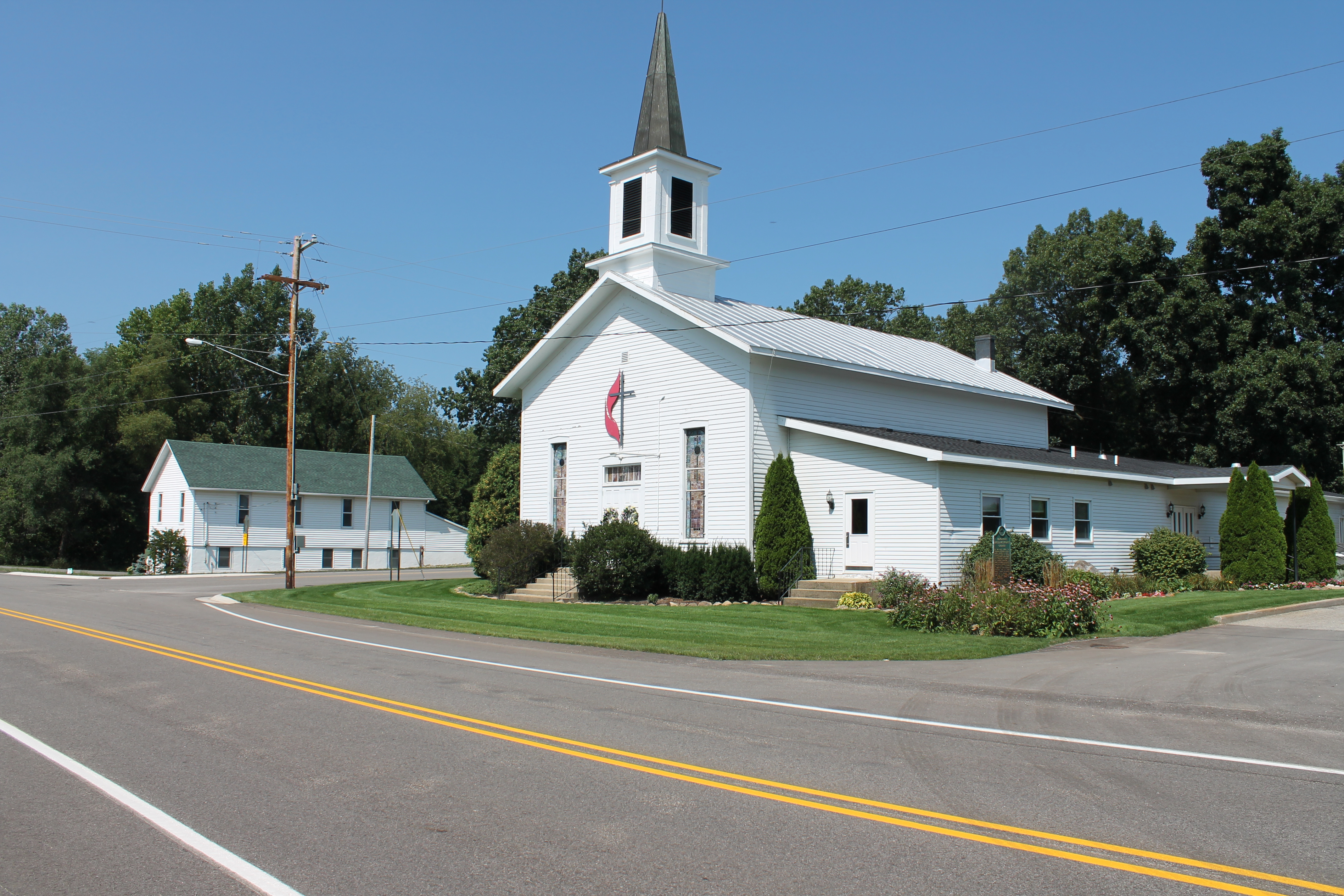
Vergennes United Methodist Church and Vergennes Township hall. Vergennes & Lowell townships surround the city of Lowell.
Precincts 1&2 vote at the township hall and at the Methodist Church.
The Main Street Inn is the only hotel in Lowell with seven rooms and large meeting spaces. It has been totally remodeled in the space where a hotel used to stand.
Main Street Inn in downtown Lowell overlooking the Flat River.
My memoir “Greenwich Meridian” is dedicated to my mother Ella Konecny of Big Rapids, Michigan. Out of the entire immigration saga now spanning three generations, she was the one who suffered the most.
“Immigration is a lot of give and take,” she said in an interview in Venice, Florida in March.
Today as she celebrates her birthday, I recall the summer birthdays of the past in former Czechoslovakia.
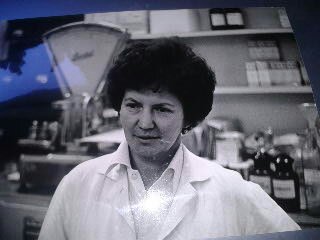
Mom Ella Konecny, the pharmacist
After returning from Texas on presidential amnesty in 1973, we spent most of our summers at grandparents’ old house in Vizovice, region of Moravia in former Czechoslovakia. The old dwelling was called a “chalupa,” which has nothing to do with the Mexican food.
“I wanted to go home to help my parents,” mom said in a recent interview in Venice, Florida.
Mom was working at the pharmacy in then regional capital Gottwaldov, while we were living the country life on the streets of Vizovice. At first I wasn’t too happy about leaving behind the American lifestyle.
Back in Hawkins, we had a car, dad’s university apartment, and a coke machine at the Junior High School. I was not only on the honor roll, but also on the basketball and softball teams. I played the flute at the time, later the clarinet. I had dreams bigger than this world.
Coming home to Czechoslovakia was a shock. I couldn’t name the months of the year in Czech, I didn’t know Russian or geometry. So, mom entered me in seventh grade instead of eighth at the local 1st through 9th grade school in Stipa.
The school in comparison to USA was very strict and a lot more difficult. I thought the teachers were mean. My aunt and classroom teacher Martha had to tutor me.
But, I loved the summer breaks at the “chalupa” in Vizovice. By the time August rolled around, I was tanned and hardened by the streets. We spent all our time on street Krnovska in Vizovice playing whatever and with who ever was available.
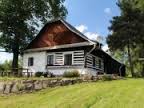
Moravian dwelling called “chalupa.”
I started a street club with friend Zdena who was the treasurer. I remember exploring along the banks of the river Lutoninka. The river had a weir, and for many years we swam in its cold waters. My grandpa Joseph poached on the river catching fish with his bare hands.
Every year when August 23rd approached, grandma Anna gave me a 20-crown bill, usually late in the afternoon.
“Go and buy a gift for your mother,” she said. “It’s her birthday.”
I grabbed the money and proudly marched into town passed the tobacco/jewelry shop close to the grade school. I’ve always loved window shopping. In awe, I admired the crystal glasses and other famous Czech crystal and garnets.
Sometimes, I would just walk into the shop and buy a newspaper and linger around so I could smell the tobacco. Therein are the origins of my love for newspapers.
When I finally made it across the bridge to the general store called “U Kaluzu” ( “By the puddle,” ) I was fascinated by all the merchandise.
The store pitched atop the river bank had everything.
Many decades later, I was surprised to find a small organizer sewing basket at my parents’ condo in Venice.
“Mom you still have this?” I asked. “I got this for you ages ago in Vizovice.”






 authoremmapalova