Category Archives: travel

Czechoslovak Harvest Festival

Harvest Festival celebrates Czech traditions

By Emma Palova

Bannister, MI- No matter how long I’ve lived in North America, I still sometimes miss my home country, the Czech Republic.

It’s hard to pin point what exactly am I missing? My whole family, except for daughter Emma Chavent, lives here in Michigan. Although, we don’t have family reunions, we often visit with each other. We all speak the Czech language including our youngest granddaughter Josephine Marie Palova. She was born in Kalamazoo in 2013 to American mother and to son Jake.

Czechoslovak Harvest Festival.
The Czech & Slovak dance group.

So, it isn’t just the language that I miss. Sometimes, I think it’s the food. But, that can’t be right, both my husband Ludek and I can cook any Czech meal. We usually cook Czech food on Sundays.

The perfect Czech Sunday meal are either schnitzels or pork, cabbage and dumplings.

Every August, we go to the Czechoslovak Harvest Festival held in Bannister, MI.  ZCBJ Lodge #225 in Bannister organizes the annual event.

We do this to remind ourselves, our kids and grandchildren of our Czech origins. French-born Ella Chavent enjoyed the festival for the first time. She has never seen the traditional Czech and Slovak festive costumes or the dances.

Czech festival in Bannister.
Czechoslovak Harvest Festival.

Ella marveled both at the dances and the music. She loved the full Czech fare that consisted of ham, fried chicken, mashed potatoes, dumplings, cabbage, cucumber salad and Czech desserts.

As in most countries, the food and the desserts are the pride of that particular nation. The ZCBJ Bannister lodge volunteers have cooked the delicious spread since 1976. Although somewhat modified, the food carries the Czech staples of dumplings, cabbage and cucumber salad.

The dance troop celebrated 40th anniversary under the leadership of Diane and Tom Bradley. Another group played the accordions, a common instrument for the Polka music.

Every year, I am flabbergasted by the dedication of the organizers to the Czech culture. Although, they are of Czech origin, most of them have never visited Czech or Slovak republics. Their meticulous research has brought them closer to the country located in the heart of Europe, thousands of miles away from the American shore.

Czech & Slovak dancers at the Harvest Festival in Bannister.
Czech & Slovak dances at Harvest Festival.

The dedication also shows in the compiled recipes in the Czech anniversary cookbooks. Most recipes are in memory of loved ones.

A Polka brass band accompanies the mass at the Cyril & Methodius Catholic Church. The dance troop also dances polka and other Czech dances.

What makes the Czechoslovak Harvest Festival even more special is the fact that such events are dying out in the old country as the older generation passes on.

“Lodge Michigan #225 has been fortunate to have members who willingly give of themselves, who live not in the past, but rather use the past to build for the future,” the festival program reads.

“Vitejte holka na Dozinky,” Tom Bradley greeted Ella in Czech.

I used to worry about the future of this Czech event that annually takes place in the middle nowhere, not close to Lansing and not close to Grand Rapids.

Since yesterday, I don’t worry anymore. I saw young blood everywhere; from the dancers to the accordion players. Among the visitors were a lot of young people, who probably have never seen anything like the traditional costumed dances.

The event closes with a dance for the public inside the ZCBJ Lodge. The lodge itself is a feast for the eyes. It has a traditional stage for the Polka band. Paintings from Czech history decorate the walls of the 1916 hall.

Thanks to all the volunteers for keeping the Czech tradition in Midwest alive.

The next Czechoslovak Harvest Festival in Bannister will be held on Aug. 6th, 2017.

For more information visit www.zcbjbannister.org or find them on Facebook.

You can also rent the hall for events. Contact Ann VanDeusen at 1-(989) 534-1862.

To join the Western Fraternal Life go to http://www.wflains.org

Go back

Your message has been sent

Warning
Warning
Warning
Warning
Warning

Warning.

Copyright (c) 2016 Emma Blogs, LLC. All rights reserved.

International experiment with my Frenchie

International experiment explores English immersion at St. Patrick’s School

Note: I will incorporate some of the current posts into the memoir “Greenwich Meridian.” The memoir is a living document in which I track the events of the past and present. It is the story of the family immigration saga spanning three generations.

By Emma Palova

EW Emma’s Writings

Lowell, MI- Thanks to my French family and a history class, I know that today is a holiday in France celebrating the Fall of Bastille in 1789. The French revolutionaries stormed the Bastille fort followed by a decade of chaos and executions, known as the French Revolution.

So, July 14th is a national holiday in France. The practical implications are that my daughter Emma Palova Chavent who is visiting with us in the USA can’t straighten out “stuff.” That’s what I call glitches in bureaucracy all over the world.

Ella Chavent in front of St. Pat;s School in Parnell, MI.

And now a few hours later since I’ve written this post, the tragedy in Nice, France  which left so many people dead. This reminds us of the fact that nothing has changed since the French revolution. Dead and more dead. I’ve written about this before that violence breeds more violence.

I consider our family clan to be international. Our daughter Emma, who was born in former Czechoslovakia, married French husband Adrien.

Now, I fear more than ever the international fate as Emma & Adrien Chavent ready to fly out tomorrow to Paris and their daughter Ella is staying here for English immersion.

Our son Jake, also born in former Czechoslovakia, married American Maranda. All of us speak English, most of us speak Czech and some speak French. I think Emma Jr. is the only one who speaks all three languages fluently.

That’s why I put up a sign greeting our international wedding guests in 2014 in three languages: Welcome, bienvenue and vitejte.

The international experiment 2016 involves language immersion for 5-year-old Ella Chavent, our granddaughter for six weeks. In September, when she turns six she will go to first grade in the wine village of Fixin in Burgundy, France.

When Emma mentioned that over the phone, my heart ached. In six years we’ve only seen Ella six times.

“That’s the price you pay for immigration,” I always say when I tell the story.

My husband Ludek came up with the summer vacation/immersion idea.

Ella was born in Dijon, France in 2010. Her first language is French. However, daughter Emma speaks to her only in English.

So, Ella’s English is good. A grammar mistake here and there. The lack of vocabulary at her age is understandable.

When at a loss for an English word, Ella uses French. So, I get to brush up on my French that was fairly good when we lived in Montreal in the 1990s. I took French immersion classes. My son Jake went to a French kindergarten. Montreal is a fully bilingual cosmopolitan city.

We do have a history in language immersion. I teach English as a second language (ESL). There was a time in the 1980s when I knew Russian, although mostly passively.

Ella started her English immersion on Tuesday of this week. We enrolled her in St. Pat’s summer school program in Parnell, MI. If everything goes fine, she will be attending through Aug. 18th. Her parents Emma & Adrien are leaving the country tomorrow July 15th. The plan is that I will fly with Ella back to Paris on Aug. 20th.

As we approach Emma & Adrien’s departure, I have butterflies in my stomach.

“Will she miss them so badly that either I’ll have to fly out with her early or Emma Jr. will have to come and get her?” I ask myself.

So, far she has whined here and there, “Where is my mami?”

Her mami and daddy were gone for four days to Arizona.

However, the whole immersion experiment hinged on St. Pat’s school. “How will Ella take it?”

When I picked her up after the first day, Ella was all excited. She immediately made friends.

“She will do fine,” her teacher assured me. “She’s great.”

That same evening Ella already started packing meticulously her things for the next day.

“We will make a jumbo pie, I want to take it to school to share it with my friends,” she said.

That warmed my heart after her video tirade that I called “Everything is mine.” Ella scripted that all by herself constantly repeating everything is mine: the books, the toys, the food.

Watch for more immersion/immigration posts to get a feel for the “Greenwich Meridian” memoir.

Contact me for your immersion needs in English and Czech. I do have two public facebook groups Immersion Czech and Immersion English.

I have summer immersion online camps available.

emmapalova@yahoo.com

Go back

Your message has been sent

Warning
Warning
Warning
Warning

Warning.


Copyright © 2016 Emma Blogs, LLC. All rights reserved.

Memoir highlights Czech & Slovak Easter traditions

Easter evokes memories

By Emma Palova

EW Emma’s Writings

Lowell, MI-In my memoir “Greenwich Meridian,” I write about Czech and Slovak traditions that I have witnessed while living in Czechoslovakia with a touch of nostalgia. Some of them disappeared along with the old regimes, but most have survived mainly in villages and small towns preserved by enthusiastic small groups of people. The traditions are reflected in festive costumes for the holidays and special events, in music, dance, food, and customs specific to each village and town.

We lived in Zlin, Moravia, which is the central part of former Czechoslovakia embedded in traditions. Both as a child and an adult, I lived and visited with my grandparents in Vizovice, a treasure trove of traditions.

cousin Bronislav Pink
Czech & Slovak Easter kraslice

Easter celebrations in Czech and some other European countries are longer by one day, and that is Monday.
We have always indulged in lavish preparations for the long Easter weekend. That meant having enough meat, desserts, eggs, and beverages for three days. There were long lines just like before any major holiday. I spent a lot of time standing in lines and listening to what the old broads had to say.
“I am not going to tell him how much I spent,” a woman  wearing a scarf and a fluffy skirt shook her head defiantly.
The other one with an apron over her dress smelled of burnt dough.
I thought, she must have burnt her kolache, a traditional festive pastry with plum butter.
The broad leaned closer to the first one and whispered something into her ear. Then they both laughed, until their bellies and chests were heaving up and down. I learned a lot standing in lines. The longer the line, the more I learned.
So, the culmination of it all is Easter Monday known for its “schmigrust,” an old whipping custom.

Traditional Czech festive costumes.

On that day, early in the morning ,large groups of boys and young men head out into the streets with their braided knot-grass whips or oversized wooden spoons decorated with ribbons. The day before, they spent many hours skillfully braiding their whips out of willow twigs or scouring the house for the biggest wooden spoon.
The boys go door to door, reciting traditional Easter carols like “Hody, hody doprovody,” asking the lady of the house for painted eggs. Then, they whip all the present females in exchange for decorated eggs and ribbons. Single women, and girls tied ribbons on top of the whip. I always wondered about the whipping custom, long before I ever set my foot out into the world. One day, grandma Anna finally explained it to me.
“It is supposed to resemble the whipping of Christ before he died,” she said.
“But, grandma that’s evil,” I cried.
Grandma just shrugged, and turned away. Later in life, I knew better than to question a tradition.
The elders in the group were offered shots of plum brandy, usually home made or acquired through bartering. Even family members took part in this ritual. Uncles and cousins were invited inside for coffee, festive desserts such as kolache, shots and meaningful conversation.
On a good year, and especially when I was a teenager, we got anywhere around 100 passionate revelers. Sometimes, I ran out of ribbons. The boys and young men, competing against each other, took pride in the number of ribbons they got. The craft stores had to stock up with meters and meters of ribbons, plain or embroidered. The hens, of course, felt obligated to produce more eggs.

Happy Easter 2016 to all.

Go back

Your message has been sent

Warning
Warning
Warning
Warning
Warning

Warning.

Copyright © 2016 Emma Blogs, LLC. All rights reserved.

Spring breaks in Florida

Spring breaks bring discoveries and surprises

By Emma Palova

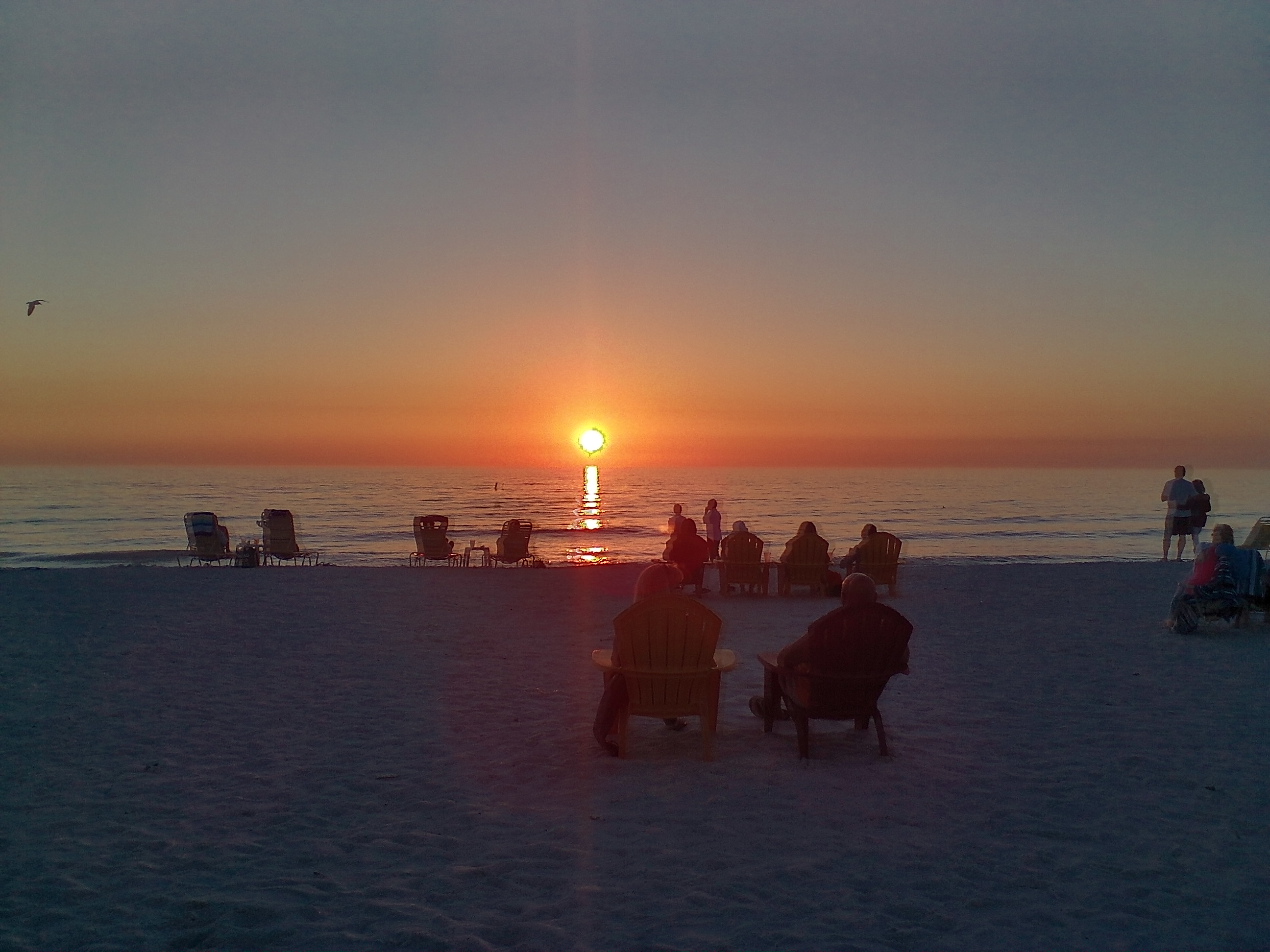
St. Petersburg, FL- I’ve made many new discoveries this year during my annual writer’s break on the Gulf Coast. I spend some time in St. Pete’s with the family in a big blue house close to the beach on Tierra Verde.

The 5,600 square feet house had no furniture except for an old couch. The five bedrooms did have beds, most of them were queen or king size. And there were smart TVs. Big smart TVs. You sat on the floor to watch the TV.

The house had two flights of stairs, one of them was spiral, probably inspired by Salvador Dali. Sitting on the couch, you could watch from the top all those who were coming up a long bridge-like walkway. It took people forever to come to the only sitting area in the entire house.

St. Pete's beach
St. Pete’s beach

I was especially fond of the huge empty living room downstairs. It was more like a ballroom. I could easily imagine couples dancing down there deep below much like in the Disneyland haunted house. The professional wrestler Undertaker lived in the house at one time. So, goes the legend.

The reason we ended up in that upscale quarter without street lights instead of Daytona Beach were last-minute arrangements. The big houses that didn’t fill with reservations were cheaper and went fast like hot potatoes.

The renter hunk Rob didn’t realize that he advertised the wrong house.

“It’s not ready,” he said. “We’re fixing it up.”

Croissant & Co. in Venice

“Don’t beat yourself up for that,” my daughter Emma said.

“The question is how much furniture will there be in the house,” Rob stated honestly.

Obviously, my daughter was looking for an adventure in St. Pete.

We had a backup plan if Rob didn’t come up with any furniture. We would split up our party and do necessary tasks. Emma and I planned to hit the local Goodwill to buy some beds. The other half would go and buy groceries.

We flew into Orlando already an hour late. On board the plane we demanded a free beer to make up for the lost hour. It was dark in an unknown city with yet a rental car to pick up.

Somehow, we made it St. Pete and knocked on Rob’s door around 11 p.m. But, first a couple of dogs came charging at us.

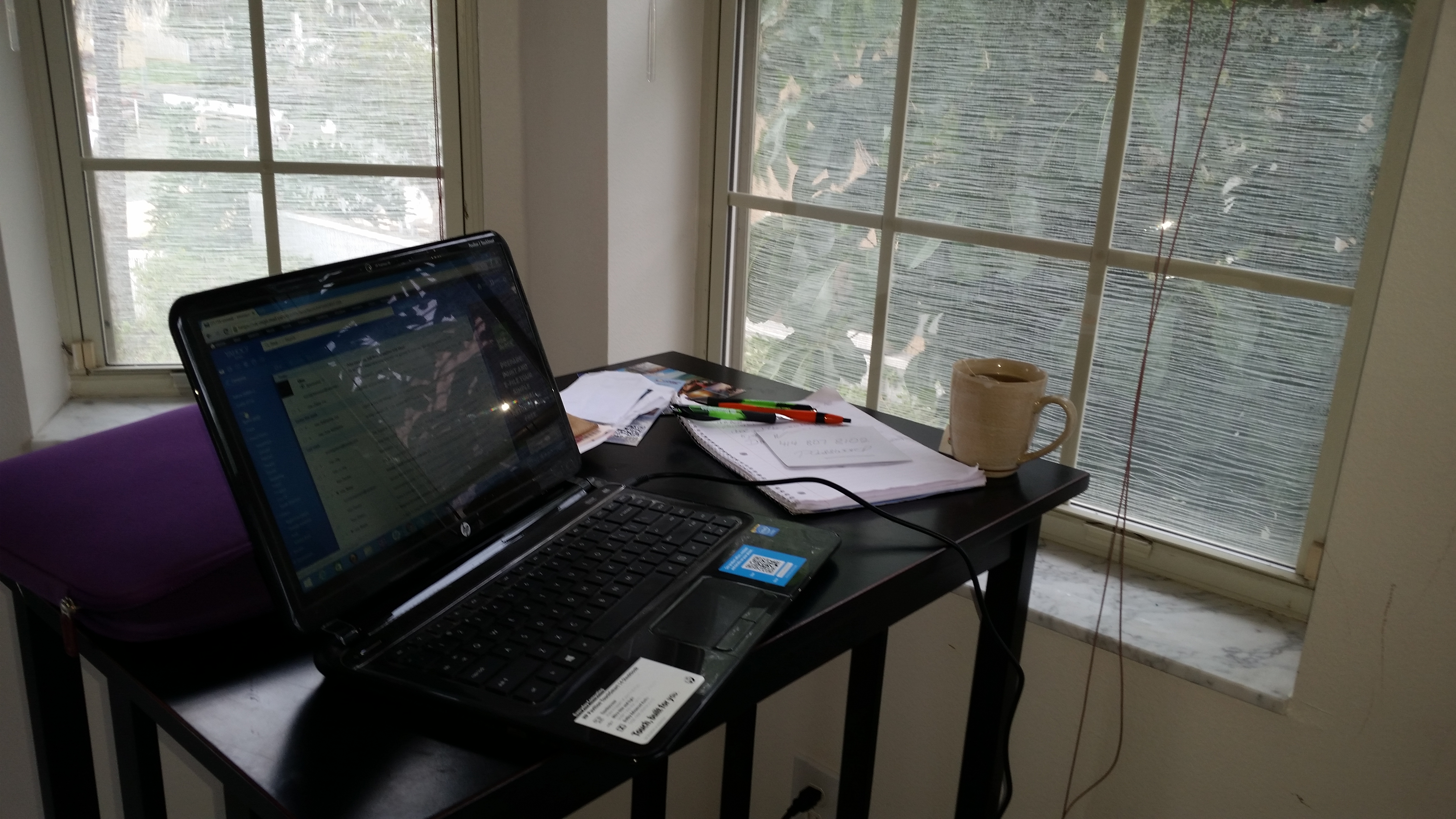
My writing station in St. Petersburg.

Rob was a fun character who made money on supplements before big box stores took over. Some really funky supplements remained in the kitchen cabinets. They looked very home-made with scribbling on them.

The kitchen even had plenty of utensils, and again it was very big more like a cafeteria. All seven of us could dance in there if we wanted to.

I like big things but everything in that blue house was enormous, even the Tupperware containers.

I don’t know if Rob was feeling guilty for our lodging or if he was just a nice guy.

Shooting pool outside.

“Hey, you can spend tomorrow at my other house,” he said. “It’s closer to the beach and the guests are not coming until later in the week.”

So, the search for the other house ensued after a breakfast standing up. The last time I ate my food standing up was as a student at cheap buffets in Brno, Czech Republic.

St. Pete, a city full of surprises, has a Gulf Blvd. and a W. Gulf Blvd.

Finally, we found it. It was much smaller, but it did have furniture. Moreover, it had a leftover box of low carb Ultra Michelob with only 95 calories per bottle.

“We earned it, we deserve it,” were shouts of joy.

We devoured the beer shooting pool outside. Then we grilled Johnsonville brats in the outdoors kitchen.

“You call that beer?” Rob laughed when we apologized. “I am from Wisconsin, that’s water.”


To be continued……

Go back

Your message has been sent

Warning
Warning
Warning
Warning
Warning

Warning.


Copyright © 2016 Emma Blogs, LLC. All rights reserved.

50 Shades of Orchids

Writer’s encounters: 50 Shades of Orchids

By Emma Palova

Venice, FL- During my annual writer’s retreats in Florida, I always come across a gem; it may be an artist, a breeze, scuba divers or sand castle builders, students of architecture on their spring break. This is my seventh year on the Gulf Coast exploring treasures washed on sea, and not just seashells.

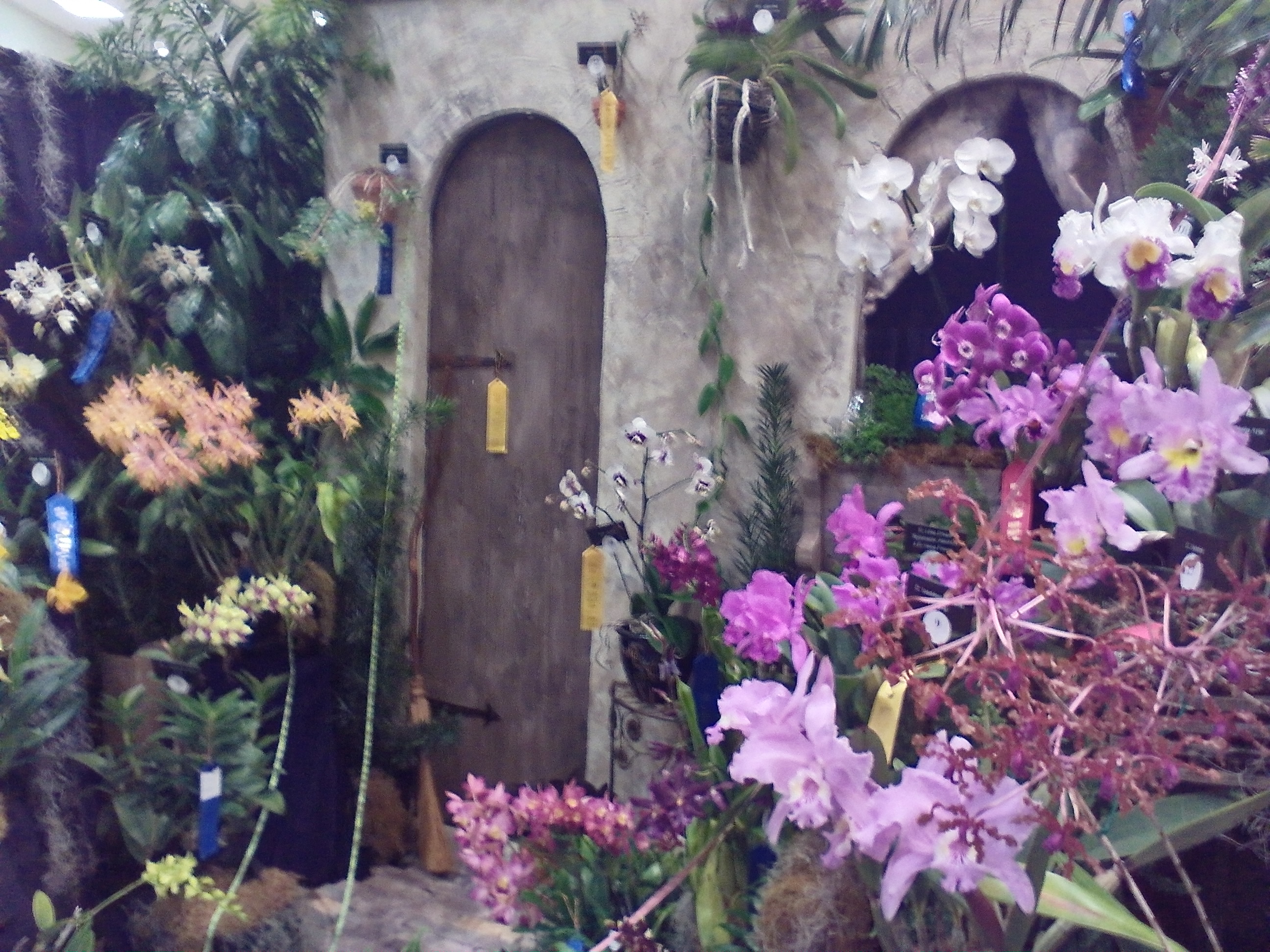
This year, it was the “50 Shades of Orchids” show organized by the Venice Area Orchid Society, (VAOS) an affiliate of the American Orchid Society.

50 Shades of Orchids in Venice

The VAOS is celebrating 50 years of existence. The show is put on at the height of the tourist season and it attracts 3,500 visitors annually and premier growers.

Perhaps, the most striking upon entering the exhibit hall at the Venice Community Center was the unexpected fragrance filtering in from all corners. I am a lifelong lover and collector of these enigmatic flowers. To see the orchids displayed in all colors, shades, hybrids and varieties was stunning.

The orchid stems and spikes were bending under the weight of the magnificent blooms.

Some of the blooms looked more like the faces of animals, birds or butterflies. Others resembled spiders. The large tricolor blooms resembled the Iris or more common flowers home to northern climate zones.

Each display consisted of 50 different orchids, hybrids and species wrapped in palm greens.

VAOS exhibit at the show.

The participating growers offered most orchids for sale including the ones adaptable to various climates like the cattleya, Phalaenopsis, oncidium and vanda hybrids.

My favorite is the ornate Phal that comes in many different shades. I have a nice collection of these that has grown over the years on my windowsills facing the soft northern light.

Years of experimenting have rendered valuable experience. Unlike popular belief the flower doesn’t like a lot of water, only two ounces per week, less in winter. The orchid does not like to have her feet wet. The pots with orchids should be emptied.

img_20160206_155000.jpg
Catleya orchid.

There are more than 25,000 orchid species in existence. However, many are being destroyed by poaching and deforestation.

The orchid society promotes conservation and educational projects. It has grown into one of the largest and most active orchid societies in Florida.

The magical orchid can also be found at the Marie Selby gardens in Sarasota, Fl.


For more info go to: www.vaos.org

Or www.aos.org


Marie Selby gardens www.selby.org

Go back

Your message has been sent

Warning
Warning
Warning
Warning
Warning

Warning.


Copyright © 2016 Emma Blogs, LLC. All rights reserved.

Our story 2- If I could turn back time

Turning back time to life in Canada

By Emma Palova

Note: This is the second part of a story series, “If I could turn back time” based on a prompt by the WordPress Daily Post that spurred my imagination.

The first story posted at https://emmapalova.com/2016/01/17/my-story-if-i-could-turn-back-time-2/ delved into an action packed time in my life spent on the ranch in Vizovice, Czech Republic with my grandparents.

As I start my second story, I look back at a transition time in the early 1990s as the family adjusted to life in North America. This time in Canada. It surprises me that I would like to turn back time to a difficult period in a foreign cold country, where initially I didn’t know anyone, I had no relatives there or any other bonds. I didn’t speak the language and I barely knew how to drive.

Life in Quebec, CA
Life in Quebec, CA

A lot of this theme “If I could turn back time” is reflected in my memoir about the three generation family immigration saga, “Greenwich Meridian.” ©

The beginnings

Montreal, CAN After immigrating first to the USA in 1989, our family ended up in Montreal the following year. I wanted to join my husband Ludek who got visa to Canada.

It was a long haul, both physically and mentally. The 10-hour drive on 401 through Toronto gave me a lot of time to think.

I haven’t had time to get used to the rural life in US and I was changing the path that would take me to a fully bilingual cosmopolitan city.

At first we lived in a one-bedroom apartment in LaSalle close to the Saint Lawrence River. My husband Ludek and I slept in the living room which was also the dining room separated by a bar top from the kitchen. We had an old green Chevy that my dad Vaclav gave us.

After living with my parents for six months in Big Rapids, MI I was happy I had my kitchen. I didn’t mind the smells coming from the kitchen. I love to cook. I remember the weekly trips to the grocery store. We examined each item twice before it got thrown into the cart. We retrieved some of them later in the next aisle and put them back on the shelf.

Gaspesie, Canada
Gaspesie, Canada

And it was chicken and chicken again; once roasted, at other times fried, curried or on paprika with sauce and dumplings. Ludek’s friends from Slovakia did the same.

“I’ve had enough of your chicken,” yelled Willi at his brother Joe. “Can’t you cook something else?”

“I could but it’s expensive,” said Joe puffing on his cigarette while he stirred the chicken on paprika.

We made many friends in Montreal. The province of Quebec welcomed immigrants from all over the world.

Days went by fast. I went to COFI, the French Immersion School sponsored by the Quebec government full-time. It was a six month-long intensive course with six hours of French daily. We didn’t have to pay a dime to learn a foreign language. On the other hand, we got paid to go to the French school.

It was a very social and productive time in life. I met Judith from Slovakia and Emil from Rumania, people from Bulgaria, Africa, Japanese and Russians as well as people from all walks of life.

We nurtured our immigrations dreams together side by side sitting in desks with doctors, surgeons, poets, writers, musicians, healers, programmers, factory workers, teachers and stay-at-home moms.

It was at this course that I learnt how to teach languages immersion style.

We were not allowed to speak any other language than French, which was for the better of it, because we wouldn’t be able to understand each other.

We had to act out little scenes from life. I remember I did not want to act in the doctor’s office scene, because I am afraid of doctors and the Rumanian guy Emil liked me way too much.

Ludek worked at a Czech chemical company called Anachemia. Actually, most Czech and Slovak immigrants worked there. I worked in their branch for a while packing medical supplies. This is where I met Liba from the same Walachia region that I came from in Czechoslovakia. We would have probably never met in our homeland and out of all the places in the world, we ran into each other at a factory in Montreal.

We had no mortgage, so we could go skiing in the Laurentian Mountains or drive to Toronto to see a lifelong acquaintance from Technical University of Brno, Dana Pastorcakova who was also from Walachia.

Only, now 20 years later I realize, that it was an advantage not to have a mortgage, because it is what it means.

“Mortgage is a death pledge,” said real estate instructor and broker for Westdale.

Times would prove him right during the mortgage/economic crisis in the mid to late 2000s. My artist friends lost their home on Long Lake.

We moved to a bigger apartment also in LaSalle close to an island in the St. Lawrence River.

“You’re living here like on a vacation,” said Liba during a visit.

“I can’t live and write any other way,” I said.


To be continued……

Go back

Your message has been sent

Warning
Warning
Warning
Warning
Warning

Warning.


Copyright © 2016 Emma Blogs, LLC. All rights reserved.
Lost in Brno- Czech Republic

I am running with this story now that Brno has become the 27th place in the world to visit out of 52 this year, according to New York Times.
I am very proud of this city. It has completely revamped itself from its communist mantra lasting until 1989. It is en par with the great cities of Vienna, Geneva, Prague and Budapest.

The architecture in the downtown area of Svoboda’s Square and the pedestrian zones is Art Nouveau, Empire and Neo-Classical. These styles are visible on the building of Janacek’s Academy of Music in the university district adjacent to the main square.

I was born in Brno, graduated from the Technical University of Brno in 1986 and I visited this gem in 2013. My friends live and work in Brno. I cherish the memories in my heart. Enjoy this city as much as I have.

emmapalova's avatarauthoremmapalova

Lowell, Michigan

I have safely returned home after travelling around several European countries including France, Spain, Czech Republic and Switzerland.

This is the eighth installment in my adventure travel series when I decided to step back into the past to fuel my memoir “Greenwich Meridian, where East meets West.”

Lost in Brno- Czech Republic

I had one entire day on Sept. 25th  to relive it all in post-revolution Brno, while my friend Jane worked her post-revolution work for  an Austrian firm.

“Just follow the tram tracks into town,” she said.

Now, that was easier said than done. Brno was and is a pulsing metropolis that has cleaned itself up, so it is completely en par with Prague, Paris and Geneva. As I got into town, I found myself caught in an entire web of pedestrian zones surrounding a big park; they all seemed to lead onto Jost Boulevard.

View original post 439 more words

30 Day Blogging Challenge #14

For the love of the Fallasburg  Park.

By Emma Palova

Fallasburg, MI- I love everything about the Fallasburg Park and the village: the Covered Bridge, the Flat River, the house museums. It truly takes you back in time, away from the fear of technology, from the fear of the unknown and much more.

I live approximately three miles away from the park and I do social media marketing for the Fallasburg Historical Society. The park and the village serve as a major venue for many regional events such as the Fallasburg Festival for the Arts in the fall, the Fallasburg Bazaar and the upcoming Christmas in Fallasburg traditional party on Dec. 12 at 6 p.m. Please join us to celebrate the season.

Memories of Fallasburg Park from Connie Elsasser.


image

Go back

Your message has been sent

Warning
Warning
Warning
Warning
Warning

Warning.

Copyright (c) 2015 Emma Blogs, LLC. All rights reserved.

30 Day Blogging Challenge #13

Old town Prague with clock tower from Czech Republic. Photo credit Facebook public group I love Czech Republic.

image

Go back

Your message has been sent

Warning
Warning
Warning
Warning
Warning

Warning.

Happy blogging to FHS

This is my latest status update. I am working with clients on social media marketing for the Fallasburg Historical Society (FHS), CJ Aunt Jarmilka’s Desserts and potential clients the Lowell Women’s Club and Americas Voices.

My first order of business was to set up a blog for them on the WordPress platform using different themes.

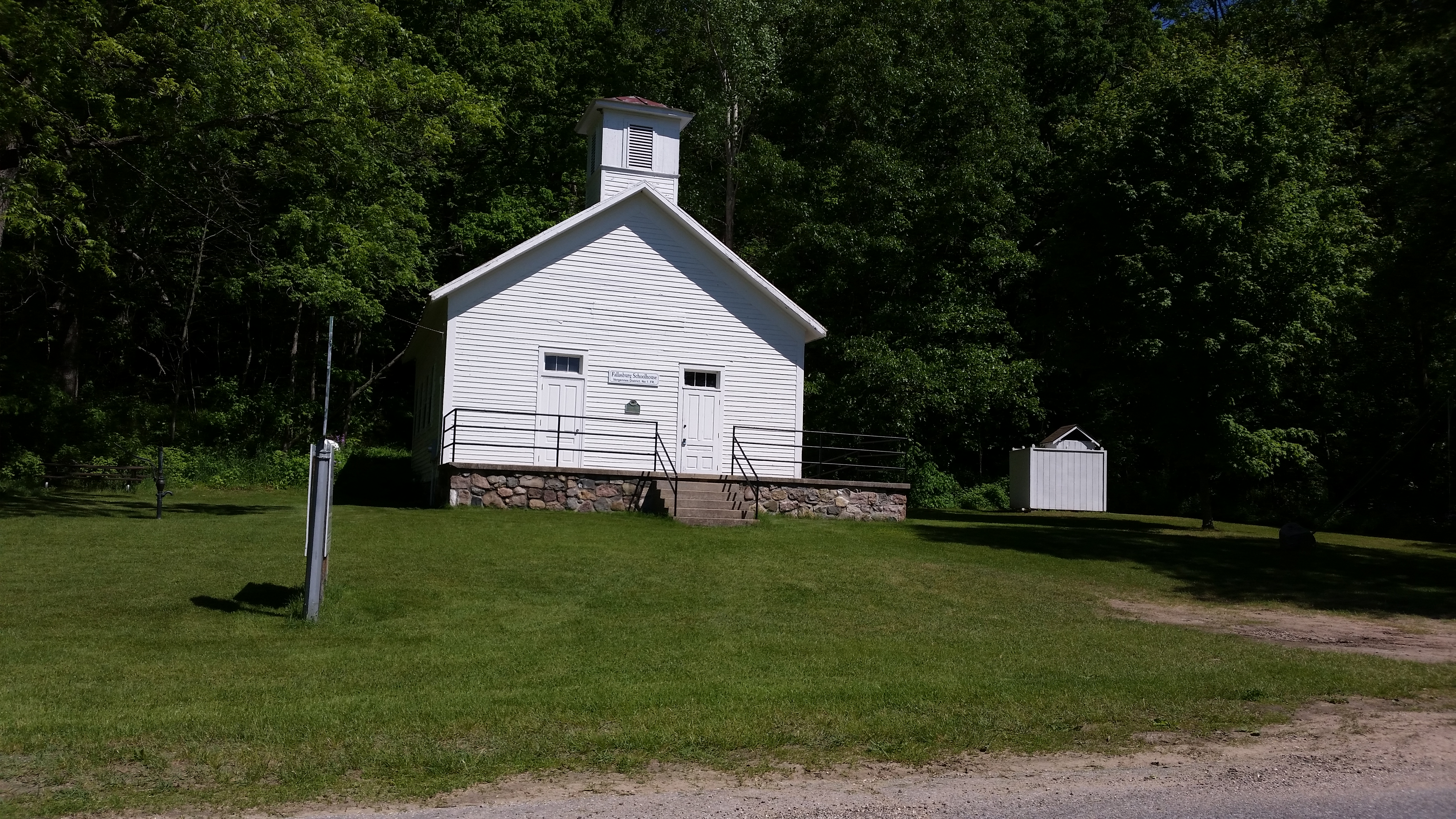
One room school house, a museum for the Fallasburg Historical Society

For FHS I designed “Fallasburg Today.” Then came social media, that is establishing accounts on Facebook and twitter. And posting on regular basis.

I think the posting on regular basis is the biggest challenge, but also the key to success.

I do have to say that the folks at FHS embraced the social media project 100 percent. They gave me materials, photos and maps.

Map of Fallasburg bazaar vendors.

I don’t think one can do it alone with the quantity of data. I appreciate all their help and their efforts to raise awareness of the 1830s Fallasburg village with modern means.

The village will hold its first annual bazaar on Sept. 19 & 20 from 10 a.m. to 5 p.m. Come and explore. A big deal for the village is the annual Christmas party. Stay tuned for details.

I am looking forward to creating the October newsletters and bringing on board the Lowell Women’s Club and Americas Voices.

Go back

Your message has been sent

Warning
Warning
Warning
Warning
Warning

Warning.

Copyright © 2015 Emma Blogs, LLC. All rights reserved.