Lowell, MI- I love the Fourth of July holiday for many reasons. Most of all the Independence Day reminds me of my independence when I decided on my own free will to leave my homeland Czech Republic to pursue a better future in America.
Most of my dreams have come true and I am working on the ones that haven’t materialized yet. I am grateful to this great country that I have the freedom to express myself without censorship, that I can fly as high as I choose to, that I can be a woman entrepreneur.
Lowell Showboat decked out for July 4th
While honoring the past in Czech Republic, I am moving ahead with life in the USA. Sometimes seemingly small steps lead to bigger victories. The path is not always straight, it winds and twists much like life itself. We now have deep roots in USA with the fourth generation already born here on the continent right at Bronson and Borgess hospitals in Kalamazoo, Michigan.
I trust that Josephine, 19 months old and the new guy will be fully bilingual in this ever-changing world. I know they will be able to travel to the old country to trace their roots and marvel at the European culture, try some Czech beer and the national dish; pork, dumplings and sauerkraut.
I marvel at the strides the technology has made since my first-born child Emma in 1979. With no ultrasound yet available, we were eagerly anticipating the arrival of the baby. We had no idea what it was going to be. I really didn’t even have names ready. Finally, I decided if it’s a girl, her name will be Emma.
“Mom, you have a girl,” the doctor said leaning over me.
I was overwhelmed with joy and surprise. And now the family saga continues with the next generation.
My son Jake with wife Maranda Palova have already enjoyed a 3D peek at their son. Maranda is in the eighth month of pregnancy.
Maranda Palova’s account of the 3D experience
Getting a 3D ultrasound is a luxury; I never had the opportunity with my first-born, Josephine. It gives you a small glimpse of what you can look forward to, and I was lucky enough to see my little guy in action.
It was difficult to get an image at first since he was moving so much. But finally we were able to get a good look at his precious face. My first thoughts were WOW how amazing!!!
I could immediately tell that he had a few of my families traits, and seen a resemblance to my brother Tony’s’ features as a child. It will be incredible to see him for the first time and be able to compare that 3D image to real life.
As the technologist scanned more of his body we were able to see that he was also breech (when baby’s feet or buttock are to be delivered first). He still has time to flip into the head down position, but this concerns me and makes me wonder if and when he will do it because there can’t be too much room to flip.
We were also able to see he was quite the gymnast already; he was bent at the torso with his feet to his head. He is quite the character.
I can’t wait to meet him for the first time.
The 3D images are produced by sending sound waves into multiple angles that reflect back into a program reconstructing the images into a three-dimensional image. 3D ultrasounds can enhance medical conditions in an unborn child, but are usually not medically necessary.
About the featured image: this is a 3D ultrasound image of an eight month old baby Pala.
Editorial/marketing calendar for July, August, September
Dive into summer fun with Emma
The editorial/marketing calendar for Emma Blogs is flexible and I invite anyone who wants to contribute whether with stories, photos or ideas.
As you can see the topics range from blogging to vacationing, and everything in between. I am looking forward to the new summer series, Living in the country vs. living in the city. I bet anyone can attest that both have their advantages and disadvantages. So, feel free to write about your take on where you live and why. It will be hilarious.
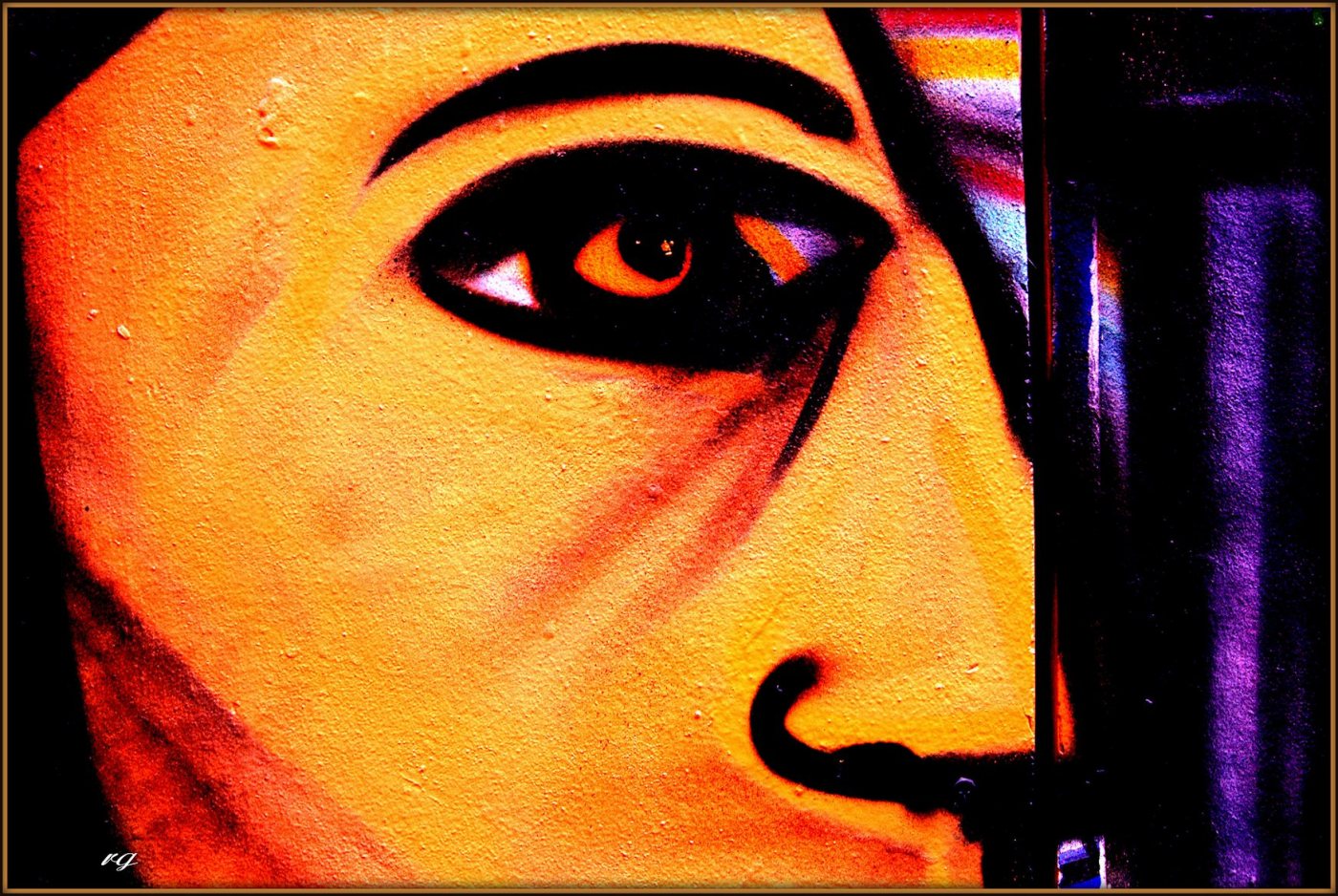
Kathleen Mooney’s abstracts.
Also sign up for Emma Blogs July newsletter for blogging/design tips and How to get story ideas and bring them to fruition.
July
Blogger of the month
Creativity
Independence Day
Vacationing
Summers in Czech
Riverwalk 9, 10, 11/local
Summer series
Living in the country vs living in the city
August
Summers in Czech on the ranch
Vacationing
Mom’s birthday
Lowell youth fair/local/Aug. 6-13
Summer series
Living in the country vs living in the city
September
Fall fest with Fallasburg village bazaar /local Sept. 1&20
Fairs/expo Brno
Socialist brigades for students and army
Summer series
Living in the country vs city
Schools/universities
Copyright (c) 2015. Emma Blogs, LLC. All rights reserved.
Fallasburg Historical Society celebrates 50th anniversary
By Emma Palova
EW Emma’s Writings
Fallsburg, MI- It was Leonora Tower of the Vergennes Cooperative Club who started the West Central Michigan Society in 1965 with Norton Avery. The goal was historical preservation of the Fallasburg village once a thriving village six miles north of Lowell.
In 1990, the society changed its name to Fallasburg Historical Society, but the same people remained involved. However, the society became bankrupt in 2006.
That’s when the current president Ken Tamke got involved.
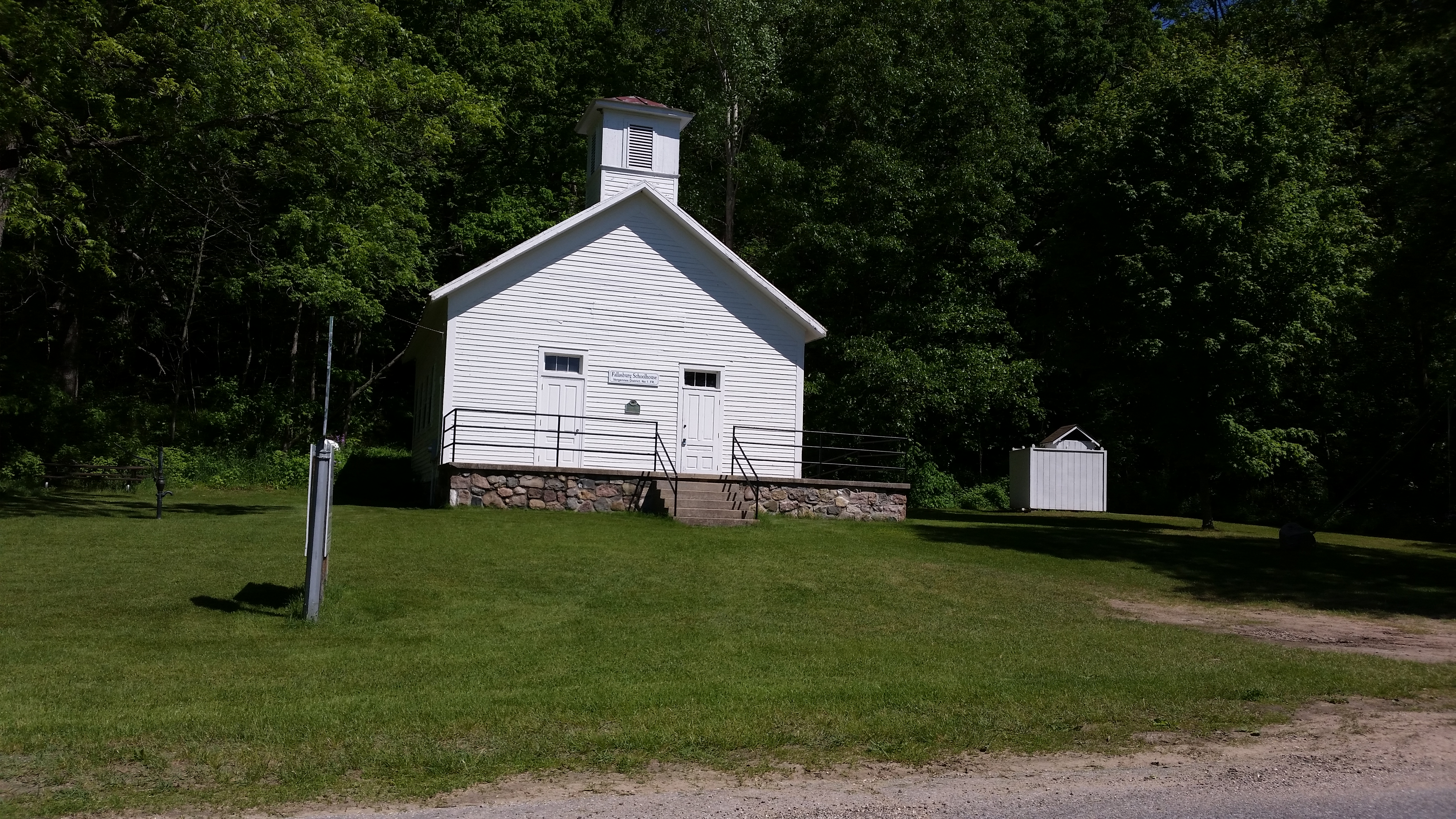
One room school house, a museum for the Fallasburg Historical Society
“I grew up around there, visited my grandparents all the time,” Tamke said.
His grandparents, the Bradshaws owned the farm on Fallasburg Point, which is now a fancy development.
His passion for historical preservation runs in the family. His dad was involved in history preservation in Berkeley.
“I am a big fan of history,” he said. “Historic preservation is in my blood.”
So, basically, according to Tamke, the modern society grew out of a group of women from the Vergennes Cooperative Club. Also involved was Marcia Wilcox, former Vergennes Township supervisor.
Fallass House 1842
I love the place,” Tamke said. “It’s a little hamlet that became forgotten.”
Truly, time has stopped here. The village sleeps its dream from the thriving 1800s.
Founded in the 1830’s by John Wesley Fallass. The village of Fallasburg includes 42 acres along the banks of the Flat River, the covered bridge, a schoolhouse, village cemetery, the Fallasburg Historical Museum and the Misner House Museum, the Tower House and a barn.
The Fallasburg Historical Society exists for preservation, restoration, and maintenance of the Fallasburg Village, as well as encouraging public support through education, sharing information, and hosting many events.
Misner House 1850
The one room schoolhouse is actually the museum where artifacts are stored. It is open during summer time on Sundays from 2 p.m. to 4 p.m.
The Fallasburg village was listed as the Fallasburg Historical District in the National Register of Historic Place on March 31, 1999.
“There were initial problems with that, but it did go through and doesn’t give restrictions,” said Tamke. “We’re very proud of this. It’s an honorary designation.”
Now, the biggest project ahead of the society is fixing up the Tower House to give it a new purpose since it sits close to the North Country Trail.
The society received a grant from the Lowell Community Fund and Lowell Cable Fund. The roof got fixed. But, the kitchen, the bathroom and other interior spaces need to be restored. The financial estimate from 1999 to fix the Tower House was $100,000.
Charming annual Christmas party in the Fallasburg village
“We want to repurpose the building as a meeting place for the historical society, the Lowell Area Historical Museum and other community groups,” he said. “We hosted weddings at the school.”
The quaint village attracts couples to tie the knot, and hundreds of photographers. The restored barn was the Barn of the Year 2014. Also new markers have been placed by the covered bridge. It is the goal to have unified markers by each building.
Fallasburg events include the first and brand new village bazaar will be held during the Fallasburg Fall Festival in September, along with the vintage baseball tournament with the Flats team in the field.
Tents with crafts, food and arts will be set up by the Misner and Tower houses. All buildings will be open for self-guided tours without any admission.
“We’re not affiliated with the arts council, it will be a concurrent event, ” Tamke said.
Barn of the year 2014
The biggest event is the Covered Bridge Bike Tour coming on July 12. However, the most charming event is the annual Christmas party at the school.
Ladies from the society bring delicious dishes to pass, there is music and Tamke serves up wine and grog .
There are 120 members in the historical society and most actively participate in various events.
Kids from the area schools take field trips to the village. Addie Abel and Mike Organek actually went to the school give tours.
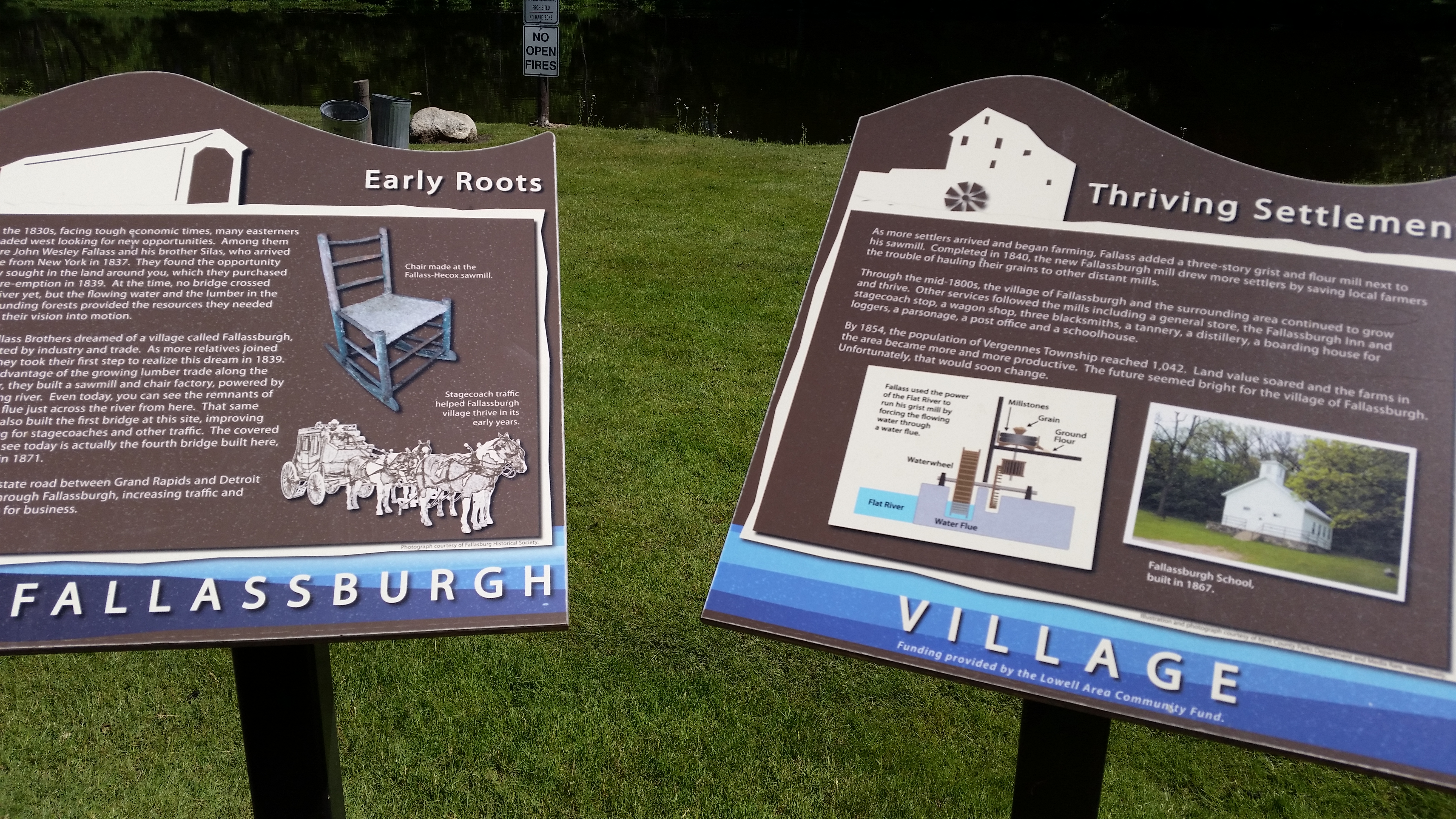
Interpretative markers in the Fallas village
“Parents come with them and gain appreciation for the village,” said Tamke. “It hasn’t been touched by the pass of progress.”
Lowell Area Historical Museum director Lisa Plank will help with mentoring of an intern to help scan and catalogue documents and artifacts.
“We want to raise public awareness because you can forget that it’s out there,” Tamke said. “It’s a hidden gem.”
It’s also a great place to visit for Father’s Day and get some unforgettable photos and to escape from technology.
Today is a big day. As I write to the morning chirping of the birds, I still have my feet wet from watering the flowers for my mother, for Mother’s Day.
My dog Haryk passed in September of last year. So, I don’t have him anymore. It’s bizarre how many things have changed in one year. I’ve made a lot of posts since April of last year. I had around 100 posts, now I am close to 300 posts.
Mistakes. Yes, tons of them. Success, too. I’ve established my company Emma Blogs, LLC in August of last year. I got my eyes fixed with Dr. Verdier.
It’s May 9th, it’s my birthday. I was born on the national holiday in former Czechoslovakia. On that day, the nation’s capital Prague, the mother of all cities, was freed from the Nazi occupation by the Soviet Army. That was the end of World War II.
Many years later, I was born in the wee hours at 4 a.m. to parents Ella & Vaclav Konecny. My mom woke up to the cracking noises of fireworks announcing the anniversary of the victory.
“I thought it was war again, but then I realized those were fireworks celebrating your birth,” she said to me this morning as she wished me a happy birthday. “The whole nation celebrated.”
Czech Capital Prague
Mom says that to me every year, as the nature too celebrates the awakening after long winter.
“The nature blossoms on your birthday,” she says. “You always had the day off and a parade.”
Birthday blossom
The above note is one of the many reasons why I dedicated the memoir “Greenwich Meridian where East meets west” to my mother.
200 Posts & beyond
This post is inspired by Anton Chekhov’s “Three Sisters” and the constant friction that I have witnessed between sisters in this world.
Mom Ella & I
Mom Ella and aunt Anna
As I watch people drop like flies around me, I realize how time is going by fast. I like the inscription on the clock in the living room, “Tempus fugit.” That’s why I bought that pendulum clock as one of the first things when I arrived on this continent in 1989 for $110. Not that I had that kind of money. I just wanted the clock so bad, that I probably borrowed money for it. It announces the time by boldly striking every full and half hour. My husband Ludek still has to wind it by hand much like the clock that the in-laws had at home in the old country.
“They probably wouldn’t even let us know if Anna’s dead,” mom said about her sister.
Well, I think she is right. There is probably no one left to let us know. That’s all part of the emigration package that I am writing about in the memoir “Greenwich Meridian.”
To be continued as part of the ongoing series 200 Posts & beyond
Note: I decided to feature WordPress blogger Rob Goldenstein, who suffers from dissociative identity disorder, because May is the mental health month. As always before I write about somebody, I study their work, whether it’s an artist or an entrepreneur.
Longtime blogger deals with alternates of the dissociate identity disorder to express himself
By Emma Palova
EW Emma’s Writings
Lowell, MI- I do not know Rob Goldenstein personally only from an interview over Skype and from studying his extensive work. Goldenstein mentions that quite often he cannot relate to his own writing, and that it has been written by an alternate.
Featured blogger Rob Goldenstein
Few themes keep emerging in Goldenstein’s blogs both on Flicker and on WordPress.
“The alternates describe the blog is an extension of second life,” he said. “I have all these different avatars.”
In his About page, Goldenstein writes about his passion for right of full access to health care for people with mental illness.
“By full access I mean access to all treatment modes regardless the prevailing myth of scarcity,” he stated. “In the About me, I express my intentions as they evolve as I continue to blog.”
Goldenstein has been blogging on Flicker since January 2010, and he has posted some 2,179 photos.
In his Inside Dissociative Identity Disorder (DID) page Goldenstein outlines his goals as to organize what he knows about himself in a single place.
“It is where I can see it while interacting with other people,” he said.
His therapist told Goldenstein that he didn’t get sick in isolation, and that he is not going to get well in isolation.
One of Goldenstein’s goals is to let the alternates like Sara or Peter tell their stories.
“It is the only way that I can think of to set myself free,” he stated. The writing of this blog is only literary to the extent that I bring to it certain literary sensibility acquired from the study of poetry, literature, and film.”
The alternates, according to Goldenstein, use different styles in the way they write, but they share a certain tone of voice.
“That singularity of voice is my true self,” he stated. “I do my best to keep up with the people in my network, but my best is a bit slow now.”
Goldstein is thankful to other bloggers like Andy Weisskoff, LCSW, whose blog, 90 Days to Change, helped to understand the political aspect being a person with dissociative identity disorder.
The little I know about dissociative identity disorder is that it happens as a defensive reaction when overwhelmed, typically starting in childhood under extreme cases of abuse, and then gets triggered when situations in the present seem like dangerous situations in the past.
As far as what the government might do about treating mental illness, I’ve gotten very specific on my blog. The federal agencies that oversee medicare and medicaid dollars could audit Kaiser mental health services to ensure that basic services are being provided.
Kaiser is the largest provider of mental health services in California and so it is a very good place to start holding physicians’ groups accountable for providing the same level of service for people with mental illness as they do for people with other types of illness.
Psychology professor at Cornerstone University Daniel Ehnis said about the mental illness:
“In my opinion, the reason that DID is so misunderstood is that
it is often confused with Bipolar Disorder and Borderline Personality. Others think that
the symptoms can be faked. DID is a creative way to prevent repressed feelings from surfacing.
As a result, this creativity shows up in various ways.”
Writer Sarah Harmon participates in the Lincoln Tribute
Note: The article is Sarah Harmon’s account of the two-day Lincoln Tribute held in Washington D.C. at the Ford’s Theatre this week.
“The Lincoln Tribute was definitely unforgettable and I am so glad I was able to experience it,” Harmon said.
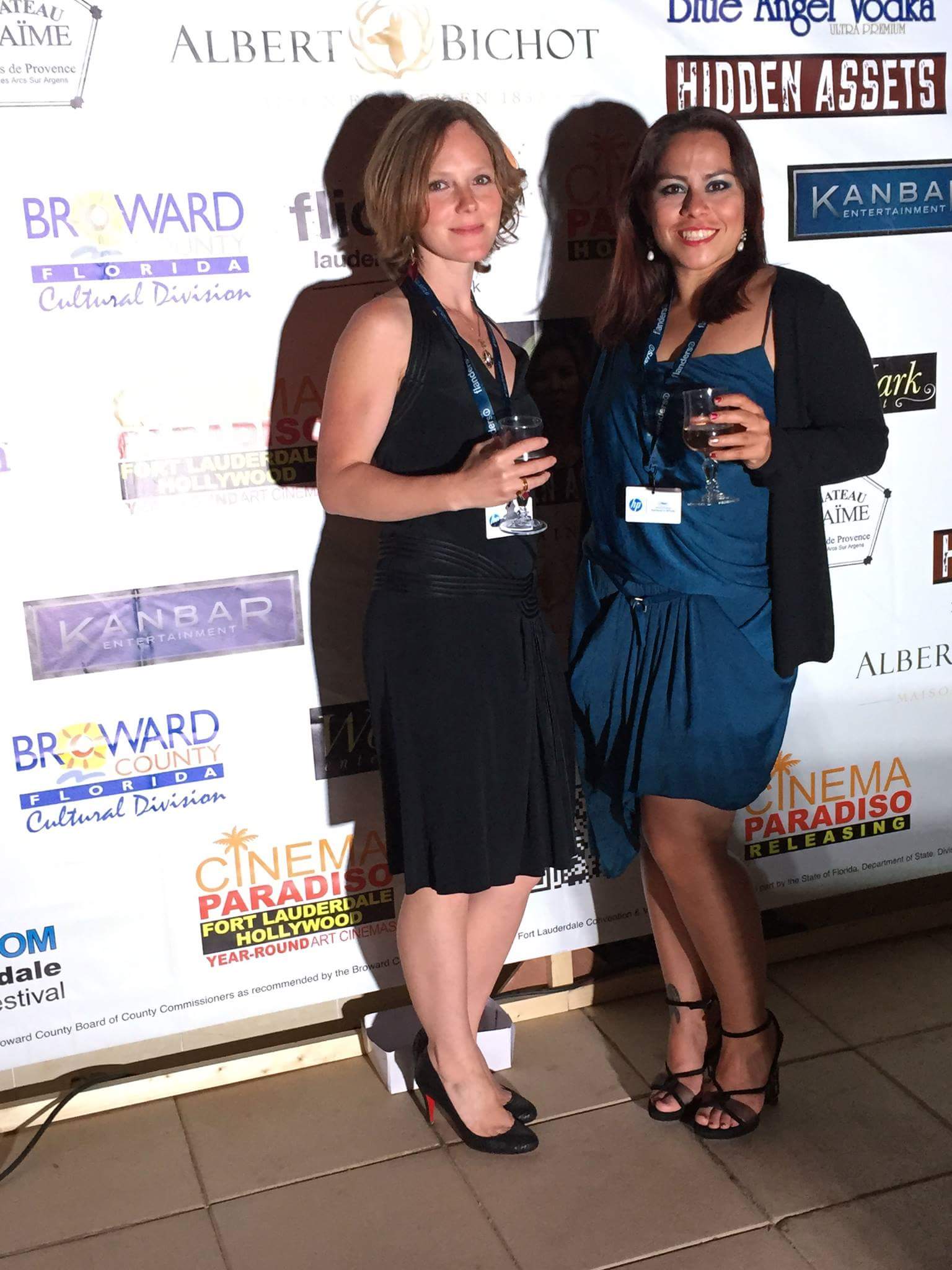
EW writer Sarah Harmon in Paris
Lincoln Tribute, 150 anniversary
By Sarah Harmon
EW Emma’s Writings
“Lincoln shot! Condition considered hopeless!” Those were the headlines around America this very week 150 years ago. The night of April 14, 1865 changed the history of the United States forever when actor and Confederate sympathizer John Wilkes Booth jumped down onto the stage of Ford’s Theatre screaming “Sic semper tyrannus!” (Thus always to tyrants) and ran out the back of the theater after shooting President Abraham Lincoln. What should have been a time of celebration that after four long years, the Civil War was finally over immediately became a nation in mourning for one of its greatest leaders.
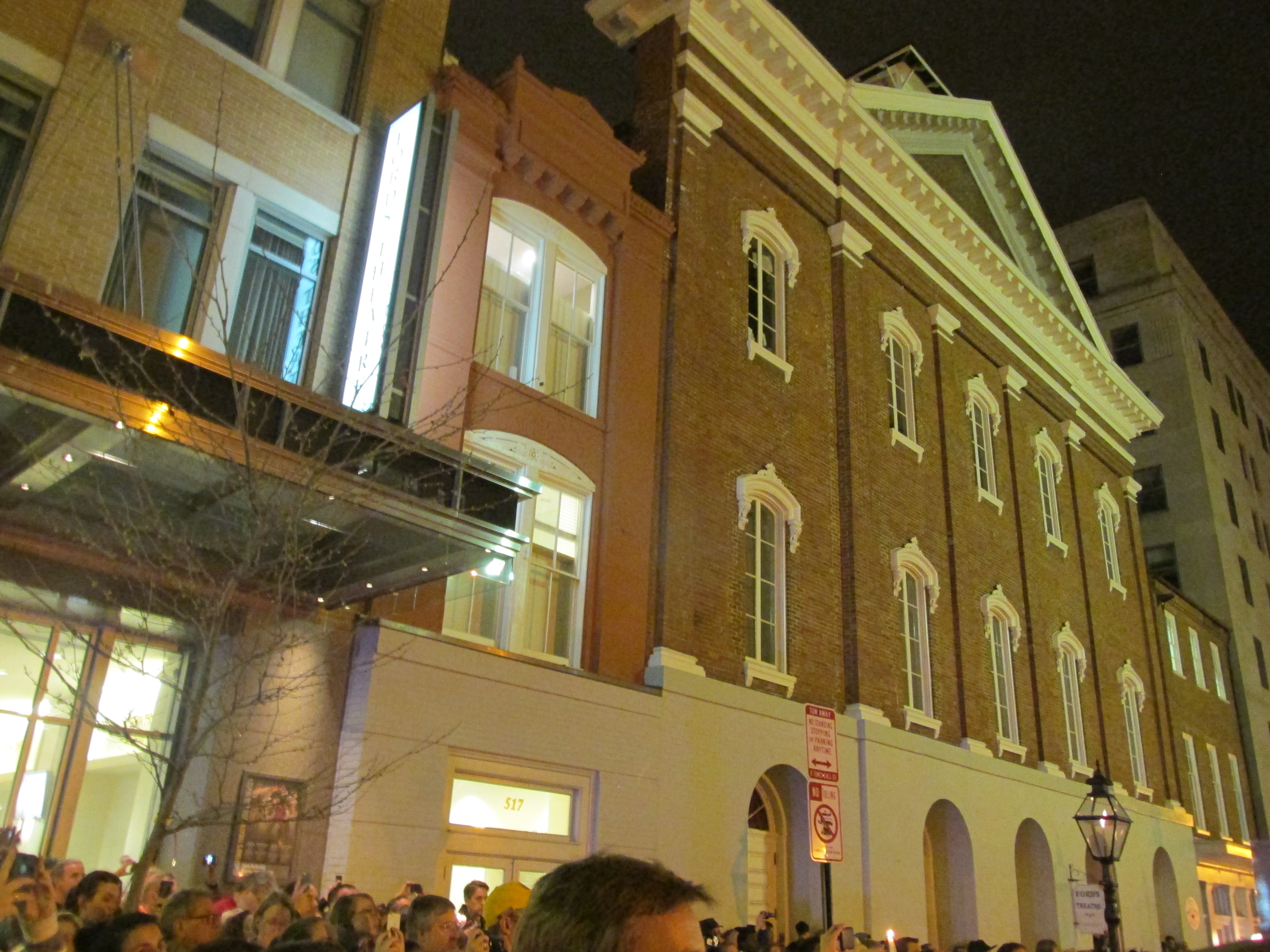
The box with the flag on the upper right of the theater picture is where Lincoln was sitting when he was shot.
The National Parks Service, Ford’s Theatre, and Civil War buffs everywhere have eagerly anticipated the commemoration of such an important turning point in American history. Museums throughout the D.C. held special exhibits in honor of the 150th anniversary of the Civil War and Lincoln assassination, and Ford’s Theatre in particular opened a special exhibit featuring artifacts that had not been all brought together under that roof since April 1865. Notable elements include the Derringer pistol Booth used as well as the bullet itself. They also show the objects that were in Lincoln’s pockets that fateful night. Perhaps most interesting of those was a Confederate five dollar bill.
The brick and white building is Ford’s Theatre during the vigil.
The two-day Lincoln Tribute at Ford’s Theatre began at 8 am on the fourteenth with a behind the scenes tour of the theater and concluded with the 7:30 pm performance of the play “Freedom’s Song: Abraham Lincoln and the Civil War” on the fifteenth. In addition to the usual spring performances of the one-act play “One Destiny” and the Detective McDevitt walking tour, several dozen living historians were on the sidewalks of Ford’s and across the street at the Petersen House, where Lincoln died. Both days included a panel discussion of the parallels between Lincoln and his legacy in America and the life and legacy of South African president Nelson Mandela. From 9pm to 10:15, the moment Booth fired the gun, a special performance, “Now He Belongs to the Ages,” took place on the stage at Ford’s. It was streamed live online and at the National Portrait Gallery for those unable to get tickets inside the theater.
The show began with music and an introduction by Colin Powell. Actors and historians shared words spoken by and about Lincoln including some criticism from his peers to remind us that the sixteenth president was not just the perfect marble version in the Lincoln Memorial, but was a man with faults who loved to laugh, tell stories, and be a loving father to his sons as well as his nation.
Crowds during the candlelight vigil on Tenth Street with Petersen House on the left and Ford’s Theatre on the right at 11:30 p.m.
The sound and emotion of 150 years of history reverberated through the theater and Portrait Gallery courtyard as the audience joined in singing “Amazing Grace,” a song Abraham knew and loved. Following the presentation, most participated in a candlelight vigil in honor of the president’s last hours, which he spent laying diagonally on a too small bed in Petersen House.
Actors in the crowds would suddenly burst into a monologue, telling of how she saw Booth just that afternoon or how he held Lincoln’s head while the doctor examined him. It truly felt almost as if the entire block traveled back in time a century and a half. The vigil and tours of the theater continued throughout the night and culminated in a ceremonial wreath laying outside Petersen House at 7:22 am, the moment Lincoln passed from life into history.
Artifacts at the Ford’s Theatre on display.
John Wilkes Booth wanted to be a hero for the Confederate cause by murdering the American President. He hoped that it would help to erase the name of the Great Emancipator from time, but in fact, his actions did more than any other single episode to make sure that the name of Abraham Lincoln would echo forever throughout the ages.
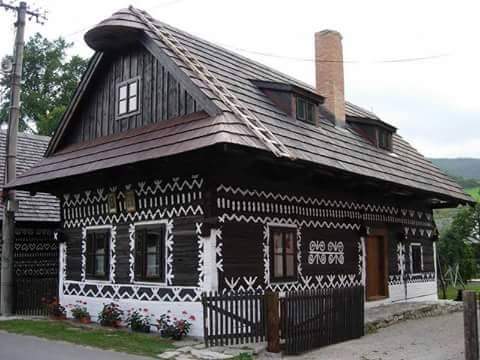
In my memoir “Greenwich Meridian,” I write about Czech and Slovak traditions that I have witnessed while living in Czechoslovakia with a touch of nostalgia. Some of them disappeared along with the old regimes, but most have survived mainly in villages and small towns preserved by enthusiastic small groups of people. Festive costumes for the holidays and special events reflect these traditions, as well as music, dance, food, and customs specific to each village and town.
We lived in Zlin, Moravia, which is the central part of former Czechoslovakia embedded in traditions. Both as a child and an adult, I lived and visited with my grandparents in Vizovice, a treasure trove of traditions.
Cousin Bronislav Pink ready for “schmigrust”
Easter celebrations in Czech and some other European countries are longer by one day, and that is Monday.
We have always indulged in lavish preparations for the long Easter weekend. That meant having enough meat, desserts, eggs, and beverages for three days. There were long lines just like before any major holiday. I spent a lot of time standing in lines and listening to what the old broads had to say.
“I am not going to tell him how much I spent,” a woman wearing a scarf and a fluffy skirt shook her head defiantly.
The other one with an apron over her dress smelled of burnt dough.
I thought, she must have burnt her kolache, a traditional festive pastry with plum butter.
The broad leaned closer to the first one and whispered something into her ear. Then they both laughed, until their bellies and chests were heaving up and down. I learned a lot standing in lines. The longer the line, the more I learned.
So, the culmination of it all is Easter Monday known for its “schmigrust,” an old whipping custom.
Traditional Czech festive costumes.
On that day, early in the morning ,large groups of boys and young men head out into the streets with their braided knot-grass whips or oversized wooden spoons decorated with ribbons. The day before, they spent many hours skillfully braiding their whips out of willow twigs or scouring the house for the biggest wooden spoon.
The boys go door to door, reciting traditional Easter carols like “Hody, hody doprovody,” asking the lady of the house for painted eggs. Then, they whip all the present women in exchange for decorated eggs and ribbons. Single women, and girls tied ribbons on top of the whip. I always wondered about the whipping custom, long before I ever set my foot out into the world. One day, grandma Anna finally explained it to me.
“It is supposed to resemble the whipping of Christ before he died,” she said.
“But, grandma that’s evil,” I cried.
Grandma just shrugged, and turned away. Later in life, I knew better than to question a tradition.
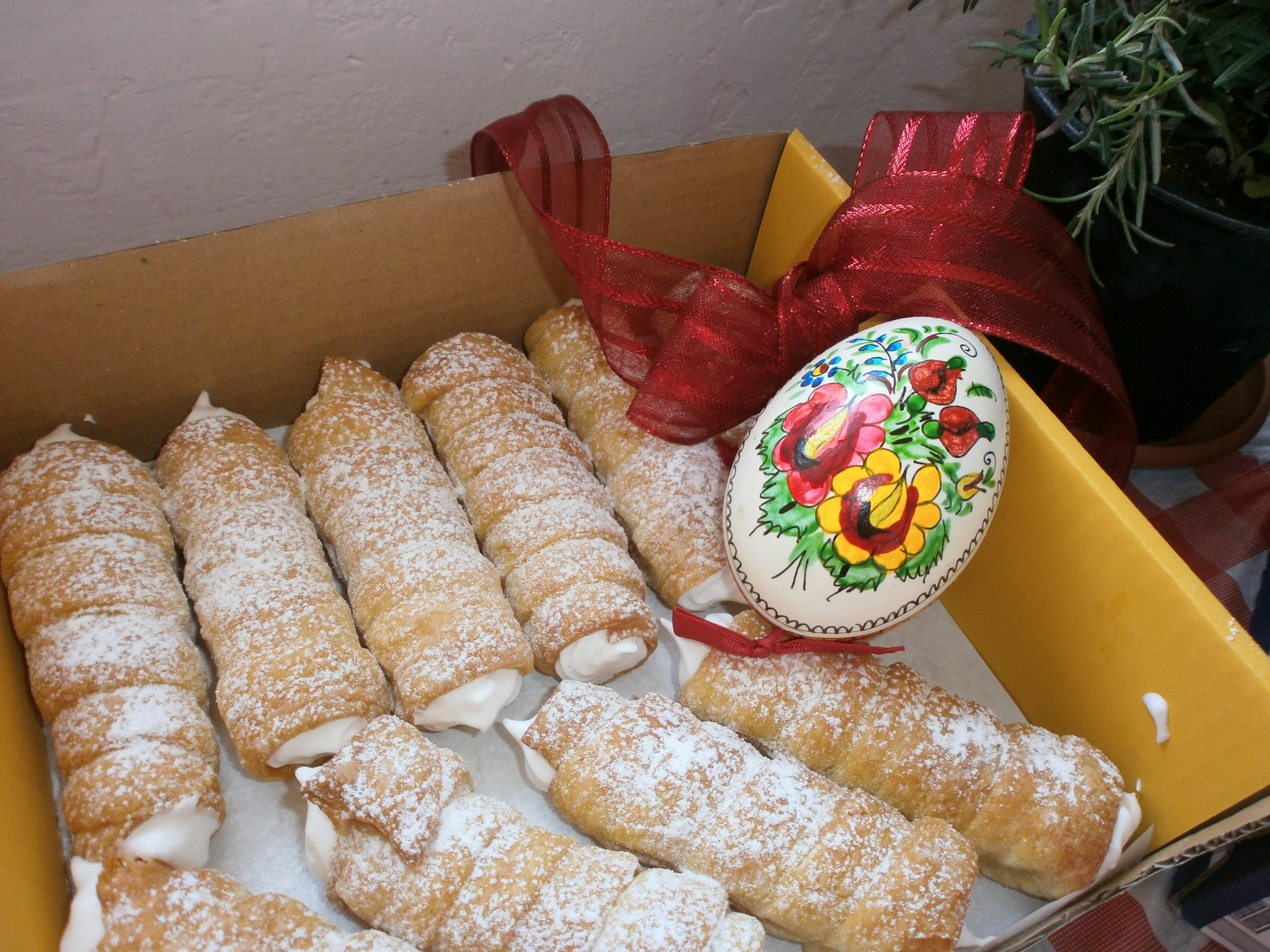
Easter desserts
Women of the house offered shots of plum brandy, usually home-made or acquired through bartering to the “schmigrust” groups. Even family members took part in this ritual. Uncles and cousins visited for coffee, festive desserts such as kolache, shots and meaningful conversation.
On a good year, and especially when I was a teenager, we got anywhere around 100 passionate revelers. Sometimes, I ran out of ribbons. The boys and young men, competing against each other, took pride in the number of ribbons they got. The craft stores had to stock up with meters and meters of ribbons, plain or embroidered. The hens, of course, felt obligated to produce more eggs.














 authoremmapalova