All posts by emmapalova

Emma Palova, born in Czech Republic, is an author, a writer, a screenwriter, a journalist, a photographer, a designer and the founder of Emma Blogs, LLC, based in Lowell, Michigan. Currently, she is working on her memoir "Greenwich Meridian" which she intends to turn into a screenplay. Palova started her blog EW Emma's Writings at http://emmaplova.com in support of the publication of her memoir in January, 2013. The blog has grown into a passion and a company that designs blogs for other people under the umbrella of Emma Blogs. Palova is a prolific online publisher open to new ideas and to new horizons. A natural innovator, Palova loves to create progressive brands into the future. Check out her inspirational post "Desert epiphany" and the authors page on About_me and on Facebook. I am looking forward to seeing you around the greater Grand Rapids area and on my blog. I am seeking an agent or a publisher for the memoir that I intend to publish for my mom Ella's 80 birthday on Aug. 23. I celebrated my fourth anniversary on the WordPress publishing platform on Jan. 15th, 2017 with more than 1,000 followers and 500 plus posts. Love always, Emma

NANOWRIMO DAY 25

Greenwich Meridian: Where East meets West memoir with excerpt

Black Friday Countdown

Shop for book 1 and book 2 from the Shifting Sands Short Stories collections this Friday through Dec. 4. Save up to 60 percent. Click this link: https://www.amazon.com/author/emmapalova

Amazon Review of Secrets

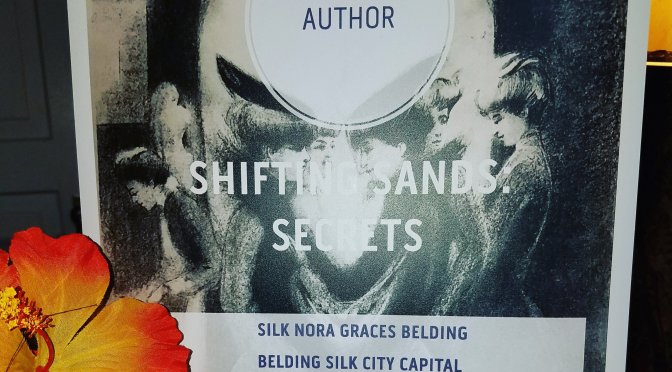
In her own unique style, Palova transports us in “Secrets” Part II of Shifting Sands. She exposes a local scandal in “Chief”. “Faustina” details a relationship lost…or is it? Palova shows us the hard line between fact and rumor in “Secrets in Ink.” My favorite, “Silk Nora”, takes us to small town Belding, Michigan at the height of WWI. A lost love is found again. I could go on with my little snippets from the dozen plus short stories in this book, but I think you’ll want to curl up and read for yourselves.

Translation

I finished translating mom’s memories from her first stay in the U.S. until 1973 this morning. Mom Ella captured three years of her life on 12 pages written in a pretty cursive.

When I compare my account of those years spent in Hawkins, TX as a kid to hers as a disappointed housewife, I begin to understand the mechanism of immigration.

From her lines, I could feel all the emotions:

Excerpt: Bittersweet memories

I planned the return home at the end of the school year in June. In April, Vaclav received a letter from his friend in Toronto, who was also in Sudan, with a newspaper clip from a Czech newspaper published in Toronto. There was a note for me in the letter, advising me not to return back to Czechoslovakia, that the amnesty wasn’t working the way it was supposed to. The newspaper article was about a person who had returned back to Czechoslovakia; at the airport he was taken into an establishment unofficially called “Introduction into citizens’ life.” I read the article at least 10 times and I determined that it was propaganda against Czechoslovakia, and that the press exaggerated everything. Deep inside, I doubted, that it could be true. 

At the beginning of May, I asked Vaclav if he could buy us tickets to Czech. He was very unhappy, but he knew that he couldn’t keep me any longer in Texas. Although Vaclav refused to return with us, he bought the tickets – with a heavy heart. My desire to return back home was stronger than my love for him. I also firmly believed that he wouldn’t stay by himself in the U.S.A. and that he would return to us. 

The scene from the Prague Airport repeated itself at the airport in Dallas; tears, wailing, remorse; I questioned why I had to go through all this again, why couldn’t we return from Sudan home to Czech. This tearful farewell spoiled the joy of my homecoming, and had yet to find out what was in store for me. Finally, after three years, I was leaving Texas, that I never liked. 

Copyright (c) 2019. Emma Blogs, LLC. All rights reserved.
NANOWRIMO DAY 24

Greenwich Meridian memoir continues with excerpt

By Emma Palova

Lowell, MI – I continued this morning with the translation of mom’s memories of our fatal return to Czechoslovakia in 1973 following the presidential amnesty to political prisoners such as us. We fell into this category for illegally leaving the country in 1970.

Excerpt: Presidential amnesty, fatal return to Czechoslovakia in 1973

In her own words

The kids went back to the school in the fall for their third year in Hawkins, Texas. Vaclav liked his job at the college, so everything continued in the same rhythm including my light work as a housewife in our household. I was homesick, I missed my country, my friends and my job at the pharmacy. I didn’t expect any changes and I didn’t try anything new either, I fell into despair firmly convinced that nothing would ever change. 

Home in Vizovice, Czech Republic
Vizovice, our hometown in Czech Republic.

However, a change came; one that I would never expect. As the new year 1973 arrived, Czechoslovakia was celebrating the 25th anniversary of communism known as the “Victorious February” or the 1948 Czechoslovak coup d’etat. In that year, the Communist Party of Czechoslovakia with Soviet backing assumed the undisputed control over the government of Czechoslovakia, marking the onset of four decades of communist rule in the country.

The Czech coup of 1948 had extensive consequences in the Western world.

President Gustav Husak issued an amnesty to political prisoners who illegally left the country and were tried for it. That meant that we could return back home to Czechoslovakia without the risk of going to prison. I could not believe that God heard my prayers and that I could return back to the homeland. 

Within two weeks, I received approximately 10 letters from Czechoslovakia with newspaper clips about the presidential amnesty. I was determined to return to Czechoslovakia with the kids with or without my husband Vaclav; this wasn’t the life for me in Texas. I was extremely happy and immediately responded to all the letters stating that I was going back home. 

To be continued…..

Note: Watch for Black Friday countdown deal on Amazon for Shifting Sands Short Stories book 1 and book 2. Books make a great gift and a great souvenir from Michigan.

Stay tuned for pre-order information on Amazon at https://www.amazon.com/author/emmapalova

Black Friday countdown deal on Amazon for Shifting Sands Short Stories.

Copyright (c) 2019. Emma Blogs, LLC. All rights reserved.
NANOWRIMO WINNER 2019

Greenwich Meridian: Where East meets West memoir

By Emma Palova

Lowell, MI – By logging in 3,751 words in the NaNoWriMo 2019, I am officially a winner of the 50K -word challenge with my memor about the family immigration saga. Yay! I never thought I would get it done. I have yet to complete a translation of three pages of mom Ella’s memories from Texas and review the entire memoir.

NaNoWriMo memoir insights

I entered the challenge this year to complete the memoir that I divided into two halves after hitting a dead end at chapter 11. I did extensive prep work in October including translations of mom’s memories from her immigration ordeal since 1968 and the translation of the “Chronicle of Velvet Revolution.”

Dad Vaclav and mom Ella

The memoir anchors in two major historical events in Czechoslovakia: Prague Spring, 1968 and Velvet Revolution, 1989. It’s an epic saga of love and passion for math, between the main characters, mom Ella and dad Vaclav. These major driving forces took our family across three continents. My own second-generation experience is intertwined in the memoir, as I am the storyteller.

I had to break down different chapters and create a timeline in order to navigate the events of more than 50 years. Once I had the timeline, I filled in the missing years with my parents’ own accounts of their immigration experiences.

What propelled the memoir ahead was the change from a travel account to the experience of immigration in all its dimensions. That was the pain of being separated both from homeland and from each other, offset by dad’s passion for math.

I arrived at an interesting conclusion while writing the memoir: for mom, imigration was a sacrifice to dad and to us, so we could live in a free country. For dad, immigration was a way to teach math without the fear of being persecuted in a socialist country. For me, immigration set me free to create and for Ludek it was a dream come true to build our own house and live the American dream.

Stay tuned for excerpts.

Ask questions right here:

Copyright (c) 2019. Emma Blogs, LLC, All rights reserved.

NaNoWriMo Day 21 & 22

Greenwich Meridian: Where East meets West memoir with Havel quote

By Emma Palova

Lowell, MI – Between the two dreary November days, I logged in 4,000 words into the National Novel Writing Month (NaNoWriMo 2019) dashboard. The Greenwich Meridian memoir about our family immigration saga from former Czechoslovakia is my writing project. The 50K word writing challenge has entered its final week, as we also approach Thanksgiving and I have to do some grocery shopping.

The turkey is already in the freezer and the tasks have been assigned among the family members; mom Ella is making the stuffing and a vegetable casserole, if she feels good she will make the traditional Czech pastry “kolache.” Yay! We’re doing the turkey, cranberry relish and baked beans, daughter-in-law Maranda is making the twice baked potatoes. Yay again!

Czech kolache

For many participants, NaNoWriMo is a great motivator and if you get your winner certificate and finish writing your content, it’s also a great marketing tool for your new book. I penned the core of my second book Shifting Sands: Secrets during last year’s NaNoWriMo.

I would not have been able to do it, without the daily accountability of the word count. Plus, by participating in the month-long NaNoWriMo, you form a daily writing habit, if you don’t have it already. That’s how you unlock your daily writing badges.

I have been writing for the last 22 days in a row after I exercise and do my meditations in the morning. If I have to do something else before I reach the daily writing quota, I continue to write in the afternoon. Overall, my less productive time is in the afternoon, so I leave it for marketing and communications.

I agree with all the great writing gurus:

“Protect your writing time, no matter what.”

If that means writing early in the morning or late at night, so be it. There is no time for goofing around on social media instead of writing. As I have learned at the 2018 Calvin College writing conference, some authors don’t even watch TV after they finish writing in the evening or in the morning.

This week I have been working on chapters “Velvet Revolution” and “Back in the U.S.” Looking back at the historical events like Prague Spring in 1968 and Velvet Revolution in 1989, has been an eye-opening experience. My love for history, politics and arts has only grown stronger while doing research for the memoir.

The Greenwich Meridian memoir will be available for pre-order in January of 2020. Follow me on Amazon on:

https://www.amazon.com/author/emmapalova

Vaclav Havel quote

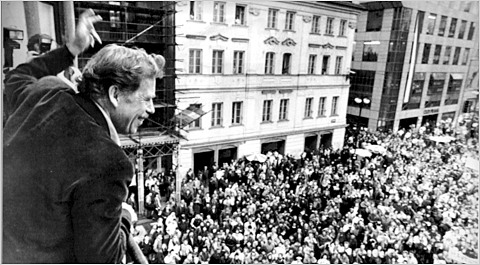
The Red Truth newspaper, the official newspaper of the Communist Party, interviewed Vaclav Havel on Dec. 2, 1989. This was his first opportunity to introduce himself as a playwright and writer, rather than a dissident and a political prisoner. Previously, the newspaper only published bad news about Havel’s actions against the regime.

“You must not like this newspaper?”

“Now is not the time for recriminalization of the past,” he said. “We have to think about the future. The party will enter the democratic system just like any other political party.”

Copyright (c) 2019. Emma Blogs, LLC. All rights reserved.

NaNoWriMo 2019 Day 20

Greenwich Meridian: Where East meets West with excerpt

By Emma Palova

Lowell, MI- As I continued to delve into the memoir this morning, I realized that the immigration experience from former Czechoslovakia to the U.S. wasn’t just an escape from the communism trap, but also a quest for self-realization on both my dad’s part and my own.

But, for our partners, it was a sacrifice.

My dad professor Vaclav Konecny, who feared the religious prohibition set by the Marxist Leninist ideology, wanted to freely practice math in the U.S. without being afraid to go to church on Sundays.

“You can achieve any goal you set your mind to,” he said.

Dad has proven that dreams come true if you work on them, much like late president Vaclav Havel never gave up on freeing Czechoslovakia from the communist grip.

I followed my dream to publish a book after many detours en route to publishing; I have a pile of rejection letters from agents and a lot of pay stubs from jobs, I did not want to do. To this day, my dad is my constant inspiration, since he has never given up on anything. He is forever patient, kind and forgiving.

My other role model is Havel, who spent years in prison for fighting for democracy in Czechoslovakia.

Here is an excerpt from the chapter “Velvet Revolution.”

On Wednesday, Nov. 29, 1989 the Czech Parliament finally dissolved the article about the leading role of the Communist Party and the Marxism-Leninism monopoly on education. 

It was a major victory since this article firmly anchored the dictatorship of the Communist Party and its ideology in the society.  According to the Marxist ideology, the official religion was atheism.

Under the old socialist regime, I had to take final exams from Marxism-Leninism in order to graduate from the Technical University in Brno in 1986. We had mandatory classes in Marxism-Leninism all four years of our engineering studies.  

I remember those wicked Monday classes after getting off of a bus from a two-hour ride Zlin to Brno. One early morning, the professor came in with a black eye. He looked at us and explained pointing to his shiner: 

“I was at Stork’s last night, we had a few beers and I talked about Lenin,” he said. “A guy at the next table got up and hit me.” 

Stork’s is a historic pub located at the Grain Market near the Birthing Center. It was a great pub to study and do our homework, but not to talk about Lenin or Marx. Dads came there to give a toast to their newborn babies.

To be continued…Havel’s interview with the “Red Truth.”

Copyright (c0 2019. Emma Blogs, LLC. All rights reserved.

NANOWRIMO DAY 19

Greenwich Meridian: Where East meets West

By Emma Palova

Lowell, MI – I continued to work on the Greenwich Meridian memoir this morning for the NaNoWriMo 50K word challenge. I logged in 2,948 words for a grand total of 43,485 words.

Mom Ella left for the U.S. for the second time on the Feast of St. Joseph, March 19, 1980 after a long battle for emigration visa from Czechoslovakia.

It was a sad farewell at the Ruzyne Airport in Prague on a rainy day.

Excerpts from chapter “Without mom”

I actually honed my writing skills on letters to the USA long before the Internet, mobile devices, keywords and hashtags.

Magistra Ella Konecny at the main pharmacy in Zlin in late 1970s.

Calling from Europe was expensive, so mom and I wrote to each other letters mailed in thin transluscent Air Mail envelopes with red and blue border. It was a celebration when I received a letter in the mail. It was mostly good news coming from the west side of the Atlantic; mom getting a job or new furniture for the house.

I can’t say the other way around. Eastern Europe was still under the grip of hardldine socialism in 1980, and it would stay that way for another long nine years. Letters were censored and the phones were bugged. Lines for food grew longer.

Living under the oppressive regime meant constant search for life’s necessities. 

Once mom left for America so were gone her connections from the pharmacy on Main Square in Zlin. Mom had a long arm and she used it to get what we needed from meat to toilet paper. 

I had to start living like millions of other people. That meant standing in lines on Tuesdays for bananas and on Thursdays for beef. On weekends at 2 pm a truck came with Prerov beer. Grandpa Joseph wouldn’t drink any other beer.

On the other hand, life was more social in every aspect, because we had to use public transportation. There weren’t enough cars made, and there was a waiting list for them. The only brands available were a standard Skoda, and the lesser Trabant dubbed as Hitler’s vendetta because it was made in East Germany. That was before the wall went down. 

However, most people didn’t have money to buy either the Skoda or the Trabant. We used public transportation choosing between buses, trains and trams. They were all equally uncomfortable and dirty. 

Everyone carried a bag full of groceries every day, because the refrigerators were not big enough for longer storage. And then of course there was the issue of different days of deliveries of different groceries, not to speak of fresh produce and meat. 

In the heat of the summer, people smelled of cheap fragrances. The better perfumes were imported from the West, and available only at Tuzex stores with fake money called bons. 

Submit your questions about what was it like living in socialist Czechoslovakia.

← Back

Thank you for your response. ✨

Copyright (c) 2019. Emma Blogs, LLC. All right reserved.

NANOWRIMO DAY 18

Greenwich Meridian: Where East meets West

By Emma Palova

Lowell, MI – I worked on a draft chapter “Consolidation” about life in Czechoslovakia before mom’s second departure for the U.S. earlier this morning up to 1980. I logged in a grand total of 40, 537 words in the NaNoWriMo 50k word challenge.

I described Czech Christmas traditions and the major differences between Czech and American cultures. My author’s gig at the Lowell Area Historical Museum helped me add another dimension to our immigration saga from socialist Czechoslovakia.

Mary Lacy of M&M Prescious Gems at the Lowell Area Historical Museum

I talked about the memoir with fellow vendors Mike and Mary Lacy of M&M Prescious Gems from Grand Rapids during Christmas through Lowell. We shared a 28-hour workload over three days under the watchful eyes of the Lowell Board of Trade 1908 and the portrait of one of Mr. Graham’s wives. Mr. Graham built the Italianate structure of the museum in 1873.

“Were you scared in Czechoslovakia?” Mary asked me on Sunday.

I had to think really hard if I was ever scared living in a socialist country under the Soviet rule in the hardline 1970s and 1980s.

“I was careful, but not scared,” I said. “Unless you were a political activist like late Vaclav Havel, you were just an ordinary person, and they didn’t care about you.”

By that, I meant the communist party and the whole political system didn’t really care about a regular citizen. However, we were under surveillance after our return to Czechoslovakia in 1973, since we were tried for illegally leaving the country.

True, you had to be careful about what you said in public, because there were spies. Plus, there was a religious prohibition. We were afraid to go to church, especially my dad and aunt, who were teachers.

Excerpt: Differences between the two cultures

People often ask me what are some of the differences between the two cultures: Czech and American. Many differences have disappeared after the communist regime fell with the Velvet Revolution in 1989.  However, judging from visits and people’s posts on social media, phone calls with friends and family, the attitude toward life in general hasn’t changed. It is a mix of pessimism with a twist of evil in the response to a typical Czech greeting “How are you?” 

“It’s worth shit.,” anyone will say at any given time. 

The honest answer holds an entire spectrum of emotions including the disappointment from the aftermath of the Velvet Revolution as capitalism stuck out one of its ugly heads like Medusa. The gap between the rich and the poor in Czech Republic is getting wider and wider, as there are few rich people, while the majority struggles. Traditionally, the Czechs envied each other’s possessions, but with capitalism the envy maxed out into hatred usually directed toward politicians and the past that cannot be changed. Whenever anything bad happened, it was usually the other person’s fault. There is a general lack of responsibility among the population for anything whether bad or good. That is the legacy of communism; no one was responsible for anything because the almighty Communist Party took care of everything for you. There was very little left for you to do; go to work, get some groceries and watch TV. 

Copyright (c) 2019. Emma Blogs, LLC. All rights reserved.

30th anniversary of Velvet revolution, Nanonowrimo day 17

Note: I logged in 1, 135 words in the National Novel Writing Month 50K word challenge earlier this morning. I will be at the Lowell Area Historical Museum (LAHM) today from 11 a.m. to 5 p.m. along with eight other vendors ranging from candles to jewelry. Stop by to pick up an autographed copy of my new book Secrets from the Shifting Sands Short Stories collections.

Christmas through Lowell, Sunday Nov. 17

I have a special today: both of my books “Secrets” and “Short Stories” are for 25$. They make an excellent Christmas gift or a souvenir from Michigan. All the stories are set in Michigan; the flagship story “Silk Nora” is set at the turn-of-the-century Belding, when it was known as the Silk City Capital of the World. The silk mills employed young women who were known as “Sweethearts in Silk.”

Sweethearts in Silk

Sweethearts in Silk, at Richardson Silk Mills

By Emma Palova

Lowell, MI -Today is the 30th anniversary of the Velvet Revolution that toppled the socialist regime in former Czechoslovakia on Nov. 17, 1989. It is a national holiday in Czech Republic known as the Day of Battle for Freedom and Democracy.

The student protests started in Prague and swept the entire country for 10 critical days that culminated in the General Strike on Nov. 27, 1989.

I was still in living in Czechoslovakia when these demonstrations broke 44 years of silence under the Communist Party rule.

Excerpt from Greenwich Meridian: Where East meets West

Velvet Revolution, 1989 

The journey to return back to the USA was long and painful, to be exact it lasted 16 years. Those years were filled with normal and not so normal life’s events; the most significant being the toppling of the communist regime a month before my departure on Dec. 22, 1989. 

I lived history twice: in Prague Spring,1968 and Velvet Revolution in 1989. I was a kid, so I don’t remember the Soviet tanks invading the country in 1968, but I remember the consequences that my parents Ella and Vaclav described so eloquently in their own words. The results of Prague Spring took us on a roller coaster ride from Czechoslovakia, to Africa, Canada, Texas and back to Czechoslovakia. 

But, the second event. Velvet Revolution, that changed the course of history for Eastern and Western Europe, I recall as if it had happened yesterday. I documented it myself in a diary with a blue hard cover and bought an important publication published by the Czech Press Office: “Chronicle of Velvet Revolution” in 1989 for 10 crowns. It is the most important document that I own, other than the American passport. 

The communist block, which Czechoslovakia was a part of, started collapsing in neighboring Poland under their leader Lech Walesa. I remember, we had no dairy products, as they were all being shipped to Poland. While it was an act of camaraderie, the Polish people didn’t unload the train with the food and let the products spoil. 

After that it seemed like a domino effect with one block collapsing and knocking down the other countries of the Eastern Block.

Sometime in the summer of 1989, I spoke with a friend attorney about matters pertaining to my pending departure to the U.S.- I had to get rid of all possessions, including my citizenship, pay for my education and such. After discussing matters at hand, Mr. H said: 

“The bell is tolling for them.” 

I stared at him in awe; we were used to speaking in riddles. 

“What do you mean?” I asked. 

“I can’t say.” 

Copyright (c) 2019. Emma Blogs, LLC. All rights reserved.

NANOWRIMO DAY 16

A day at the museum during Christmas through Lowell

By Emma Palova

Lowell, MI – On day 16 of the National Novel Writing Month 50k word challenge, I continued to work on chapter “Bits and Pieces” from the Greenwich Meridian: Where East meets West memoir. Excerpt will follow.

I will be at the Lowell Area Historical Museum again today from 9 a.m. until 7 p.m. along with eight other vendors including the museum gift shop. The museum is located at 325 W. Main at the main intersection in downtown Lowell next to Larkin’s Other Place.

NaNoWriMo 2019

We spent a fine day at the museum yesterday enjoying an influx of visitors. At the end of the day, the tally was 470 people.

The museum is one of the finest small town museums in America, currently with a special exhibit about Robert W. Graham who built the Italianate structure in 1873 as a family residence.

Many visitors admired the wallpaper, the floor and the steep staircase. The building also served as a library and it was home to the YMCA.

The museum comes alive this weekend with vendors ranging from soy candles, rocks, wire-rapped jewelry, knitted products and books.

Excerpt: Greenwich Meridian

Bits & Pieces

True, I have broken a lof of stuff in my life. That is both physical and emotional. I have broken crystal glasses and I have broken hearts. I have severed ties with the old country, most of them. What remains are bits and pieces, just like the memorabilia: porcelain spice jars with green clovers and a coffee set from Carlsbad in soft colors with golden etching made by Josefina Loucky Czechoslovakia.

I have broken and I have mended. Ludek fixed some of the broken pieces like the fragile sugar bowl with grey flowers and golden etching from grandma Anna. He glued the broken pieces together. Out of the incomplete coffee set, I have the sugar bowl and two plates left.

To be continued…

Copyright (c) 2019. Emma Blogs, LLC. All rights reserved.

NANOWRIMO DAY 15

Christmas through Lowell Nov. 15- Nov. 17, 2019

Lowell Area Historical Museum

325 W. Main St., Lowell

I am getting ready for a three-day author’s gig at the Lowell Museum during the Christmas through Lowell tour. Stop by for an autographed copy of my new book “Secrets” from the Shifting Sands Short Stories series. Today is the longest day from 9 a.m. until 9 p.m.

NaNoWriMo 2019

Greenwich Meridian: Where East meets West

I got an early morning start today with my husband Ludek announcing that we finally got a thaw from the “Novruary” weather that was more like in January.

I worked on the chapter “Mom’s battle for emigration” that will need a title change.

Excerpt

I wandered through the streets of Zlin afterwards not going back to school. I needed to internalize cousin Peter’s funeral. I went past the shops on the main boulevard of Zlin now named Thomas Bata Boulevard after the big shoe businessman. I stopped at some of the store windows without knowing what was on display. Like a robot, I walked to the next one, I stopped and looked, but I didn’t see. Sometimes, I looked at my feet as they walked forward. And then I looked up at the grey sky laying heavily above my head. 

I stopped at a news stand to look at the books that had just come out. I saw a paperback book “Diary of an American Wife.” I wondered what it’s like to be an American wife. I thought I would never find out. 

I was hoping that I wouldn’t run into any friends. I must have been carrying a bag with my text books because I started to feel the weight in my right hand. I went past “Zlinanka,” a fancy decadent café that served sundaes and desserts. I’ve been there a thousand times, but this time it didn’t feel right.

Next in row was the main pharmacy and then came the real hard decision-maker. That was the deli “Rybena.” The deli for me was like Mc Donald’s is here in the USA.

Even though, I must say “Rybena” was more than a socialist staple. It stood out from the other ubiquitous delis around the country. The deli made its own greasy white chips, a bag for two crowns called “lupinky” which means flakes. I doubt they were made from potatoes. I usually bought a bag, and I ate it all at once. Then I would get sick. “Rybena” was also the only place in town that sold raw fish, mostly trout. The raw trout were laying right next to the open-faced sandwiches known as “canopies” because they looked like tents or canopies. 

Copyright (c) 2019. Emma Blogs, LLC. All rights reserved.