Thanks for writing reviews that will help the ranking of my books on Amazon from the Shifting Sands Short Stories collections. I need to reach 25 reviews for basic ranking.
This is the main link to writing reviews on Amazon. The reviews do not have to be long.
I am in the process of planning my book tour for 2020. Let me know, if you want me to come to a specific place or event.
I will be in Venice, FL for the book fair and writer’s festival on March 20 & 21. It is also my writer’s retreat.
I am looking for an author to share a table.
Contact me with questions about my new book Greenwich Meridian: Where East meets West, or any other questions. The book will be available for pre-order in January.
Holiday traditions bring food to the festive table
By Emma Palova
Lowell, MI – Since we are in the holiday spirit, I wrote about the holidays and festivities in my Greenwich Meridian memoir today back in the socialist era of former Czechoslovakia.
Many households were self-sufficient with most everything home raised and home made. A staple of the holiday season was the butchering of the family pig, so there was plenty of meat on the festive table.
Below is an illustration by Czech national artist Joseph Lada of a holiday tradition.
Here is an excerpt:
However, a big tradition centered around the parishes stayed intact- that is the feast of the saints, to which the churches were dedicated to. In our case, it was the Feast of Saint Mary in Stipa on September 8th. These feasts or pilgrimages were much like homecomings or festivals in the U.S. The entire families gathered for the feasts for an opulent celebration of the saints. In many cases, animals were butchered and ladies baked the famous pastry-kolache or strudels. A dance took place at the local hall on the night before the feast. This often turned into a brawl, as people got drunk on plum brandy. Carnival rides always came into town with booths and paper roses. I loved these paper colorful crepe roses on wires; I wish I had kept at least one. Other booths sold gingerbread hearts of all sizes for all hearts.
In traditional pilgrimage places like Hostyn, the booths were set up all the time and opened for the season with hundreds of religious and non-religious items.
That brings me to celebrations of holidays in general. In villages like Stipa, many people raised animals for meat: rabbits, pigs, geese, turkeys, chickens and ducks. That was the primary source of meat for the holidays. Most meat was roasted, served with sauces or sauerkraut and dumplings. Pork and chicken were often fried into wiener schnitzel. Salads or vegetables were not as common as in the U.S. due to their year-round shortage. Soups were always a part of a holiday meal, mostly beef or chicken. In some households, people made their own noodles.
As a rule, women baked for the weekends all sorts of pastries, some for breakfast. But there was also an abundance of pastries on the market; at the bakeries, coffee shops, patisseries and in grocery stores. Among the most famous were “rohliky” or bread rolls in the shape of a crescent, some even came with poppy seeds. And bread was always good, whether baked round with hard crust or in loaves.
Other products made also at home were sausages and smoked meat. The butchering of the family pig usually took place in winter and before the holidays, so there was plenty of meat on the table.
The shortages in socialism drove the need for self-sufficiency specifically in the villages and craftsmanship as well.
Many households in villages and towns were self-sufficient with everything homemade or home grown. National artist Joseph Lada illustrated the traditional festivities: The Feast of St. Nicholas on Dec. 6, the butchering of the family pig in the yard with onlookers, Christmas by the tall tiled stoves, autumn campfires with fire-roasted potatoes and summer fun by the ponds with the willows.
The Czech Republic enjoys distinct seasons: mild winters, early springs, hot summers and moderate autumns.
Wishing you a peaceful holiday season, as I continue to work on the Greenwich Meridian memoir about our family immigration saga from former Czechoslovakia to the U.S.
Based on a request from Mary Lacy, a vendor of M&M Prescious Gems at the Lowell Area Historical Museum, I decided to add two more chapters about living in socialism.
Below is an excerpt from the Greenwich Meridian memoir:
The Good and the Bad
The socialist system had its own way of getting at you by creating mysterious “profiles.” It was a compilation of background checks that ranged from, whether you were a member of the Communist Party or not, to how many volunteer hours have you worked on a community project like building a nursery. If you went to church, your profile would state that, and it went against you when you applied for jobs or to universities.
My profile was “speckled” because we had returned from the U.S. for Czech President Gustav Husak’s amnesty in 1973. Even though, it was an official amnesty for political victims of the 1968 Prague Spring, like us, it served more as a punishment and a showcase of what can happen if you screwed over the regime.
The profiles also took into account your mandatory volunteering at different community projects and brigades. The communists must have used some sort of a scoring point system; the worst part was that they took into account your entire family. For example, if you came from an agricultural family that used to own large parcels of land, that went against you, even though the communists took all the land in two major nationalizations in 1945 and in 1948. If you were a former business owner, that wasn’t good either.
Among interesting events at workplaces were birthday celebrations. My husband Ludek described a typical birthday when the celebrant brought in a bottle of plum brandy and poured everyone from each department a shot. After work, the celebration continued at the local pubs. There was a lot of birthday celebrations throughout the years. For the 50th birthday, you always got a fancy watch.
During national holidays, the factory workers would steal anything and take it through the gates without being checked because there were so many of them leaving at once for the parades. So, the parades were known as the “March of Thieves.” The parades actually started inside the factory.
On the matter of overtime, one individual was selected to punch for all, who waited somewhere behind the gates. The huge factory complex known as Svit and ZPS spanned several blocks in Zlin, and it was built during the Thomas Bata era in the 1940s. It employed 10,000 workers per factory. Svit was the shoe factory started by Bata, while ZPS was the mechanical engineering factory. The shoe factory mainly employed women, while ZPS employed mostly men.
Both were the major employers in Zlin, and people worked there for generations. In socialism, everything was planned accordingly into one- year plans, five -year plans and 10- year plans. All the companies had to strive to fulfill the plans to the highest percentage for bonuses at the end of the year, called the 13th salary.
To be continued…Socialism perks through ROH
Subscribe or email questions about living in socialism or any other questions or comments:
Greenwich Meridian: Where East meets West New autobiographical novel on its way to pre-order on Amazon. .
Emma Palova’s author news
With Christmas just around the corner and the shopping frenzy on, I am pleased to announce that I have completed the new autobiographical novel “Greenwich Meridian: Where East meets West during the National Novel Writing Month (NaNoWriMo.) I have, however, decided to add two more chapters based on a recent conversation at one of my book signing events. Vendor Mary Lacy asked me, if I was ever afraid living in a socialist country. I had to really think hard about the answer to the surprise question. So, it occurred to me that many of my fans will be interested in the same topic. “What was it like living in socialism?” I was born in socialist Czechoslovakia and lived there during the hardline years of communism in the 1970s and 1980s. Living in socialism meant being careful on a daily basis about what you said and to whom. However, only political activists like late president Vaclav Havel faced repercussions and ended up in jail. The system had its way of getting at you by creating “profiles.” If you went to church, your profile would state that, and it went against you when you applied for jobs or to universities. Please email me with your questions about socialism at emmapalova@yahoo.com
Reviews and a book tour
Why write a review?
All authors need reviews, and basically not just authors. But Amazon requests at least 25 reviews for authors to get any ranking, so then Amazon algorithms can start working in the author’s favor.
I haven’t been able to reach that magic number, even though it doesn’t seem high. Prior to publication, I sent out pdfs to reviewers.
And I will do that again with the new book. Just email me for pdfs.
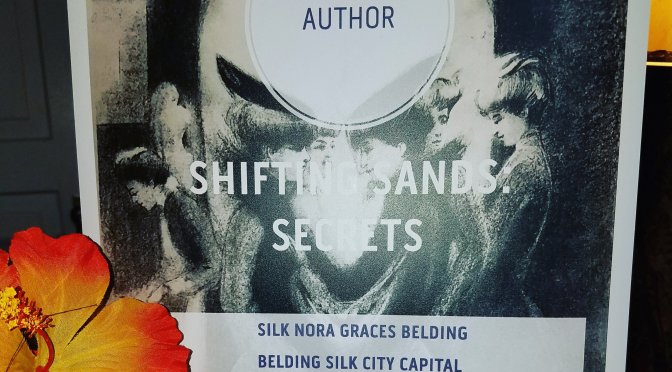
Below is a link to my books from the Shifting Sands Short Stories collections: book 1 and book 2 Secrets. Books make a great Christmas gift.
I am in the process of planning a new book tour for 2020, which I am very excited about.
Why come to a Michigan author event? “Michigan Authors are sweeping the shores of the Great Lakes from Lake Michigan to Lake Superior and Lake Huron in a new wave of renaissance in literature.” - Emma Palova
You’re supporting local authors who write from Michigan with Michigan settings. You will get an autographed book by a live author. You will get insider tips from the publishing industry. You will learn about the writing process; from an idea to a book. You will leave inspired.
Happy holidays to all.
Emma Palova Dec. 9, 2019
Email Emma to subscribe to the E-Newsletter at emmapalova@yahoo.com
Copyright (c) 2019. Emma Blogs, LLC. All rights reserved.
Lowell, MI – On this 30th anniversary of the Velvet Revolution in former Czechoslovakia, I am including an excerpt from the Greenwich Meridian: Where East Meets West memoir about our family immigration saga. The epic tale of passion and love takes place on the backdrop of two major historical events: Prague Spring 1969 and Velvet Revolution 1989.
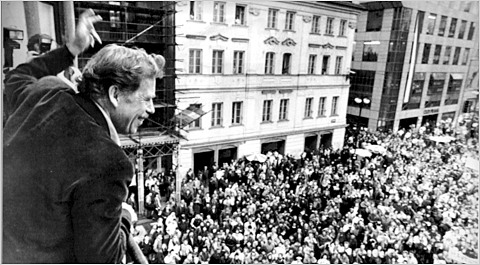
Thirty years ago, I was standing on Wenceslas Square in Prague along with 500,000 other people, ringing my keys and listening to the future president Vaclav Havel. It was cold and I was shivering; not just from the November chill, but from the events of the last 10 days. These 10 days shook the world.
“Havel to the castle,” was the overwhelming response of the crowds chanting for Havel to become the next president of free Czechoslovakia.
Excerpt from Greenwich Meridian memoir
On the day
of the General Strike, Monday, Nov. 27, the wave of citizen activity crested
after a week of protests and manifestations. Across the country, people stood
at major squares, sporting tricolor ribbons, waving flags and ringing their
keys to symbolize the end of the Stalinist model of socialism.
I took the
train to Prague to join thousands on Wenceslas Square. I still thought I was
dreaming and that I was going to wake up after a long dark night. I had to
pinch myself to feel the pain to make sure this was happening. But I could hear
it happening around me, in me, everywhere. My heart was beating fast, as I had
to fight the crowds and overcome the old claustrophobia. That day I saw Havel
in person.
The General
Strike from noon until 2 p.m. was a political referendum that did not hurt the
economy. Approximately half of the population joined in the manifestations
around the country. Only minimum percentage were not allowed to participate in
the strike; others made up for the lost time at work. The referendum joined all
members of the society representing its demographics: students, factory
workers, farmers, artists, athletes and scientists determined to change the
course of history for this small country in Central Europe.
The people
have spoken and the demands of the Citizens’ Forum were being met. The state
department of culture released all films and books from the special “safe” for
prohibited material.
The rest of
the political prisoners would be released, as one of the major demands of the
Citizens’ Forum. The university students were nominated for the Nobel Peace
Prize for their courage and bravery during the 10 days from the onset of the
Velvet Revolution on Friday Nov. 17, 1989.
The article
about the leadership role of the Communist Party would be dissolved from the
constitution. New laws allowing for freedom of speech, gathering, press were in
the works.
A new
Democratic Forum of the Communists was formed denouncing the 1968 invasion of
armies of five states from the Warsaw Treaty. The reporters, who were against
the invasion, were reinstated in the Association of Reporters.
In Brno, the
Committee of Religious Activists, showed support for the demands of the
Citizens’ Forum.
Vaclav Havel received the German Book Prize at the National Theater.
Copyright (c) 2019. Emma Blogs, LLC. All rights reserved.
Lowell, MI – As the 50k National Novel Writing Month (NaNoWriMo) challenge winds down and Thanskgiving is upon us, I have decided to share this letter from its director Grant Faulkner. It expresses exactly how I feel about the challenge, its impact and reaching writing goals way beyond the formidable 50,000K mark.
Deep inside me, I feel like I’ve always been a part of this collective effort to share our stories with the world, even though I have participated and won only twice in NaNoWriMo’s 20 years of existence. If I had known about it, I would have always participated to make a difference in this world, and not just to appease my ego.
I would like to thank all the wrimos and my readers for support. Stay tuned for a separate post on my writing day no. 27- Velvet Revolution.
For my project I chose the completion of the Greenwich Meridian: Where East meets West memoir about our family immigration saga from former Czechoslovakia to the U.S.
As of today, I have logged on my NaNoWriMo dashboard 55,895 words with Greenwich Meridian: Where East meets West.
The memoir will be available for pre-order on Amazon at the end of January.
Don’t forget to shop Black Friday deals on my books no. 1 & no. 2 from the Shifting Sands Short Stories collections by clicking on the following link:
The other day, I was talking to a Wrimo at a write-in, and she told me how she didn’t go to write-ins for several years because she was too nervous. She worried that she’d walk into a room without knowing anyone and be greeted by cold, quizzical stares.
But that didn’t happen.
“When I walked in, people greeted me, asked me about my novel, and gave me snacks and tea. I felt like I belonged,” she said.
The ostensible goal of NaNoWriMo is to write 50,000 words in 30 days, but as I talked with this writer, I was reminded how NaNoWriMo is about much more than that. It’s about expanding your world through your story. It’s about going places you might be afraid to go. It’s about connecting to something larger than yourself—both on the page and beyond.
It’s about belonging, in short. We find belonging in our stories because our stories show us how our longings and our needs aren’t just ours alone, but part of something larger, something more universal. That’s important because when you feel you belong, you can do big things.
So I’m pausing today to thank you for helping to create a world of belonging through our stories. I thank you for welcoming people into write-ins and tweeting encouragement to writers you might not even know. I thank you for creating this community that is somehow the largest table of writers in the world, yet still feels so personal, so intimate, and so generous.
Grateful for a world where people find a home in their stories,
Grant Faulkner Executive Director 43,174 words and counting….
Copyright (c) 2019. Emma Blogs, LLC. All rights reserved.
Greenwich Meridian: Where East meets West memoir with excerpt
Black Friday Countdown
Shop for book 1 and book 2 from the Shifting Sands Short Stories collections this Friday through Dec. 4. Save up to 60 percent. Click this link: https://www.amazon.com/author/emmapalova
Amazon Review of Secrets
In her own unique style, Palova transports us in “Secrets” Part II of Shifting Sands. She exposes a local scandal in “Chief”. “Faustina” details a relationship lost…or is it? Palova shows us the hard line between fact and rumor in “Secrets in Ink.” My favorite, “Silk Nora”, takes us to small town Belding, Michigan at the height of WWI. A lost love is found again. I could go on with my little snippets from the dozen plus short stories in this book, but I think you’ll want to curl up and read for yourselves.
Shifting Sands Short Stories book 1 and Shfiting Sands Secrets book 2
Translation
I finished translating mom’s memories from her first stay in the U.S. until 1973 this morning. Mom Ella captured three years of her life on 12 pages written in a pretty cursive.
When I compare my account of those years spent in Hawkins, TX as a kid to hers as a disappointed housewife, I begin to understand the mechanism of immigration.
From her lines, I could feel all the emotions:
Excerpt: Bittersweet memories
I planned the return home at the end of the school year in June. In April, Vaclav received a letter from his friend in Toronto, who was also in Sudan, with a newspaper clip from a Czech newspaper published in Toronto. There was a note for me in the letter, advising me not to return back to Czechoslovakia, that the amnesty wasn’t working the way it was supposed to. The newspaper article was about a person who had returned back to Czechoslovakia; at the airport he was taken into an establishment unofficially called “Introduction into citizens’ life.” I read the article at least 10 times and I determined that it was propaganda against Czechoslovakia, and that the press exaggerated everything. Deep inside, I doubted, that it could be true.
At the beginning of May, I asked Vaclav if he could buy us tickets to Czech. He was very unhappy, but he knew that he couldn’t keep me any longer in Texas. Although Vaclav refused to return with us, he bought the tickets – with a heavy heart. My desire to return back home was stronger than my love for him. I also firmly believed that he wouldn’t stay by himself in the U.S.A. and that he would return to us.
The scene from the Prague Airport repeated itself at the airport in Dallas; tears, wailing, remorse; I questioned why I had to go through all this again, why couldn’t we return from Sudan home to Czech. This tearful farewell spoiled the joy of my homecoming, and had yet to find out what was in store for me. Finally, after three years, I was leaving Texas, that I never liked.
Copyright (c) 2019. Emma Blogs, LLC. All rights reserved.
Lowell, MI – I continued this morning with the translation of mom’s memories of our fatal return to Czechoslovakia in 1973 following the presidential amnesty to political prisoners such as us. We fell into this category for illegally leaving the country in 1970.
Excerpt: Presidential amnesty, fatal return to Czechoslovakia in 1973
In her own words
The kids went back to the school in the fall for their third year in Hawkins, Texas. Vaclav liked his job at the college, so everything continued in the same rhythm including my light work as a housewife in our household. I was homesick, I missed my country, my friends and my job at the pharmacy. I didn’t expect any changes and I didn’t try anything new either, I fell into despair firmly convinced that nothing would ever change.
Vizovice, our hometown in Czech Republic.
However, a change came; one that I would never expect. As the new year 1973 arrived, Czechoslovakia was celebrating the 25th anniversary of communism known as the “Victorious February” or the 1948 Czechoslovak coup d’etat. In that year, the Communist Party of Czechoslovakia with Soviet backing assumed the undisputed control over the government of Czechoslovakia, marking the onset of four decades of communist rule in the country.
The Czech coup of 1948 had extensive consequences in the Western world.
President Gustav Husak issued an amnesty to political prisoners who illegally left the country and were tried for it. That meant that we could return back home to Czechoslovakia without the risk of going to prison. I could not believe that God heard my prayers and that I could return back to the homeland.
Within two weeks, I received approximately 10 letters from Czechoslovakia with newspaper clips about the presidential amnesty. I was determined to return to Czechoslovakia with the kids with or without my husband Vaclav; this wasn’t the life for me in Texas. I was extremely happy and immediately responded to all the letters stating that I was going back home.
To be continued…..
Note: Watch for Black Friday countdown deal on Amazon for Shifting Sands Short Stories book 1 and book 2. Books make a great gift and a great souvenir from Michigan.
Lowell, MI – By logging in 3,751 words in the NaNoWriMo 2019, I am officially a winner of the 50K -word challenge with my memor about the family immigration saga. Yay! I never thought I would get it done. I have yet to complete a translation of three pages of mom Ella’s memories from Texas and review the entire memoir.
NaNoWriMo memoir insights
I entered the challenge this year to complete the memoir that I divided into two halves after hitting a dead end at chapter 11. I did extensive prep work in October including translations of mom’s memories from her immigration ordeal since 1968 and the translation of the “Chronicle of Velvet Revolution.”
Dad Vaclav and mom Ella
The memoir anchors in two major historical events in Czechoslovakia: Prague Spring, 1968 and Velvet Revolution, 1989. It’s an epic saga of love and passion for math, between the main characters, mom Ella and dad Vaclav. These major driving forces took our family across three continents. My own second-generation experience is intertwined in the memoir, as I am the storyteller.
I had to break down different chapters and create a timeline in order to navigate the events of more than 50 years. Once I had the timeline, I filled in the missing years with my parents’ own accounts of their immigration experiences.
What propelled the memoir ahead was the change from a travel account to the experience of immigration in all its dimensions. That was the pain of being separated both from homeland and from each other, offset by dad’s passion for math.
I arrived at an interesting conclusion while writing the memoir: for mom, imigration was a sacrifice to dad and to us, so we could live in a free country. For dad, immigration was a way to teach math without the fear of being persecuted in a socialist country. For me, immigration set me free to create and for Ludek it was a dream come true to build our own house and live the American dream.
Stay tuned for excerpts.
Ask questions right here:
Copyright (c) 2019. Emma Blogs, LLC, All rights reserved.
Greenwich Meridian: Where East meets West memoir with Havel quote
By Emma Palova
Lowell, MI – Between the two dreary November days, I logged in 4,000 words into the National Novel Writing Month (NaNoWriMo 2019) dashboard. The Greenwich Meridian memoir about our family immigration saga from former Czechoslovakia is my writing project. The 50K word writing challenge has entered its final week, as we also approach Thanksgiving and I have to do some grocery shopping.
The turkey is already in the freezer and the tasks have been assigned among the family members; mom Ella is making the stuffing and a vegetable casserole, if she feels good she will make the traditional Czech pastry “kolache.” Yay! We’re doing the turkey, cranberry relish and baked beans, daughter-in-law Maranda is making the twice baked potatoes. Yay again!
Czech kolache
For many participants, NaNoWriMo is a great motivator and if you get your winner certificate and finish writing your content, it’s also a great marketing tool for your new book. I penned the core of my second book Shifting Sands: Secrets during last year’s NaNoWriMo.
I would not have been able to do it, without the daily accountability of the word count. Plus, by participating in the month-long NaNoWriMo, you form a daily writing habit, if you don’t have it already. That’s how you unlock your daily writing badges.
I have been writing for the last 22 days in a row after I exercise and do my meditations in the morning. If I have to do something else before I reach the daily writing quota, I continue to write in the afternoon. Overall, my less productive time is in the afternoon, so I leave it for marketing and communications.
I agree with all the great writing gurus:
“Protect your writing time, no matter what.”
If that means writing early in the morning or late at night, so be it. There is no time for goofing around on social media instead of writing. As I have learned at the 2018 Calvin College writing conference, some authors don’t even watch TV after they finish writing in the evening or in the morning.
This week I have been working on chapters “Velvet Revolution” and “Back in the U.S.” Looking back at the historical events like Prague Spring in 1968 and Velvet Revolution in 1989, has been an eye-opening experience. My love for history, politics and arts has only grown stronger while doing research for the memoir.
The Greenwich Meridian memoir will be available for pre-order in January of 2020. Follow me on Amazon on:
The Red Truth newspaper, the official newspaper of the Communist Party, interviewed Vaclav Havel on Dec. 2, 1989. This was his first opportunity to introduce himself as a playwright and writer, rather than a dissident and a political prisoner. Previously, the newspaper only published bad news about Havel’s actions against the regime.
“You must not like this newspaper?”
“Now is not the time for recriminalization of the past,” he said. “We have to think about the future. The party will enter the democratic system just like any other political party.”
Copyright (c) 2019. Emma Blogs, LLC. All rights reserved.







 authoremmapalova