I entered this award contest by public vote with my Greenwich Meridian Memoir about our immigration saga from former Czechoslovakia on the backdrop of two major historic events: Prague Spring 1968 and Velvet Revolution in 1989.. Vote for my book today. Author Emma Palova. Voting information is not public.
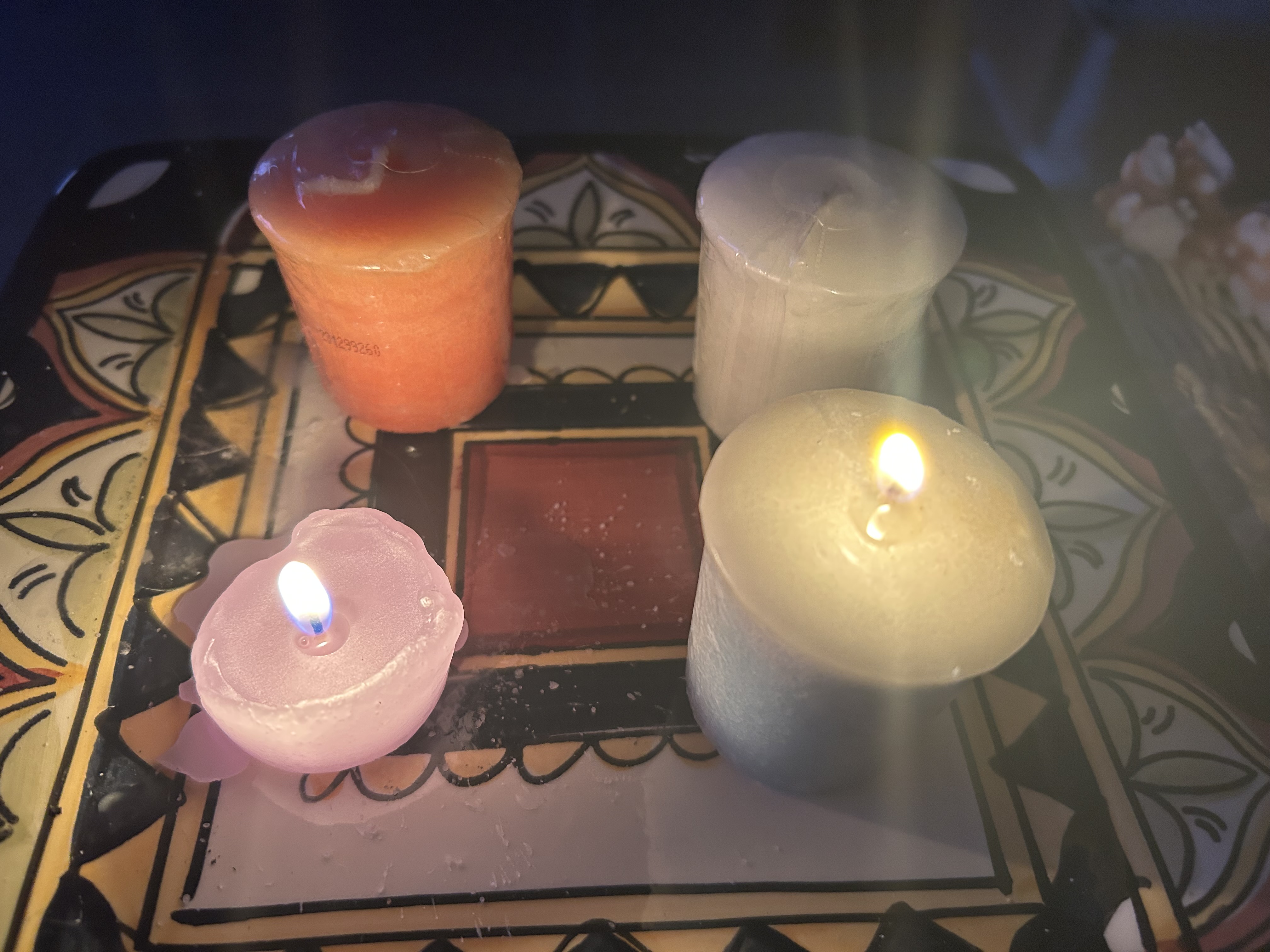
I lit the second Advent candle this morning after logging in 503 words in my personal @NaNoWriMo December challenge reimagined. The balmy morning on the driveway uncovered beautiful winter sunrise as I rejoiced in the joy of the Advent season.
Advent is inspiring me to create in the peace of the days. Everything is silent. No disturbances in the air or heart.
The second Advent candle is burning strong in the stillness of my beloved sunroom. I
Today is my dad Vaclav Konecny’s name day, and my brother’s as well. Vaclav is the regular modernized version of Wenceslas, which was a royal name for the kings of Bohemia. It is a national holiday in the Czech Republic also known as ‘Czech Statehood Day’ that has been celebrated since 2000.
Sept. 28 is the feast day of St. Wenceslas, the patron saint of Bohemia, and it commemorates his death in 935. St. Wenceslas was the duke of Bohemia and the patron saint of the Czech Republic. Unfortunately, he was the victim of a murder plot orchestrated by Boleslav, who was his own brother. People celebrate this feast with festivals around the nation.
The main square in Prague is called “Vaclavak” or Vaclavske Namesti. It’s more a boulevard than a square and it is the busiest place in Prague, and traditionally a place for gatherings and manifestations, the site of Christmas markets. The statue of St. Wenceslas adorns the boulevard at the top along with the National Museum.
Throughout the years, “Vaclavak”, originally known as Konsky Trh or Horse Market, has witnessed many demonstrations, both sad and joyful events; invasion of Soviet tanks in 1968, demonstrations against the Soviet occupation, 1989 Velvet Revolution demonstrations and demonstrations on Sept. 3 of this year against the current government.
A big celebration planned for Wenceslas Square on Sept. 28, 2022 has been canceled due to security reasons, as a protest is scheduled to take place on the square. The protest called “Czech Republic First” is taking place right now.
“Vaclavak” is the site of a big seasonal market offering beers, food, and souvenirs.
Happy name day to my father Vaclav who inspired my memoir Greenwich Meridian Memoir about our family immigration saga from former Czechoslovakia to the USA.
My dad Vaclav grilling on Memorial Day 2022
Copyright (c) 2022. Emma Blogs, LLC. All rights reserved.
Illustrators and caricaturists at the Palmer Park Art Fair last weekend. I love this show in Detroit for its diversity. I met new authors from Ghana, Jamaica and some great visitors to the show. Stay tuned for full story.
Copyright (c) 2022. Emma Blogs, LLC. All rights reserved.
The Czech and Slovak Easter traditions are deeply embedded in the villages of Moravia and Slovakia, and they are not as prevalent in the big cities such as Prague or Bratislava.
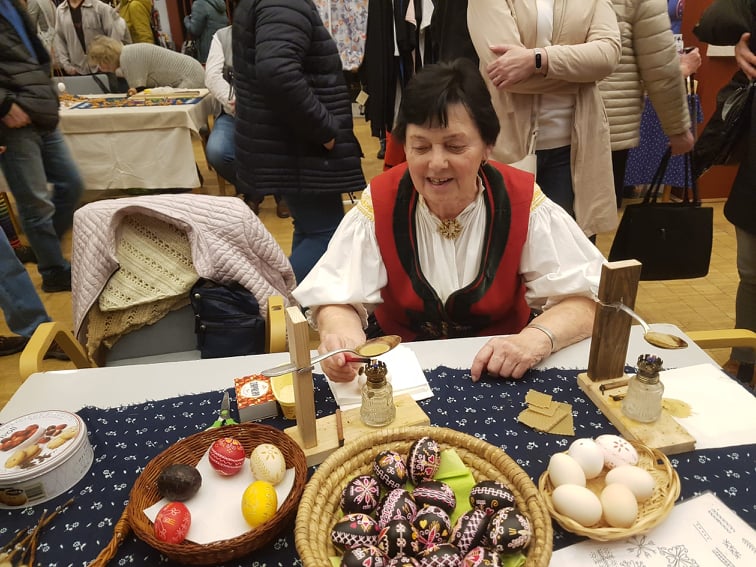
Slovak goose eggsEaster egg artist Anna Krocova in VizoviceBakery by Ellen Machackova of VizoviceKlabacka or noisemakerEaster whips
Most families color eggs in dyes or onion skins for the deep brown color and polish the eggs with butter and set them on the Easter table to reward the revelers, along with a bottle of plum brandy, desserts, lamb pound cake, and open-faced sandwiches.
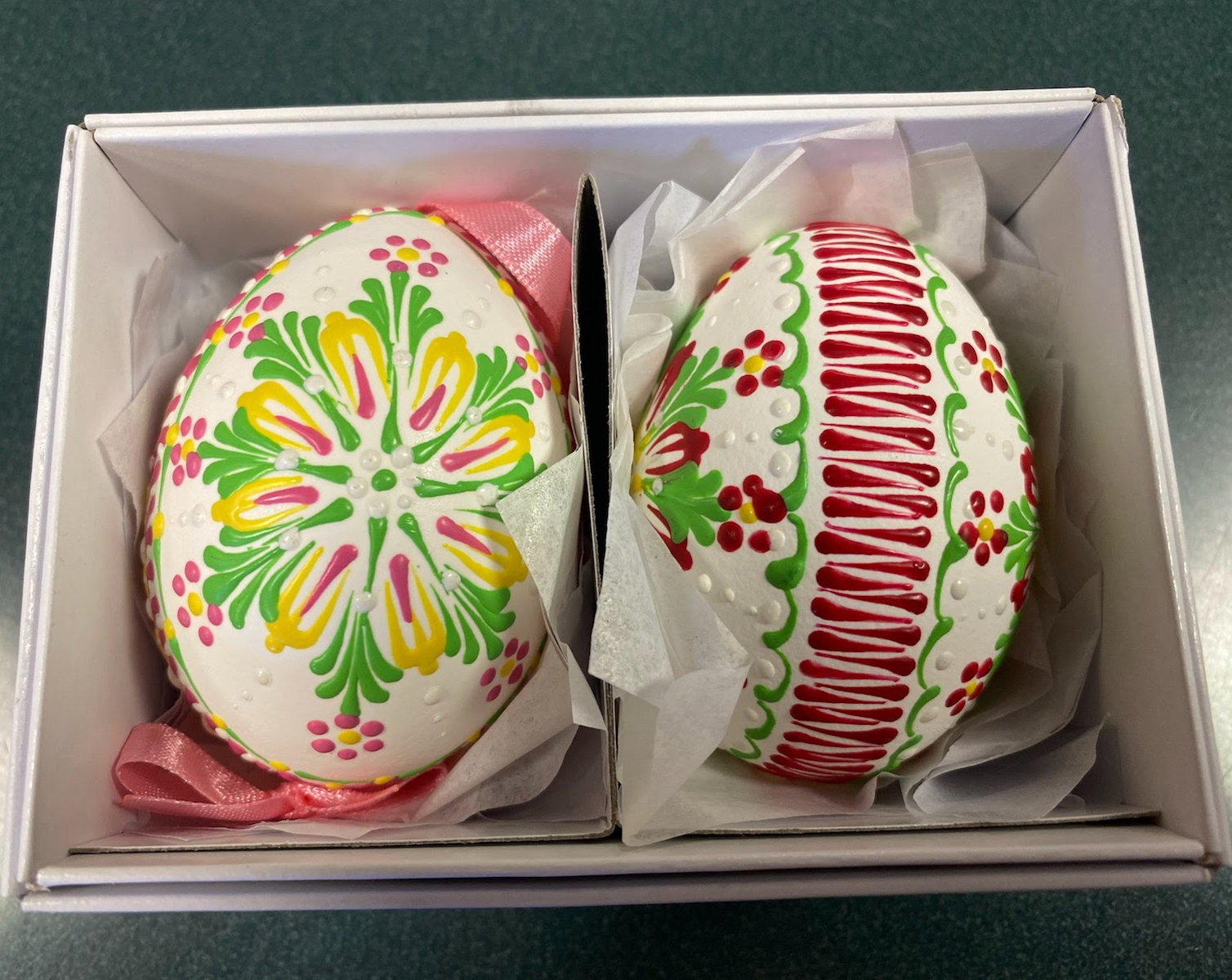
Easter egg artists make “kraslice,” which are decorated empty eggshells after the yolks and whites have been blown out. These pieces of delicate art painted on a fragile shell are the mainstay of Easter sold at markets and gift shops, along with hand-embroidered tablecloths and ceramics.
The prevailing tradition remains the mysterious “whipping” of the women of the household on Easter Monday known as “schmigrust.” Men and boys traditionally braid their own whips from willow branches in all sizes. These whips are called “pomlazka” or “karabac” and they can be up to two meters long braided from 24 willow rods. Some use large special wooden spoons with ribbons or branches of juniper.
“Schmigrust is my favorite part of Easter,” said Ludek Pala, a Moravian native of Stipa, now a resident of Lowell, who still practices the tradition in the USA.
The revelers get up at the crack of dawn and head out into the streets in groups of all ages. Depending on the region they also carry wooden carved noisemakers carved by local wood artists.
When the door opens, the women and girls get a gentle whipping to drive away evil spirits, according to old legends. Originating in ancient pagan fertility rites, the practice is supposed to guarantee beauty and good health for women in the coming year.
Loosely translated as: Give me a colored egg, if you don’t give me a colored one, give me at least a white one, and your hen will lay another.
The plum brandy aka slivovice reward
The plum brandy is made in the stills in Moravia and across the country. People usually bring in their own plum or pear ferment that is distilled.
We decided to bring this tradition to the USA where we live permanently. The fruit is locally sourced from Paulson’s, Hills Brothers, and Mason peaches and apples, with no additives the brandy reflects an age-old tradition of craft stilling started by our forefathers.
Copper still by Kovodel Janca from the Czech Republic.Jakub Pala, Emma Chavent and Ludek Pala.
Moravian Sons Distillery
In return for the whipping, the revelers get a ribbon tied to the whip, a colored egg, a shot of plum brandy and they help themselves to open-faced sandwiches and desserts, such as festive kolache and lamb pound cake.
“By noon you’re tired,” said Pala.
In some regions, if the group arrives after 12 p.m., they get doused with water. However, in Slovakia, the Easter custom is to douse the women and girls with water or perfume in the morning.
According to a 2019 survey, 60% of Czech households follow the tradition of spanking (or watering) someone on Easter Monday.
In the past, young boys would chase young girls in the village streets with the whips, and vintage illustrations by Josef Lada of people in traditional folk costumes show girls running or hiding as if playing tag.
Copyright (c) 2022. Emma Blogs, LLC. All rights reserved.
This is a traveling panel exhibit on loan from the National Czech and Slovak Museum (NCSM) in Cedar Rapids now installed at the Czech and Slovak Ed.Center & Historical Museum in Omaha through Feb. 27.
If you’re in the area, check it out in person or browse through our website to find out more about your roots.
The Museum is open on Saturdays from 10 am to 5 p.m. Sundays from 1 to 5 p.m. Give us your feedback in the comment section below.
Check out this oral history project “Leaving Czechoslovakia” during the Cold War.









 authoremmapalova